President Nana Akufo Addo says socio-economic difficulties, political and economic exclusion, mismanagement amongst others are some of the factors identified by the African Union as the main causes of instability on the continent.
According to the President, drought, corruption, nepotism, unemployment, religious extremism, transnational crime, drug trafficking and external political interference in the affairs of African countries are also attributable to the volatility in Africa.
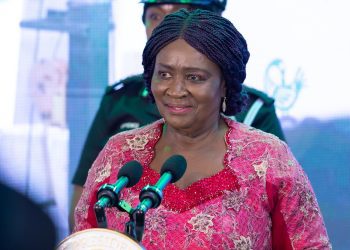
The President said this in a speech read on his behalf by the Minister of Foreign Affairs and Regional Integration, Madam Shirley Ayorkor Botchwey, at the 984th Virtual Meeting of the Peace and Security Council of Heads of State and Government Level.
The meeting aims at discussing Sustainable Peace in Africa: Focusing on Climate Change and its Effects on Peace and Security on the Continent.
This according to President Akufo Addo is imperative since there is a strong connection between climate change, peace, security and development and he had therefore called for global action.
“And that failure to consider the growing impacts of climate change could undermine global efforts at peace as well as risk trapping vulnerable countries into a vicious cycle of climate disaster and conflict.”
“It, therefore, comes as no surprise that climate change today is defined as a threat multiplier and equally as no coincidence that seven out of the 10 countries most vulnerable and least prepared to deal with climate change, host a peacekeeping operation or special political mission,” he said.
Touching on intervention his government has deployed on the issue, President Akufo Addo said Ghana, in 2013 developed a National Climate Change Policy to serve as a springboard for initiating a climate-resilient economy that would accelerate her development efforts and enhance the well-being of our people without sacrificing the quality of the environment and its resources.
According to him, the policy affirmed Ghana’s resolve to lessen the potential hardships that climate change impacts may pose to the sustainable development of the country.
He also explained that “the policy seeks to provide strategic directions and coordinate issues of climate change in Ghana, bearing in mind its linkages with our development, adding that what was relevant for Ghana was to ensure the mainstreaming of the climate-proofing agenda into national development.”
At the sub regional level, President Akufo Addo said the Economic Community of West African States (ECOWAS) in line with the Decision of the ECOWAS Authority of Heads of State and Government, in 2015, enhanced the capacity of Member States to better address the major risks ranging from security and terrorism, environment, crime and criminality, governance and health by setting up of National Early Warning and Response Mechanisms in each Member State.
“As of today, five centres in Burkina Faso, Cote D’Ivoire, Guinea Bissau, Mali and Liberia have been fully operationalized, whilst the remaining are at various levels of completion.”
In a broader context, the President pointed out that across sub-Saharan Africa, South Asia and Latin America, climate-driven population displacement, migration, water and food insecurity had and could continue to undermine regional stability.
He therefore urged for stronger partnerships that would align ongoing efforts by the UN, Member States, regional organizations, to identify best practices to strengthen resilience and bolster regional cooperation.
Source: Henry George Martinson@henry-george-martinson