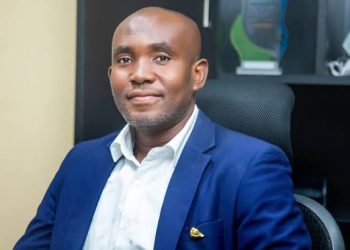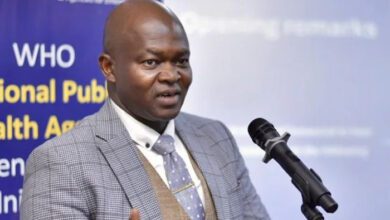
Professor Samuel Kaba Akoriyea, Director-General of the Ghana Health Service (GHS), issued an unreserved call for systemic reform and a fundamental ‘reset’ of the nation’s healthcare system at the 2025 Senior Managers Meeting, emphasizing that service failures diminish every citizen and make all Ghanaians poorer.
Speaking on the theme, “Resetting Healthcare Delivery for Effective Governance, Equitable and Sustainable Financing to achieve Universal Health Coverage,” the Director-General challenged the assembled leaders to recognize that the continued loss of life due to preventable gaps in the system, whether a pregnant woman or an elderly retiree unable to afford medication is a national shame. He posed a stark choice to the leadership: “You are either part of the problem or part of the solution; there is no middle way.”
Progress and the Urgency of Unmet Needs
Professor Akoriyea acknowledged significant achievements, including sustained high immunization coverage, a decline in the stillbirth rate, and major victories in disease control. The National Malaria Elimination Programme, for example, achieved a 74% reduction in malaria deaths (from 277 to 73 between 2021 and 2024). HIV programming is nearing the UNAIDS 95-95-95 targets, and Tuberculosis Case Notification has increased significantly. The expansion of NCDs screening through wellness clinics and the introduction of digital tools are also reshaping service delivery.
Despite these gains, the Director-General challenged the leadership to confront system failures, citing tragic cases of women and children who died due to a lack of effort and preventable oversights. He asserted that leaders must stop merely reciting national pledges and instead act decisively, noting that global peers are “in space, the moon or developing robots” while Ghana struggles with fundamental service delivery.
Four Pillars of the Strategic Reset
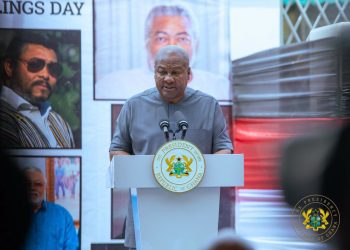
The GHS is pursuing a renewed strategic direction guided by the President John Dramani Mahama’s ‘reset agenda,’ focusing on four critical areas for reform.
First, the Service must reaffirm its Organisational Identity. This requires reviewing the GHS and Teaching Hospitals Act, developing a Legislative Instrument, and eliminating duplications that drain efficiency. He demanded an active rebranding to cultivate a professional corporate culture, stating that the era of “unhealthy competition and professional conflicts within our ranks must end.”
Second, Staff Welfare and Motivation are non-negotiable. This involves restructuring the GHS welfare scheme and establishing a dedicated Medical Support Fund for staff. Barriers to timely promotions, conversions, and other HR functions are being dismantled, with thousands of actions processed in the first half of 2025 alone. An automated Performance Management System is slated for deployment by January 2026.
Third, the GHS must aggressively balance its Clinical and Public Health Mandates. This means delivering strong, reliable clinical services while aggressively reinforcing institutional public health—from aggressive surveillance to high-quality outreach. Directors at all levels are now required to take ownership by leading at least one monthly media engagement to bring health messages directly to the public.
Finally, the commitment to the people of Ghana must be rooted in Equity, Quality, and Accountability. Services must be designed to be disability-friendly and inclusive. Accountability must extend beyond finances to service accountability to the Ghanaian public, ensuring that “Every cedi, every resource… must translate into results for the people we serve.”
Confronting Internal Rot and Preparing for the Future
Professor Akoriyea highlighted recent initiatives, including the review of management positions, comprehensive donor mapping, and the establishment of dedicated customer care desks. However, he delivered a stark warning against deep-seated internal issues, referencing recent Public Accounts Committee revelations on expired donated drugs, lack of documentation, validation of ghost workers, and intentional inaccuracy of information fed to superiors. He called this a “painful reminder that every gap in our system is created by us” and stressed that “this is why we cannot afford business as usual.”
Addressing the persistent human resource maldistribution where only a fraction of registered doctors are within the GHS the Service plans to make all regional hospitals residency training centers and encourage GHS staff to affiliate with universities as lecturers. Furthermore, the GHS is positioning itself to deliver on flagship presidential initiatives, including the rollout of Free Primary Health Care (FPHC), the MahamaCares programme for chronic diseases, and aligning health services with the 24-hour economy.
The Director-General concluded with an unambiguous final instruction to the leaders, “Own your districts, own your facilities, own the outcomes. Let us commit to making every cedi, every staff hour, and every policy decision count for the health and dignity of the Ghanaian people.” The collective resolve, he stated, is to set the GHS on a path to becoming one of the best in the world.
Story By: Eugenia Ewoenam Osei