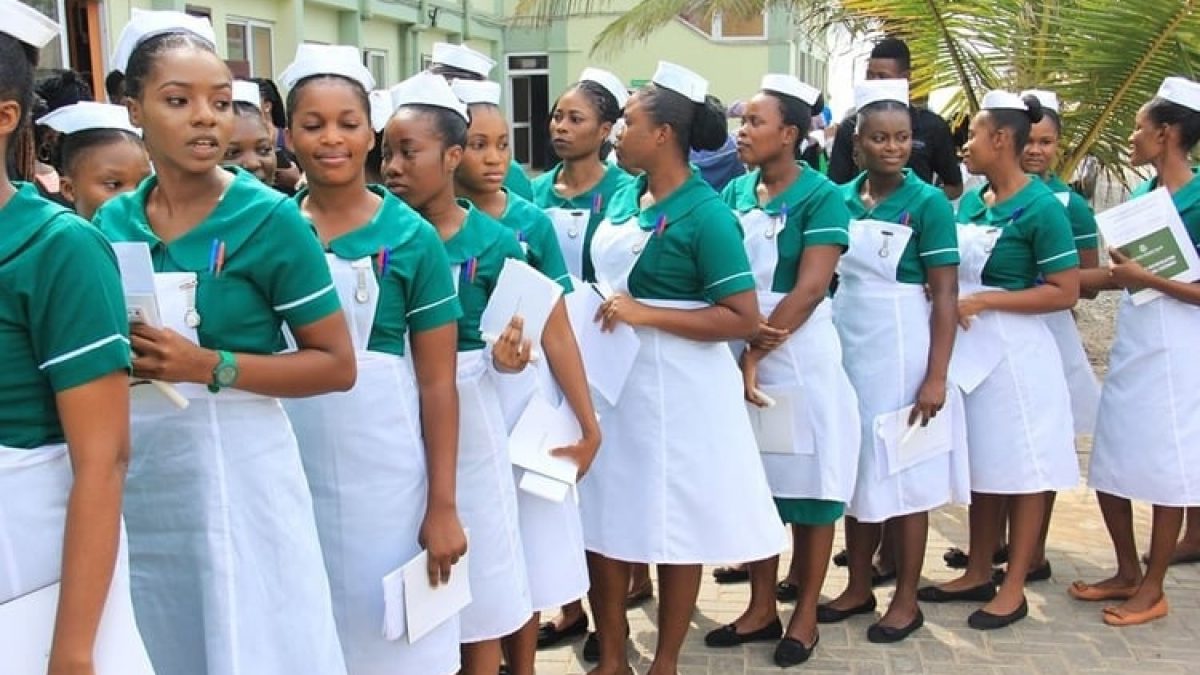
Ghana’s health economy is reaching an inflection point. In 4 years, Ghana could have 180,000 unemployed health professionals. Ghana’s signing of a Memorandum of Understanding (MoU) with Grenada to facilitate the recruitment of Ghanaian nurses is a strategic international partnership, which forms part of the government’s “managed migration” initiative, aims to create pathways for trained nurses to work abroad while ensuring that local healthcare needs remain adequately staffed. Health Minister Hon Kwabena Mintah Akandoh has warned that if no decisive measures are taken, Ghana could have as many as 180,000 unemployed trained health professionals by the end of 2028.
Currently, about 74,000 qualified health workers remain without placement, and thousands more graduates annually from nursing and midwifery institutions. The minister explained that clearing this backlog through public sector recruitment alone would require over GHS 6 billion annually; a cost that the current fiscal framework can not sustain. As a result, the ministry is pursuing a dual strategy: gradual domestic recruitment combined with structured overseas employment opportunities for qualified personnel. The idea is straightforward: export some of the surplus workforce through bilateral agreements while maintaining the optimal nurse-to-patient ratio at home.
During the announcement, the President described the partnership as “a valuable opportunity for structured collaboration between our two countries.” He highlighted that Ghanaian health workers are internationally recognized for their professionalism and compassion, attributes that have positioned Ghana as a trusted source of skilled nurses across the globe.
The agreement comes at a time when Ghana’s health labour market is under pressure. Despite years of investment in nursing training, absorption into public facilities has lagged behind. The Minister noted that clearing the existing backlog alone would require GHS 6 billion annually, an unrealistic figure in the current fiscal climate. By exporting nurses through structured partnerships, the government hopes to convert a domestic employment burden into an economic and diplomatic asset. Yet, this approach is not without its dilemmas. While international recruitment offers short-term relief, it could deepen domestic service gaps, especially in rural and underserved regions.
The challenge, therefore, is balance: ensuring that Ghana remains a net beneficiary of its own human capital. The MoU with Grenada symbolizes a larger question: Can Ghana turn its surplus-trained nurses into a sustainable export industry without hollowing out its local health system? The answer depends on whether the “managed migration” model evolves into a transparent, data-driven framework, one that matches export numbers to domestic needs, ensures fair contracts abroad, and reinvests remittances or gains into local health infrastructure.
If poorly coordinated, the policy risks creating a two-tier system, where the best-trained nurses leave for foreign contracts while local facilities struggle with limited staffing, low morale, and service deficits. To make this emerging skills export policy work, Ghana must:
Develop a comprehensive health labour market database to track training, employment, and attrition. Introduce return pathways for nurses abroad, allowing reintegration into domestic service after international contracts and strengthening local incentives for health professionals, especially in underserved regions.
Ghana’s partnership with Grenada marks an important innovation in health and labour policy, a shift from crisis management to strategic workforce diplomacy. But it is also a test of policy discipline. Exporting skills can only be a victory if it complements domestic reform, not replacing them.
Source: IMANI