Minister for Foreign Affairs, Samuel Okudzeto Ablakwa, is demanding a fundamental reform of the global financial architecture and key UN institutions.
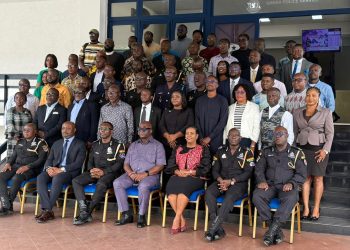
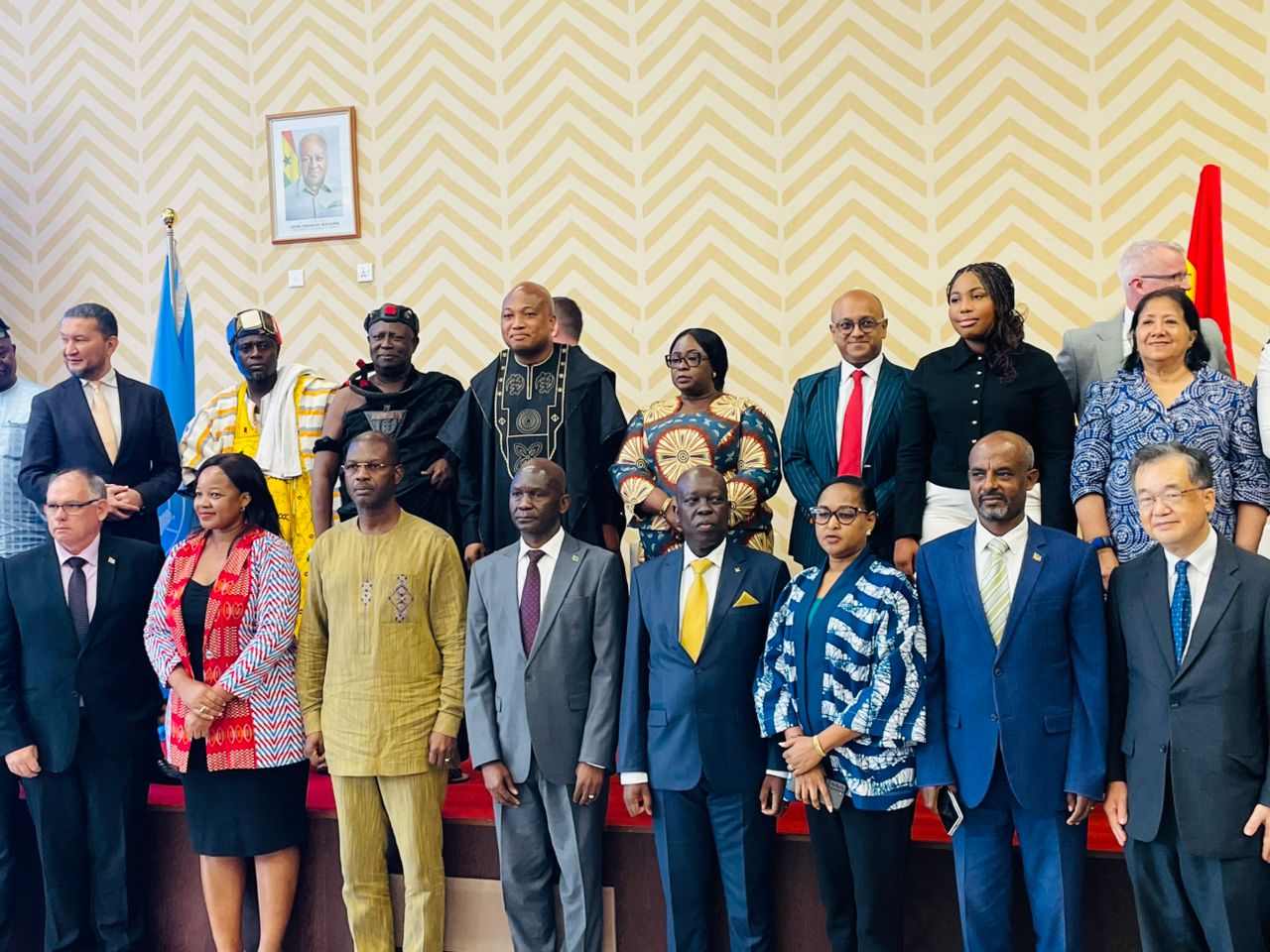
Speaking at the Ministry of Foreign Affairs High-Level Dialogue on the dual themes of The Future of Multilateralism in a Changing World” and “Advancing Sustainable Development and Finance in a Fragmented Global Order today, Mr. Okudzeto Ablakwa asserted that current global systems are “rigged against Africa.”
Commencing his remarks, the Minister acknowledged the UN’s enduring legacy as humanity’s “greatest expression of hope” over eight decades, a platform that has championed peace, human rights, and global development initiatives, including the successful fight against pandemics such as Ebola and COVID-19.
However, he pivoted sharply to the present reality, noting that the foundations of the global system are being “tested as never before”, citing rising geopolitical tensions, widening inequalities, a resurgence of protectionism, and a growing erosion of trust among nations as symptoms of a highly complex and dynamic world.
Highlighting an immediate and devastating challenge, the Minister drew attention to the alarming increase in attacks on humanitarian aid workers in 2024, a trend that is accelerating in 2025.
”Humanitarian workers save lives, and we should not allow this work to cost them their own,” he stressed. In affirmation of Ghana’s commitment, he referenced his participation in the signing of the Declaration for the Protection of Humanitarian Personnel during the 80th Session of the UN General Assembly in New York, pledging that decisive political commitment must now translate into concrete action on the ground.
Ghana’s position, the Samuel Okudzeto stated, is that the solution to global fragmentation lies not in the decline of multilateralism, but in its deeper and more effective renewal and reform.
This reform must ensure the United Nations evolves into a more agile, representative, and responsive institution capable of addressing 21st-century realities. A core demand, previously underscored by President John Dramani Mahama at the UN General Assembly, is the Security Council reform.
The Minister emphasized: “A continent as large and as significant as Africa must have at least one permanent seat on the Security Council.” He argued that Africa’s long-standing call, echoed by regions like Latin America and Asia is paramount to restoring legitimacy, equity, and trust in global decision-making, thereby making the system truly fit for purpose.
Furthermore, the Foreign Affairs Minister called for multilateralism to be grounded in stronger partnership and coordination between the UN and regional bodies such as the African Union and CARICOM. This, he argued, would enhance coherence, prevent duplication, and ensure that peacebuilding and development initiatives are locally informed and regionally owned.
The core of the Minister’s address focused on economic justice and sustainable finance. He contended that achieving the 2030 Agenda and the Paris Agreement goals is impossible without confronting the structural inequities embedded in the global financial system.
“We demand not only a reform of the Security Council, but also a reset of the global financial architecture, which is currently rigged against Africa,” he reiterated, echoing President Mahama’s sentiments.
The Minister insisted that reform must target international financial institutions, specifically the voting structures of the IMF and the World Bank, to give developing economies a meaningful voice. He urged the UN to champion financial justice by advocating for debt relief, sustainable investment, and innovative financing mechanisms.
On the climate crisis, Ablakwa emphasized that predictable, concessional, and climate-sensitive financing is a cornerstone of renewed multilateralism. He concluded that for Small Island Developing States and least developed countries, access to reliable and adequate climate finance through mechanisms like the Green Climate Fund and the Loss and Damage Fund is not a privilege, but a lifeline.
The High-Level Dialogue, he concluded, must serve as a call to action for collective courage and a renewed commitment to peace, justice, and a more effective and representative United Nations.
Story By: Eugenia Ewoenam Osei