Ghana’s newly empowered gold regulator, the Ghana Gold Board (GOLDBOD), has delivered its most commanding operational results yet, reporting more than US$5.4 billion in gold export value for the third quarter of 2025, a performance that signals a decisive restructuring of the country’s mineral economy under Act 1140.
The latest statutory filings show a sector being reshaped in real time: formalisation in the artisanal space accelerating, exports stabilising, national reserves expanding, and compliance levels rising across the downstream value chain. The numbers reveal the emergence of a coordinated system capable of capturing value Ghana had long been losing.
A total of 26,153.98 kg of gold, valued at US$2.76 billion, was aggregated from the artisanal and small-scale mining (ASM) sector during the quarter.
For a sub-sector historically marked by fragmentation and leakages, the scale of value now flowing through official channels is widely regarded as evidence of stronger reforms, tightening of gold-purchase pathways, compliance and national control.
For the first time under the new regime, GOLDBOD’s reserve acquisition strategy delivered 119.78 kg of gold from large-scale mining (LSM) companies, valued at US$11.82 million, directly into the Bank of Ghana’s vaults.

The purchase supports government policy to deepen gold-backed reserve buffers, a move aimed at insulating the economy from external shocks and improving long-term currency resilience.
GOLDBOD’s report shows strong international demand and disciplined export governance:
- ASM exports: 25,780.60 kg worth US$2.71 billion
- LSM exports: 24,911.21 kg worth US$2.43 billion
Together, Ghana realised more than US$5.4 billion in export value in just three months.
Q3’s combined export performance places Ghana among Africa’s most efficiently governed gold jurisdictions, a sharp contrast to previous years when inconsistent reporting and poor oversight weakened value retention.
GOLDBOD’s tiered licensing structure, designed to clean up the gold trading ecosystem continued to gain traction. A total of 577 licences were issued within the quarter:
- Tier 2: 432
- Tier 1: 123
- Self-financed aggregators: 22
Two additional licences were suspended, and several revoked for non-compliance. This level of enforcement signals a “zero-tolerance posture” toward irregular actors who previously operated unchecked.
Chief Executive Officer of the Ghana Gold Board, Sammy Gyamfi, Esq. described the quarter as a defining period in the Board’s operational evolution.
“The Ghana Gold Board continued to demonstrate strong institutional performance and sectoral leadership during the third quarter of its operational year (July–September 2025). The period was marked by steady progress in regulatory enforcement, gold aggregation and export, licensing and compliance, and inter-agency collaboration aimed at formalizing Ghana’s gold value chain,” he said.
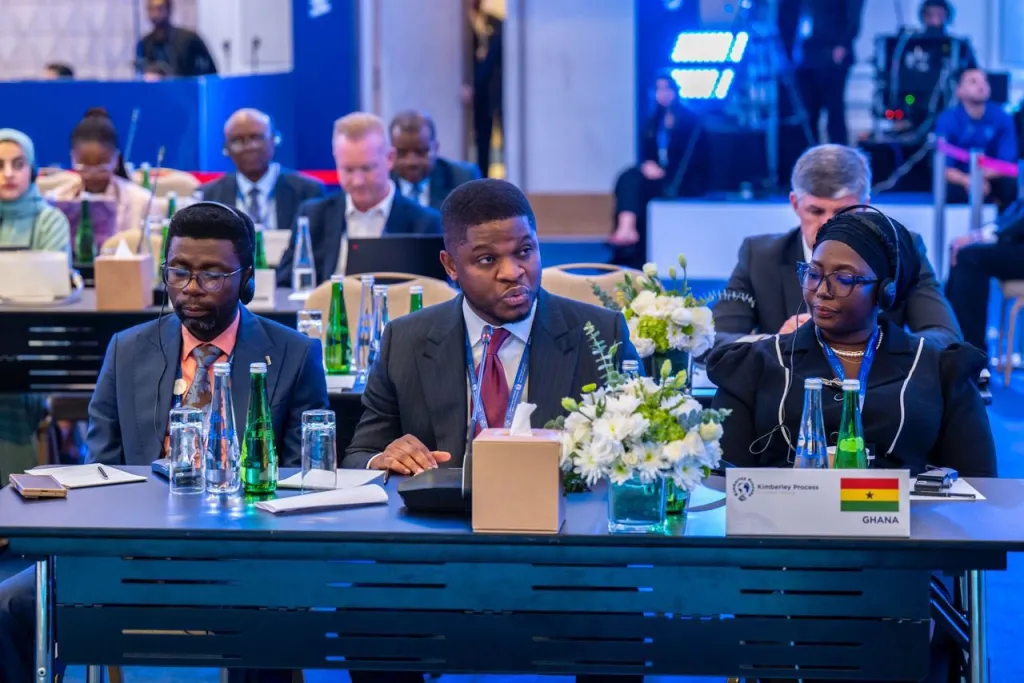
He added that the results reflect a regulator fully aligned with its legal mandate: “The GOLDBOD’s operational and financial performance reflects its growing institutional maturity and alignment with the objectives of the Ghana Gold Board Act, 2025 (Act 1140), which mandates it to regulate, promote, and ensure transparency in the purchase, assay, and export of gold and other precious minerals.”
The Q3 numbers make one fact unmistakable: Ghana’s gold value chain, long characterised by opacity and lost revenue is being brought under unified national management. With formalisation deepening, enforcement tightening and exports stabilising, GOLDBOD’s model appears to be shifting Ghana from a passive mineral exporter into an assertive gold-governance state.
The institution’s third-quarter performance demonstrates economic progress and a profound reset in Ghana’s approach to managing its most valuable natural resource.