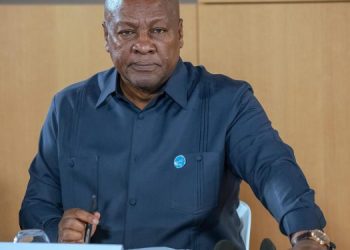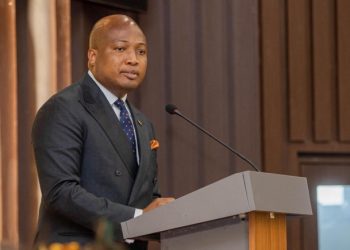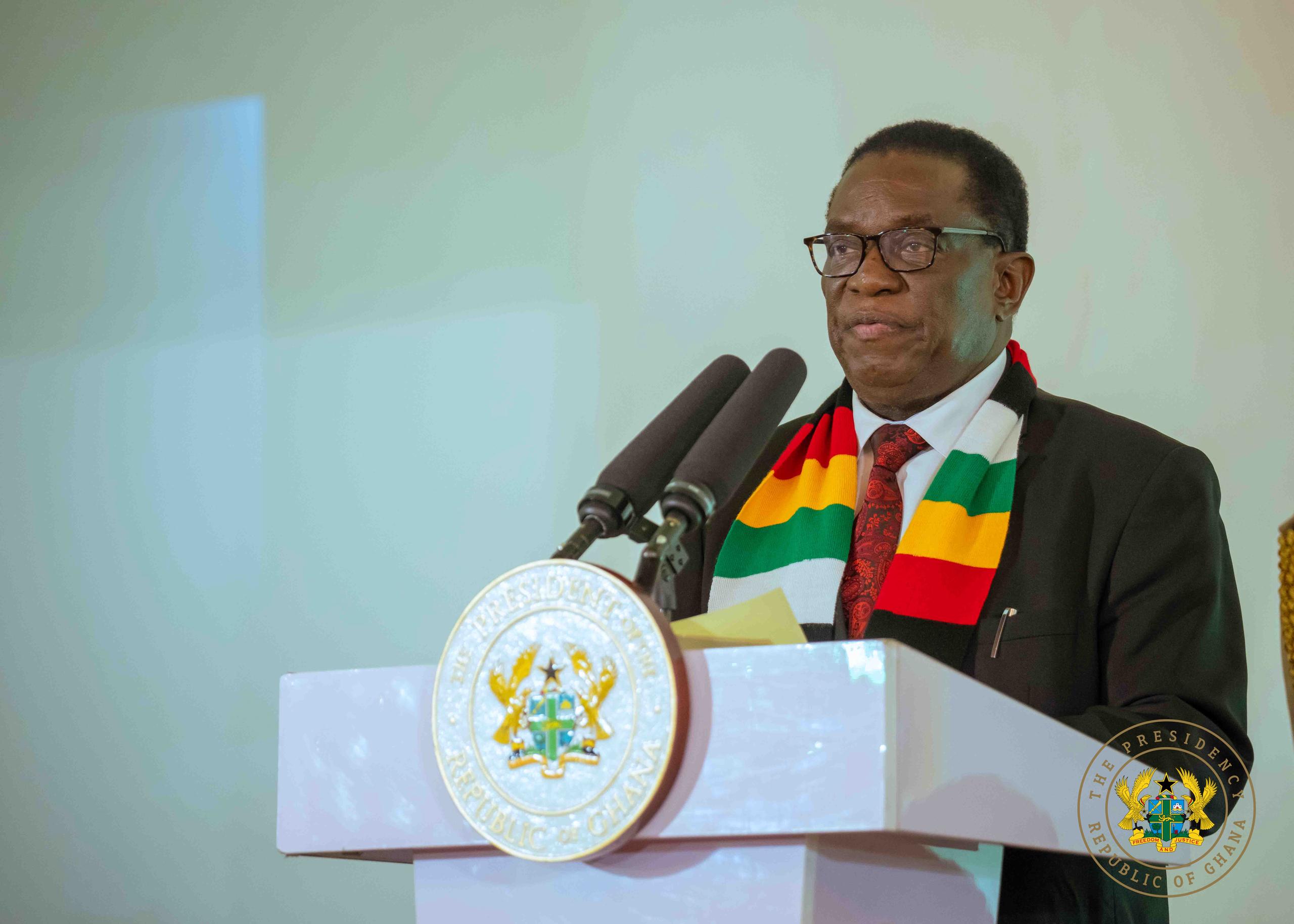
President of Zimbabwe, Emmerson Mnangagwa, has reaffirmed his country’s commitment to deepening bilateral relations with Ghana during a state banquet hosted in his honour by President John Dramani Mahama.
Delivering his remarks, President Mnangagwa expressed appreciation for the warm reception and described the visit as historic.
“On behalf of the Government of Zimbabwe and in my own capacity, I express profound gratitude for the invitation to undertake this historic state visit to Ghana,” he said.
He noted that Ghana occupies a special place in Zimbabwe’s history due to longstanding ties forged during Africa’s liberation struggles.
“Ghana holds a special place in our hearts, shaped by a shared history and enduring bonds of friendship between our peoples,” he added.
President Mnangagwa paid tribute to Ghana’s role in Zimbabwe’s independence, recalling the support extended during the country’s fight against colonial rule.
“We recall with deep appreciation Ghana’s contribution to Zimbabwe’s liberation struggle and the support extended during difficult periods,” he stated.
He also highlighted the influence of Kwame Nkrumah, whose leadership inspired liberation movements across the continent.
“His declaration that Ghana’s independence is meaningless without the total liberation of Africa remains a guiding principle for all of us,” President Mnangagwa noted.
Reflecting on the historical ties, he emphasised the solidarity among African nations during the liberation era.
“This visit rekindles memories of solidarity, sacrifice, and shared purpose among African nations during the liberation struggle,” he said.
He further acknowledged Ghana’s support to Zimbabwean freedom fighters and its role in the struggle against the colonial regime led by Ian Smith.
“Ghana’s role in dismantling the colonial regime led by Ian Smith will never be forgotten, and we remain grateful,” he stressed.
Turning to the future, President Mnangagwa said the visit signals a renewed commitment to strengthening cooperation.
“This state visit reaffirms our long-standing ties rooted in anti-colonial struggles and strengthened through people-to-people relations,” he said.
He underscored the need to transform historical bonds into concrete economic outcomes.
“We must translate our historic bonds into tangible economic benefits by accelerating modernisation, industrialisation, and sustainable development,” he urged.
President Mnangagwa identified trade and economic collaboration as key areas of focus, citing opportunities under the African Continental Free Trade Area.
“The African Continental Free Trade Area presents an important platform to increase trade among African countries, and Ghana’s hosting of its Secretariat reflects strong leadership in integration,” he noted.
He added that Zimbabwe stands ready to support continental trade initiatives and expand partnerships in key sectors.
“There are strong opportunities for collaboration in agriculture, mining, education, and tourism, particularly in value addition, food security, and climate resilience,” he said.
President Mnangagwa also commended Ghana’s development strides while outlining Zimbabwe’s national aspirations.
“I commend Ghana’s infrastructure development and its commitment to building a knowledge-driven, technology-based economy, while Zimbabwe remains focused on becoming an upper middle-income society by 2030,” he stated.
He emphasised the importance of African-led development. “Our development philosophy is that Africans must take primary responsibility for developing their nations, with external partners playing a complementary role,” he said.
The Zimbabwean leader concluded by calling for sustained cooperation to achieve shared prosperity.
“The bond between Ghana and Zimbabwe, built on history and strengthened through cooperation, must continue to drive our shared vision of prosperous, self-reliant, and united African nations,” President Mnangagwa concluded.
The banquet formed part of activities marking President Mnangagwa’s official visit, aimed at strengthening diplomatic, economic, and cultural ties between the two countries.
Story: Patrick Asford Boadu