A high-level committee investigating the tragic death of 29-year-old engineer Charles Amissah has concluded that a catastrophic breakdown in Ghana’s emergency medical referral system was the primary cause of his passing.
The findings, released on May 6, 2026, paint a harrowing picture of institutional negligence, revealing that Amissah did not die from his initial injuries, but from a “slow death” caused by being repeatedly denied care.
Amissah was struck by a vehicle at the Circle Overpass on February 6, 2026. While he was stabilized at the scene by first responders, his subsequent journey through the capital’s healthcare network became a fatal gauntlet of refusals.
The committee established that he was turned away by the Greater Accra Regional Hospital, the Police Hospital, and the Korle Bu Teaching Hospital. By the time he was finally admitted, the delays had triggered a fatal cardiac arrest.
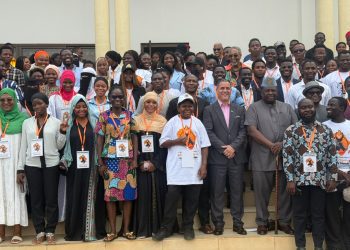
Presenting the committee’s findings, Agyeman Badu Akosa stated that none of the involved facilities provided the mandatory emergency interventions required under national triage protocols. He emphasized that the pathology report directly contradicts any assumption that the accident was inherently fatal.
”Pathology confirms there was a slow death from medical neglect and not from the instant trauma,” Akosa stated. “This means that if at any of these facilities there had been medical intervention, Charles Amissah would have survived.”
The report further highlighted a critical failure at the triage stage, where hospital staff reportedly prioritized administrative hurdles or bed capacity over the immediate stabilization of a patient in crisis. Akosa noted that timely attention at any one of the three major facilities would have likely altered the outcome.
In response to these lapses, the committee has recommended stringent disciplinary measures against frontline staff involved in the refusals. Akosa proposed that Akosua B. Turkson and Joy Daisy Nelson be referred to their respective institutions and the Nursing and Midwifery Council (NMC) for formal sanctions.
The findings have reignited a national debate regarding the “no-bed syndrome” and the enforcement of emergency care laws, with the committee calling for a total overhaul of hospital response protocols to ensure that no Ghanaian is ever again denied the basic right to life-saving stabilization.
Story By: Eugenia Ewoenam Osei