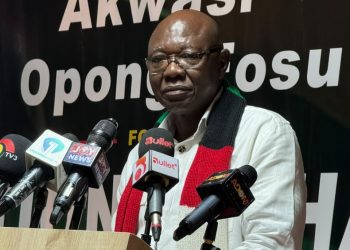
Deputy Chief Executive Officer of the Forestry Commission, Elikem Kotoko, has endorsed the government’s decision to place the Ghana Armed Forces at the centre of the national post-flood recovery and mitigation effort, describing the military as the country’s most disciplined institution and a critical partner in addressing Ghana’s recurring flooding crisis.
He believes the military’s role should extend beyond emergency interventions through sustained collaboration with local assemblies, environmental agencies, and other state institutions responsible for land use planning and disaster management.
His comments come after the Government directed the Ghana Armed Forces (GAF) to lead the operational component of a nationwide post-flood recovery and mitigation task force, with the military spearheading the desilting of major drains and waterways, the demolition of illegal structures on waterways and Ramsar sites, and coordinating with agencies including NADMO, the Ghana Police Service, the Ghana National Fire Service, and the Environmental Protection Agency.
According to Mr. Kotoko, many of the country’s flood disasters are the result of human activities, including the paving of entire residential compounds, the reclamation of wetlands, and the construction of buildings within Ramsar sites, practices that prevent rainwater from naturally infiltrating the ground and increase flooding in neighbouring communities.
Drawing a comparison with Canary Wharf in the United Kingdom, he said wetlands can be developed responsibly through proper engineering and planning, demonstrating that environmental protection and infrastructure development can coexist.
He argued that Ghana’s challenge is not a lack of political will but the substantial financial resources required to implement such large-scale engineering interventions.
Mr. Kotoko also criticised what he described as poor financial discipline in the implementation of the Greater Accra Resilient and Integrated Development (GARID) Project, noting that excessive expenditure on consultancy services, training programmes, and other non-essential activities left inadequate resources for the core infrastructure works.
“The African problem is discipline again,” he said, maintaining that unless public funds are managed prudently and institutions work together effectively, the country will continue to struggle with preventable disasters.
He stressed that while the military-led intervention is a welcome step, lasting solutions will depend on disciplined urban planning, strict enforcement of environmental regulations, responsible management of public resources, and sustained collaboration among all stakeholders.