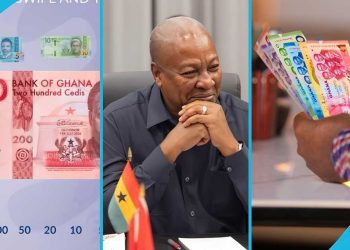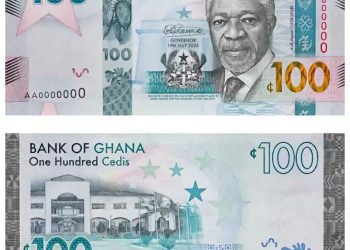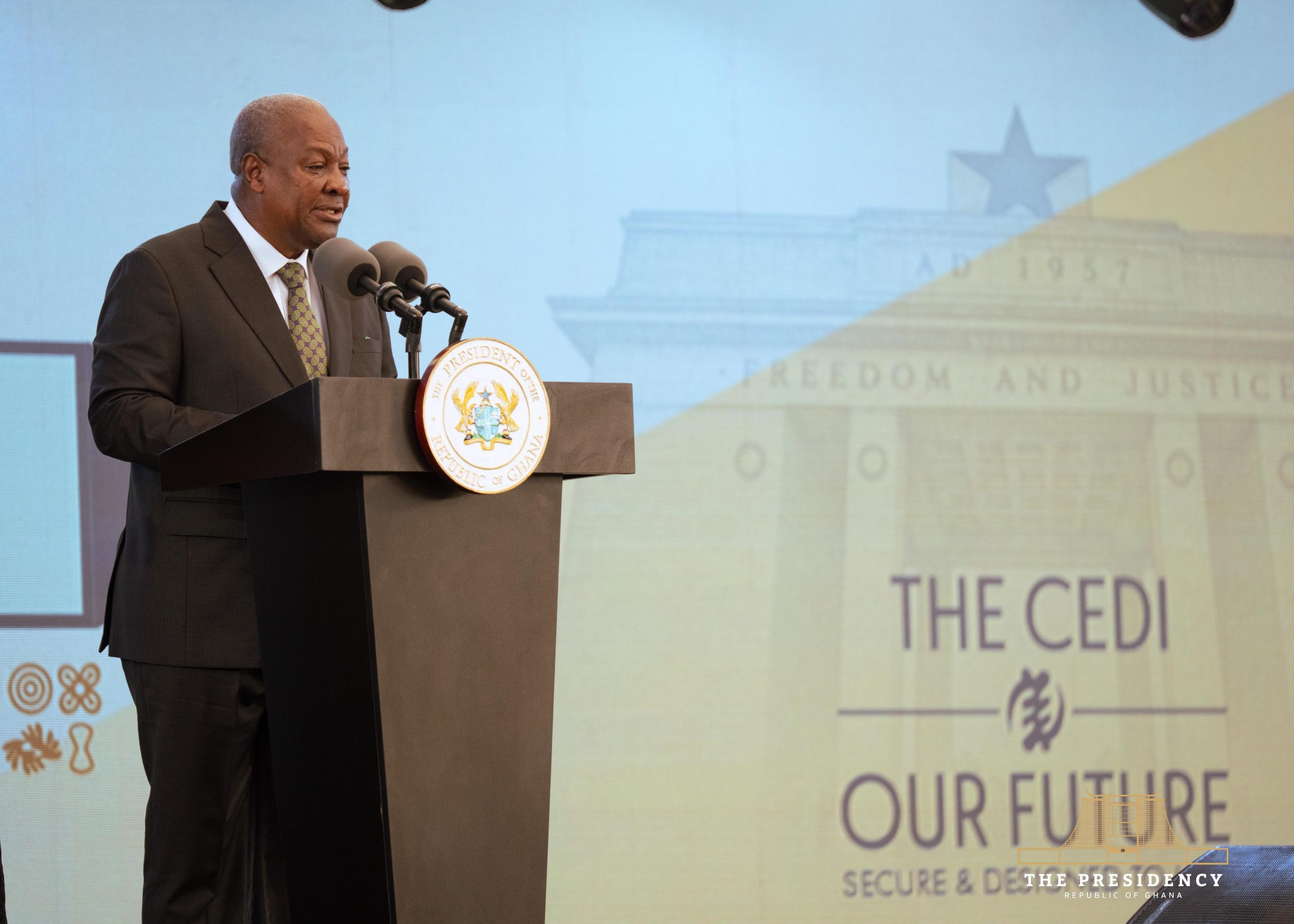
President John Dramani Mahama has formally launched the Ghana Cedi Heritage Series, describing the new banknotes as a celebration of Ghana’s history, cultural identity and economic sovereignty.
Speaking at the launch ceremony at the Bank of Ghana, President Mahama said the redesigned currency would connect Ghana’s historical heritage with its aspirations for a stronger and more resilient economy.
He commended the Governor, Board of Management and staff of the Bank of Ghana, as well as international partners, for their contributions towards bringing the initiative to fruition.
“For the Ghanaian people, the Cedi has a very practical meaning. It pays for the food that appears on the family table, it keeps our businesses running and it helps parents put their children through school,” he said.
“But it also carries something else that is less easily measured but deeply important, and that is a sense of who we are and what we share as a nation.”
President Mahama traced the origins of the Cedi to the Akan word for the cowry shell, explaining that the name reflected Ghana’s long history of trade and exchange before the establishment of modern financial institutions.
He recalled that cowries were historically used as a medium of exchange across communities, facilitating trade in commodities such as salt, cloth and cola from the markets of Salaga to communities along the coast.
He also highlighted the historical significance of gold dust and traditional brass weights, particularly the image of two crocodiles joined together and sharing one stomach.
According to him, the symbol conveys an important lesson about unity, shared responsibility and collective survival.
“Whatever either eats nourishes both of them, so their common survival depends on recognising their shared interests. That lesson of the crocodiles remains relevant in Ghana today,” he stated.
The President said the Cedi remained a unifying national symbol that transcended political, religious and ethnic differences.
“The Cedi knows no political parties. Its usefulness rests on the confidence that we Ghanaians place in it. Our heritage is shared equally,” he emphasised.
He explained that the heritage series would bring Ghana’s historical and cultural identity into everyday transactions, with the images featured on the various denominations reflecting the contributions of different communities and personalities to the country’s development.
President Mahama further described the currency as a quiet ambassador for Ghana, noting that it could offer visitors and members of the diaspora an introduction to the country’s history, culture and identity.
“A country’s currency can be a visitor’s first encounter with its history and culture. Before a visitor comes to know our landmarks or experience the warmth and hospitality of our people, they may hold a Cedi note in their hands,” he said.
He added that the new series would also serve as an educational resource for younger generations by bringing national history closer to children through the historical figures, landmarks and cultural symbols featured on the notes.
The President encouraged young people to draw inspiration from the contributions of past generations and play their part in shaping Ghana’s future through education, enterprise and service.
New notes to circulate alongside existing currency
On the technical features of the new banknotes, President Mahama disclosed that the heritage series had been produced using reinforced cotton paper to improve durability and extend the lifespan of the notes.
He said the new banknotes were also smaller and easier to handle.
Clarifying concerns about the introduction of the new currency, he stressed that the existing banknotes would not be immediately withdrawn from circulation.
“As the Governor said, the new notes will run side by side with the old currency notes. They are not displacing the old currency notes. The banks will withdraw the old notes gradually until the new notes take over completely,” he explained.
$10bn economic programme to strengthen the Cedi
President Mahama also linked the launch of the heritage series to his government’s broader ambition of strengthening the Ghanaian economy and building a more resilient currency.
He said the administration’s new economy programme, which anchors the 2027 Budget to be presented by the Finance Minister to Parliament later in the day, was designed to transform the structure of the Ghanaian economy.
According to him, the programme is a $10 billion, four-year initiative aimed at expanding domestic production, strengthening local industries and increasing Ghana’s export capacity.
“The new economy programme is a $10 billion four-year programme aimed at transforming the very structure of the Ghanaian economy.
We are working towards an economy that produces more of what we consume, processes more of what we grow, and earns more from what we export to the world,” he said.
He explained that increasing local production and processing would create employment opportunities while reducing the country’s dependence on imported goods and the associated pressure on foreign exchange.
“When Ghanaian farms supply our markets and Ghanaian factories turn our resources into finished products, we create jobs locally and reduce the need to spend scarce foreign exchange on goods that we can produce competitively ourselves,” he stated.
The President noted that expanding and diversifying exports would increase foreign exchange earnings, while domestic production would reduce import dependence.
He said these interventions, supported by disciplined public financial management and credible monetary policies, would create the conditions for a stronger and more stable Cedi capable of withstanding external economic shocks.
“Together with disciplined public finance and credible monetary policies, these measures will help create the conditions for a stronger, more stable Cedi, better able to withstand any global shocks. That is the future my government is determined to build,” he said.
President Mahama expressed confidence in the future of the national currency, saying its strength must translate into tangible improvements in the lives of ordinary Ghanaians.
“For the trader, it should mean greater certainty when ordering their next consignment of supplies.
For the manufacturer, it should give greater confidence when planning their production. For the family, it must give greater confidence that income and savings will meet their needs,” he added.
Commends Bank of Ghana’s local expertise
The President also commended the Bank of Ghana for its contribution to the country’s economic sovereignty as the institution approaches 70 years of service.
He particularly acknowledged the Ghanaian expertise behind the systems developed in-house to support the Bank’s currency operations, describing the achievement as evidence of the capabilities of local professionals and the importance of building institutional knowledge within the country.
“I encourage the Bank to continue nurturing that expertise in service of our country,” he said.
President Mahama called on Ghanaians to protect the unity and confidence represented by the national currency, stressing that the Cedi’s historical significance must be matched by a stronger and more secure economic future.
“Let us carry the Cedi with pride and uphold the confidence on which it rests so that it continues to serve Ghana securely and well for generations to come. May the Cedi build prosperity amongst all Ghanaians,” he stated.
He subsequently formally launched the Ghana Cedi Heritage Series, expressing hope that the new banknotes would deepen national appreciation of Ghana’s shared history and aspirations.
“May God bless our homeland, Ghana, and make her rich and strong,” he concluded.
Story: Patrick Asford Boadu