Financial analyst Nii Yarboi Annan has cautioned against describing Ghana’s recent macroeconomic improvements as lasting economic stability, warning that the country’s continued dependence on favourable international gold prices leaves it vulnerable to external shocks.
He argues that the current economic conditions offer Ghana a temporary opportunity to strengthen its productive capacity, rather than proof that the economy has overcome its longstanding structural weaknesses.
Speaking to Sena Nombo on Radio Gold during discussions ahead of the 2027 Budget presentation, Mr Annan acknowledged improvements in the country’s economic performance but questioned whether those gains could withstand a sudden deterioration in global market conditions.
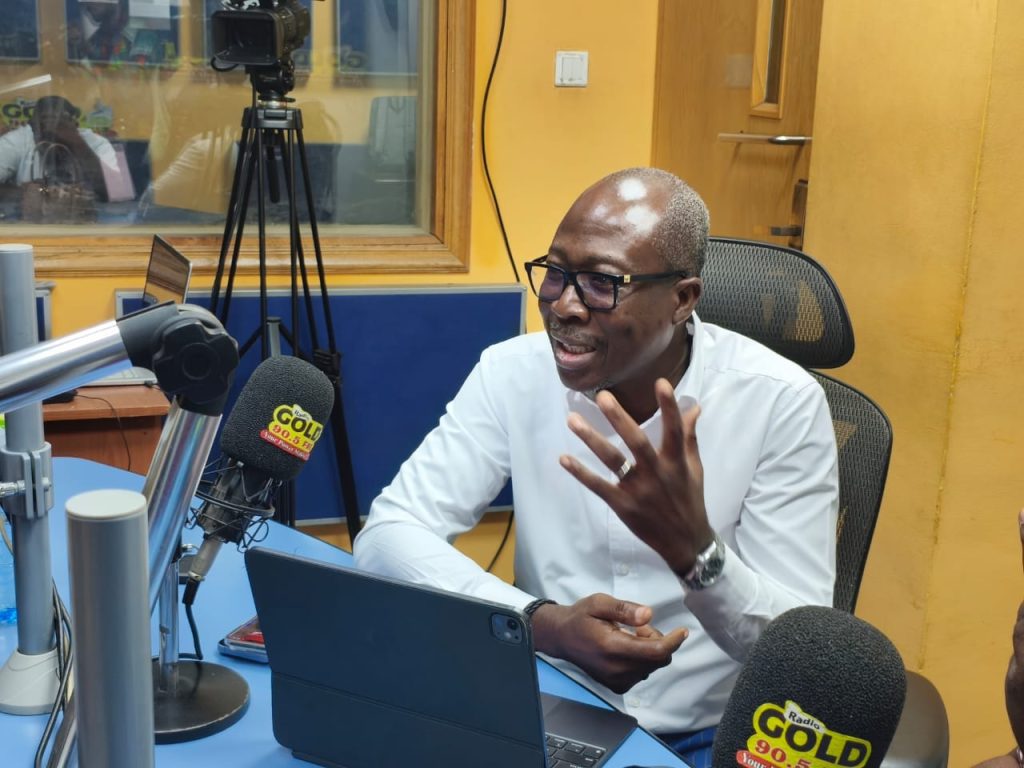
“We are better off than we used to be,” he conceded, before warning that Ghana could face serious difficulties if international gold prices declined sharply.
“Today, as we speak, if gold prices should plummet, we are in deep trouble,” he stated.
According to him, Ghana is benefiting from favourable commodity prices and improved foreign exchange conditions, but these developments should not be mistaken for a fundamentally resilient economy.
He described the situation as a “small window of comfort” that policymakers must use to develop industries and other productive activities capable of sustaining economic growth.
Mr Annan drew parallels with the global commodity price shocks of 2022, arguing that just as temporary increases in international prices can hurt an economy, favourable price movements can also create a misleading impression of lasting stability.
He maintained that Ghana must prepare for the possibility that the external conditions currently supporting the economy could change.
The financial analyst also raised concerns about the country’s foreign exchange position, explaining that although Ghana currently has improved capacity to meet its obligations, the sustainability of that position remains critical.
He warned that businesses and households could become accustomed to the present economic conditions, making any future deterioration particularly difficult to manage.
Mr Annan therefore urged policymakers to use the current period of relative economic comfort to expand domestic production, diversify exports and reduce the country’s exposure to fluctuations in international commodity markets.
He maintained that the true test of economic stability would be Ghana’s ability to sustain growth and meet its obligations even when favourable external conditions disappear.
The warning comes as the government prepares to unveil its US$10 billion New Economy Programme in the 2027 Budget, aimed at shifting Ghana from macroeconomic stabilisation towards production, industrialisation and employment creation between 2027 and 2030.