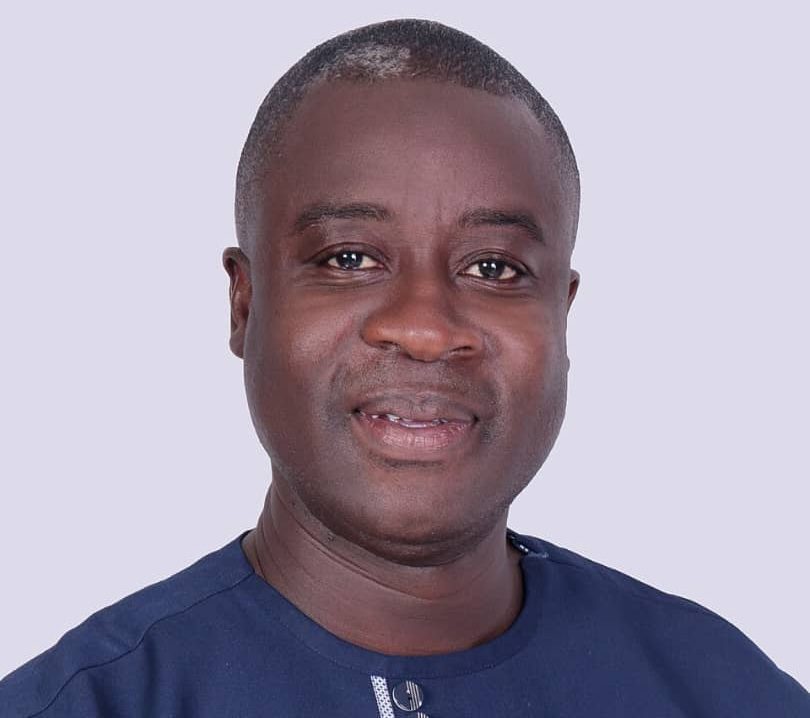
The Member of Parliament for Wa East and Chairperson of Parliament’s Committee on Food, Agriculture and Cocoa Affairs, Dr. Godfred Seidu Jasaw, has hailed the 2027 Budget Statement as a historic turning point capable of fundamentally restructuring Ghana’s import-dependent economy.
Commenting on the fiscal policy presented by the Minister for Finance, Dr. Cassiel Ato Forson, Dr. Jasaw stated that the budget delivers the structural shift toward production and export-led growth that the country has awaited for nearly seven decades. He noted that transitioning away from an economy dominated by imports is essential to easing pressure on foreign exchange reserves, curbing exchange rate volatility, and fostering macroeconomic predictability.
According to Dr. Jasaw, the 2027 budget builds directly on the fiscal discipline established under the 2025 and 2026 budgets. He explained that the government initially inherited an economy burdened by heavy debt and strict International Monetary Fund (IMF) commitments, requiring the Finance Minister to prioritize debt servicing, domestic revenue mobilization, and economic stabilization before rolling out aggressive expansionary spending.
With macroeconomic stability largely restored and agriculture contributing roughly 22.8 percent to Gross Domestic Product (GDP) at a sustained sectoral growth rate of 6.8 percent, Dr. Jasaw described the government’s new economic framework as revolutionary.
Beyond maintaining baseline allocations across traditional ministries, the budget injects an additional GH¢30 billion into a “New Economy” strategy anchored on eight critical pillars designed to industrialize the nation.
Focusing on Pillar Two: commercial agriculture, the chairman underscored the urgency of reversing Ghana’s unsustainable annual food import bill of approximately $2 billion, which includes $800 million spent on rice and $400 million on poultry alone.
He observed that high domestic production costs have historically priced local farmers out of the market, pushing consumers toward cheaper foreign imports.
“To address this, the budget dedicates substantial targeted capital, bringing total agricultural sector investments to roughly GH¢8 billion when combining the traditional GH¢2.9 billion ministerial allocation, New Economy interventions, and development bank flows toward key value chains including rice, poultry, sugarcane, maize, soya, oil palm, and aquaculture.” He stated.
He added that under the rice intervention, government support will expand cultivated acreage while establishing modern rice mills to process local paddy to international standards, bringing retail prices in line with or below imported brands.
Similarly, under the poultry farm-to-table initiative, 40 percent of Ghana Exim Bank’s flows will be channeled into poultry production, processing, cold-chain storage, and distribution logistics to boost domestic self-sufficiency.
Dr. Jasaw emphasized that achieving year-round agricultural productivity requires decisive investment in water management rather than reliance on seasonal rainfall. Pointing to near-completed 1,000-acre irrigation schemes across the country, he highlighted the government’s renewed commitment to the long-stalled Pwalugu Multipurpose Dam and Irrigation Project.
Noting that approximately $11.5 million had previously been expended on the project without tangible results, Dr. Jasaw welcomed the dedicated allocation of GH¢1 billion in the 2027 budget to revive Pwalugu.
Once completed with the first phase targeted within two years and full completion slated for 2030, the project will unlock roughly 25,000 hectares of irrigable land, generate substantial employment, and guarantee reliable raw material supply for agro-processing industries.
Eugenia Ewoenam Osei