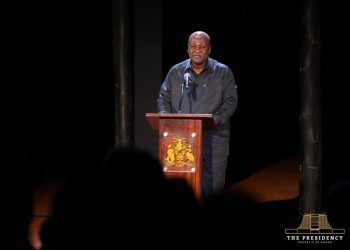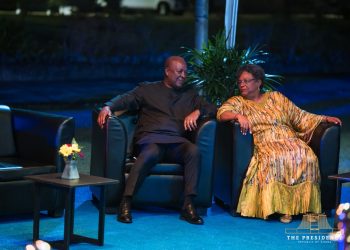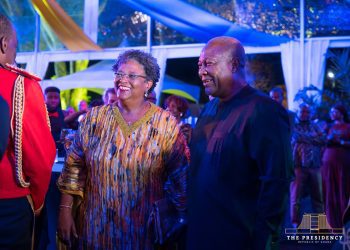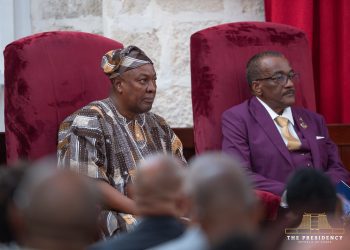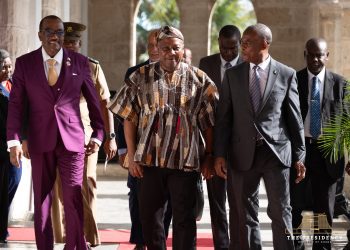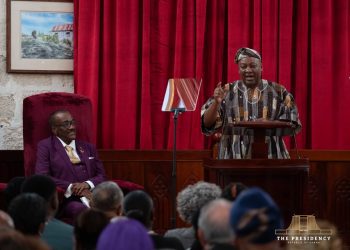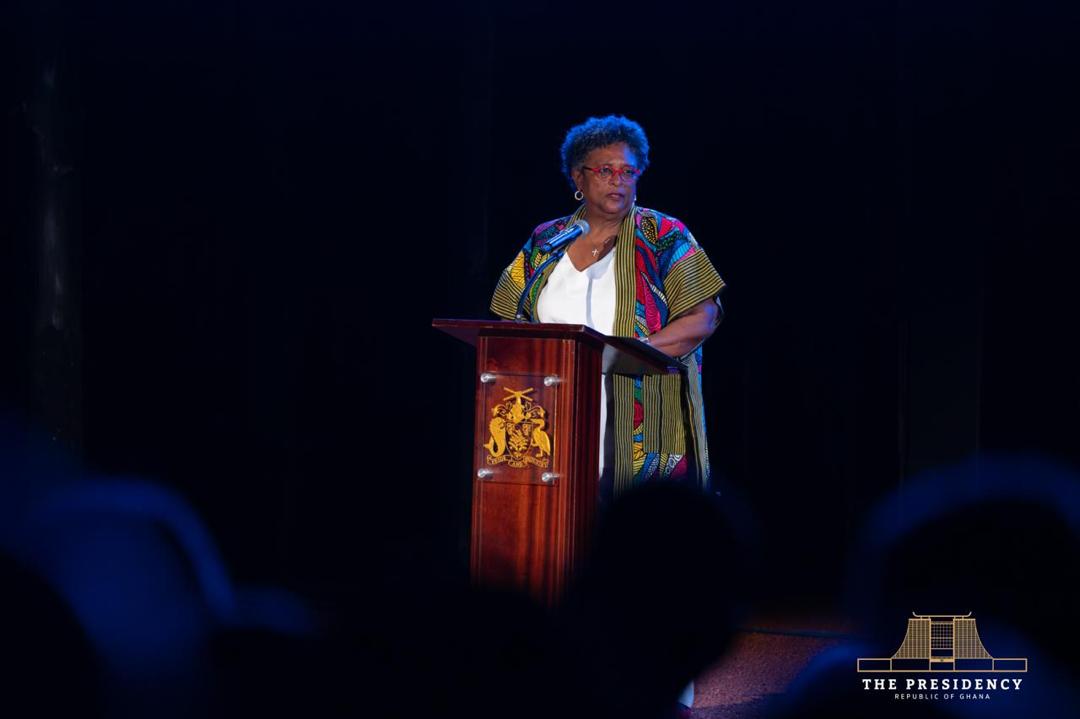
Barbados Prime Minister Mia Amor Mottley has announced plans for structured dialogue on reparatory justice involving African and Caribbean leaders, with Ghana’s President John Dramani Mahama expected to play a leading role in advancing the discussions from next year.
She said the initiative would bring together African and Caribbean countries to engage the United Kingdom on historical injustices arising from slavery and the transatlantic slave trade.
Speaking at the official opening of the Ancestral Memorial to the Enslaved and Barbados Heritage District at Newton in Barbados, Prime Minister Mottley said the discussions would require solidarity, mutual understanding and a shared commitment to addressing the consequences of slavery.
“I thank Prime Minister Burnham for agreeing to this structured dialogue that will start next year with President Mahama,” she announced.
She added that Barbados and other Caribbean countries would join President Mahama in advancing the discussions, stressing the importance of building a united front between Africa and the Caribbean.
Prime Minister Mottley, however, acknowledged that reparatory justice remained a subject requiring further engagement and consensus.
“We do so conscious that dialogue is necessary because we do not yet have agreement,” she said, calling for Africa and the Caribbean to approach the process with a common understanding of their historical experiences.
She maintained that the reparations conversation must address not only the injustices of slavery but also the negative perceptions and discrimination that continue to affect people of African descent.
“We have a great responsibility to not only correct the injustices of the past but to remove the mindsets of Afrophobia that have caused us to be the butt of everything negative as black people in this world,” she stated.
The Barbadian Prime Minister also called for mental emancipation, arguing that the psychological consequences of slavery remain deeply rooted and must be confronted alongside the pursuit of economic and social justice.
“We ourselves must emancipate our minds first, because the mental slavery, we know, went deep in our own peoples,” she said.
Reparatory justice must improve people’s lives
Prime Minister Mottley emphasised that the quest for reparatory justice must translate into tangible improvements in the lives of ordinary people rather than remain limited to historical recognition and commemorative activities.
She said the memorial was intended not only to honour enslaved Africans who lost their lives but also to remind present generations of their responsibility to use freedom meaningfully.
“We come not only to pay tribute to those whom we bury, but to ensure that the reparatory justice which we seek and which we deliver, and the redemption which we reflect, is able to make a meaningful difference in the lives of our people,” she declared.
She identified education, access to land, economic empowerment and the protection of citizens’ rights as important aspects of Barbados’ efforts at self-repair following the abolition of slavery.
According to her, successive Barbadian governments have pursued policies to reverse historical inequalities, including legislation that strengthened land ownership rights and protected people from arbitrary eviction.
She cited the Tenantries Freehold Purchase Act, introduced under the administration of former Prime Minister Tom Adams, which enabled residents living on plantation lands to purchase their plots at highly subsidised rates.
She also recalled the introduction of security of tenure measures in the 1960s as part of efforts to protect Barbadians from the vulnerabilities inherited from the plantation system.
Barbados to establish genealogical research centre and museum
Prime Minister Mottley further announced plans to establish a genealogical research centre at the Newton memorial site to preserve and provide access to historical records relating to enslaved Africans in Barbados.
She disclosed that the country had been digitising its historical records over the past three to four years and intended to use the material to help descendants trace their ancestry and reclaim important aspects of their history.
“We have the second largest transatlantic slave records in the English world, and it is our responsibility to redeem ourselves,” she said.
She explained that the genealogical research centre would be followed by the construction of a museum dedicated to telling the story of Barbados from the perspective of its people and ancestors.
The proposed museum, she said, would ensure that future generations had access to an authentic account of their history.
A journey of redemption
Reflecting on Barbados’ history, Prime Minister Mottley described the country’s journey towards independence, national identity and historical justice as an ongoing process of redemption.
She recalled the 1661 Slave Code, which legally classified Africans brought to Barbados as property, subjecting them to sale, physical punishment, family separation and the denial of their humanity.
She also highlighted the struggles that followed the abolition of slavery, particularly the Master and Servant Act, which she said sought to maintain exploitative labour arrangements on plantations.
The Prime Minister said the struggles of earlier generations, including the 1937 uprising, the emergence of political parties and trade unions, and the expansion of voting rights, laid the foundation for the freedoms Barbadians enjoy today.
She urged citizens to recognise the sacrifices of their ancestors and ensure that their present-day choices reflected the values of dignity, solidarity and collective responsibility.
Addressing President Mahama, she also drew attention to the historical and cultural connections between Ghana and Barbados, noting that Ghana would mark 70 years of independence on March 6, 2027, shortly after Barbados commemorates 400 years of modern settlement.
She called for stronger cooperation between African and Caribbean countries, insisting that their shared history should become a foundation for collective progress.
“Let this monument be an anchor for us to ensure that we commit to this wonderful and beautiful country of ours and to this great Caribbean civilisation,” she said.
Prime Minister Mottley concluded by urging Africans and Caribbean people to embrace unity and recognise their shared responsibility in shaping a more just world.
“There are many cultures, but there is one love,” she declared.
Story: Patrick Asford Boadu