President John Dramani Mahama has called on African governments, development partners, and the private sector to urgently scale up financing for gender equality, describing it as a non-negotiable pillar of Africa’s economic transformation and sustainable development.
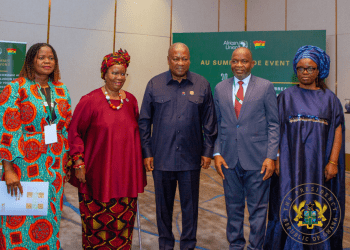
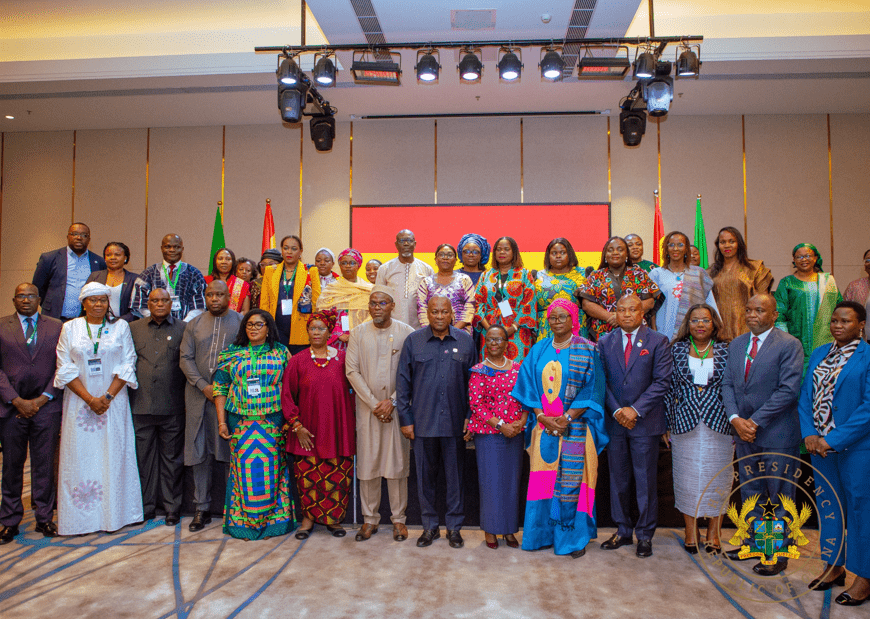
Speaking at a High-Level Breakfast Meeting on Financing and Reaffirming Africa’s Gender Commitments on the margins of the African Union Summit, President Mahama stressed that gender parity must be treated as a shared responsibility rather than a women-only issue.
“The effort to create gender parity is not a female issue alone. It is for both men and women,” he said.
“Gender equality is not peripheral to Africa’s development; it is fundamental to our economic transformation, our social resilience, and our sustainable growth.”
He noted that Africa’s ambitions under Agenda 2063 and the Sustainable Development Goals cannot be realised without fully harnessing the potential of women, whom he described as the continent’s most under-utilised resource.
“Africa cannot grow by leaving its women behind,”
President Mahama said. “Unless gender equality is embedded in our macroeconomic planning, public financing, peace and security, our development will remain incomplete.”
Gender agenda remains underfunded
President Mahama expressed concern that despite decades of commitments, Africa’s gender agenda continues to suffer chronic underfunding, with gender-responsive programmes often bearing the brunt of fiscal austerity.
“When we decide to implement austerity, gender-responsive programmes are the first to suffer,” he observed.
“Women’s rights organisations are expected to deliver transformational outcomes with very minimal resources.”
He highlighted persistent funding gaps in girls’ education beyond the basic level and the severe under-resourcing of initiatives to prevent violence against women and girls, even though evidence consistently shows that investing in women delivers strong economic returns.
“Every woman entrepreneur creates jobs. Every girl educated multiplies prosperity. Every barrier removed unleashes innovation,” he said.
From commitments to implementation
The President urged African leaders to move decisively from declarations to action, pointing to continental legal frameworks such as the Maputo Protocol, which guarantees comprehensive rights for African women and girls.
“While 46 Member States have ratified the Maputo Protocol, I urge the remaining nine to do so without delay,” he said.
He also called for accelerated action following the adoption of the African Union Convention on Ending Violence Against Women and Girls in February 2025, announcing Ghana’s readiness to lead by example.
“Ghana has signed the Convention, and this session of our Parliament will ratify it,” President Mahama stated. “I urge all Member States to sign and ratify this Convention before the end of 2026.”
He warned that violence against women and girls carries enormous economic costs.
“It is not only a moral outrage; it is an economic catastrophe costing Africa billions annually in healthcare, lost productivity, and justice expenditures,” he said.
Ghana’s commitments
As the African Union Gender Champion for Gender Development and Financial Inclusion, President Mahama outlined Ghana’s progress in advancing gender equality, including the election of the country’s first female Vice President and increased representation of women across government and the judiciary.
“I am confident that sooner rather than later, a woman will occupy the highest office of President in Ghana,” he said.
He announced that Ghana’s 2026 Budget has allocated GHS 401 million to capitalise the Women’s Development Bank, aimed at expanding access to affordable credit, financial literacy, and enterprise support for women, particularly those in informal and vulnerable employment.
President Mahama also cited strengthened domestic violence units, specialised courts, survivor support services, and social protection initiatives such as LEAP, the School Feeding Programme, free sanitary pads for schoolgirls, and free tertiary education for persons with disabilities.
Parliament has additionally passed the Affirmative Action Gender Equity Act, setting binding targets for women’s representation—30 per cent by 2026, 35 per cent by 2028, and 50 per cent by 2030.
Call for collective action
President Mahama concluded by urging African leaders and partners to recommit to concrete action, including gender-inclusive budgeting, stronger accountability mechanisms, and enhanced partnerships. “Gender equality is non-negotiable,” he said.
“The true test of this meeting will not be the speeches we have given, but tomorrow’s budgets, the laws we pass, and the protection we provide for women and girls.”
“When we meet again,” he added, “let it be to announce results — not to explain delays.”
Story: Patrick Asford Boadu