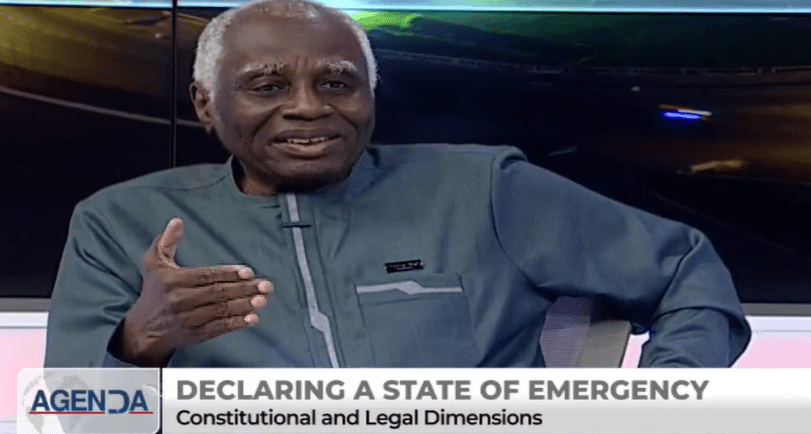
Renowned legal luminary and academic, Tsatsu Tsikata, has launched a scathing critique of the political establishment, accusing powerful vested interests of actively protecting illegal mining operations and obstructing the national effort to curb environmental degradation.
The former Chief Executive of the Ghana National Petroleum Corporation (GNPC) and legal counsel to the National Democratic Congress (NDC) described the current state of illegal mining in Ghana as “untenable,” calling out what he believes is political complicity that enables the crisis to fester.
“Clearly, there are vested interests that are protecting the whole situation that we find ourselves in. Some of these people have felt protected politically,” Tsikata asserted.
According to Tsikata, despite public outcry over galamsey, there has been a surge in mining licenses issued, many of them controversially allowing mining in protected forest reserves.
“In the last eight years, look at the number of licenses that were granted for mining in these forest areas. It doesn’t make sense,” he lamented, adding that: “Why was it possible, even just before the handover to a new government, for so many new licenses to be granted?”
His remarks allude to the tail end of the Akufo-Addo administration, when a spike in licensing activities drew suspicion, even as the government publicly committed to fighting illegal mining.
Tsikata emphasized the growing scale of destruction caused by illegal mining, noting that while the issue is longstanding, the last few years have seen unprecedented damage, especially to water bodies and forest ecosystems.
“We are talking about continued galamsey activities even in the face of us all agreeing that this is doing a lot of damage. The scale of the problem has been extraordinary,” he noted, citing investigations by journalists as evidence of systemic failure.
He criticized the hypocrisy of political actors who condemn galamsey in public while enabling it behind the scenes.
Galamsey has remained one of Ghana’s most urgent environmental crises. Successive governments have pledged to crack down on the practice due to its devastating impact on rivers, farmlands, and forests. In 2017, President Akufo-Addo launched “Operation Vanguard,” a military-led effort to stop illegal mining, declaring he was ready to put his presidency on the line.
Yet, the results have been mixed. Numerous reports, including undercover investigations like Anas Aremeyaw Anas’s “Galamsey Fraud” exposé and Professor Kwabena Frimpong-Boateng’s galamsey report, have implicated government officials and party operatives in aiding illegal miners. These reports have often gone unacted upon.
Tsikata’s comments reignite the debate about the real drivers behind Ghana’s galamsey challenge and highlight the need for transparency, enforcement, and political courage.