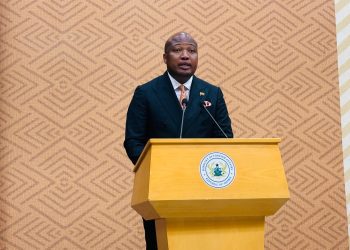
President John Dramani Mahama has commissioned the newly completed Damongo Camp Prison, describing the facility as a symbol of hope, dignity, and national responsibility in the rehabilitation of inmates.
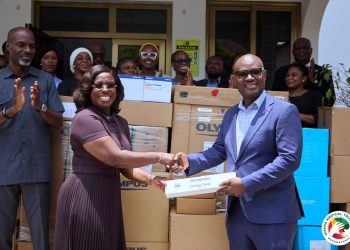
Speaking at the ceremony attended by the clergy, chiefs, security services, local residents, and officials of the Church of Pentecost, President Mahama also announced the donation of a brand new 66-seater bus to support the operations of the facility.
“Whatever you do for the least of my brothers, that you do unto me,” President Mahama said, citing the biblical teaching of Jesus Christ.
“When the Director-General asked for a bus for this facility, she sought and she has found. We will provide the Damongo Camp Prison with a brand new 66-seater bus.”
He noted that the bus will serve not only the prison but the wider Damongo community.
A Partnership Between State and Church
President Mahama praised the Church of Pentecost for its continuous collaboration with the state in modernizing prison infrastructure and restoring dignity to Ghana’s correctional system.
“This project demonstrates what can be achieved when the state, the church, and the community come together in service to humanity,” he said.
“Nation-building is not the sole responsibility of government, but a collective moral duty rooted in our belief in the inherent dignity of every human being.”
He acknowledged Apostle Eric Nyamekye and the church’s leadership for spearheading similar projects at:
Ejura Camp Prison (Ashanti Region)
Nsawam Camp Prison (Eastern Region)
And the ongoing Obuasi Camp Prison project
A New Vision for Corrections
President Mahama emphasized that the Damongo Camp Prison is designed as a rehabilitation center, not merely a place of confinement. The facility includes:
Living quarters
Classrooms
Skills training workshops
Healthcare units
Digital learning facilities
“This is a sanctuary for rehabilitation a place where lives are rebuilt and futures are restored,” he said.
“Justice must walk hand in hand with mercy. Punishment must aim to reform and reintegrate, not to reject.”
Prison Reform Agenda Outlined
The President reaffirmed his administration’s ongoing prison reform program, which includes:
Expanding alternative sentencing for minor offenses
Introducing a parole system to support reintegration
Completing the 800-capacity Nsawam remand facility left abandoned
Modernizing correctional centers for men, women, and juveniles
Supporting prison officers with improved conditions of service
He disclosed that the daily feeding allowance for inmates has been increased from GHS 1.80 to GHS 5.00, ensuring better nutrition and humane standards.
“This is not charity; it is justice,” President Mahama stated.
“Dignity should never depend on one’s circumstances.”
The Ghana Prison Service will also play a major role in the 24-hour economy, operating continuous production lines in furniture making, uniform sewing, agro-processing and large-scale agriculture powered by government-supported mechanization.
A Call to National Compassion
President Mahama urged more religious bodies, corporate organizations and citizens to follow the example of the Church of Pentecost.
“This project is a call to our national conscience,” he said.
“Let us invest in people, even when they go astray.
Let us build a Ghana where justice is tempered with mercy and discipline with compassion.”
Story: Patrick Asford Boadu