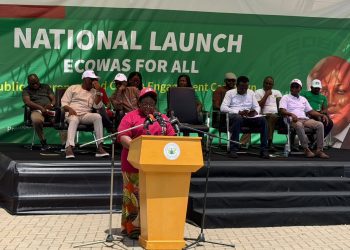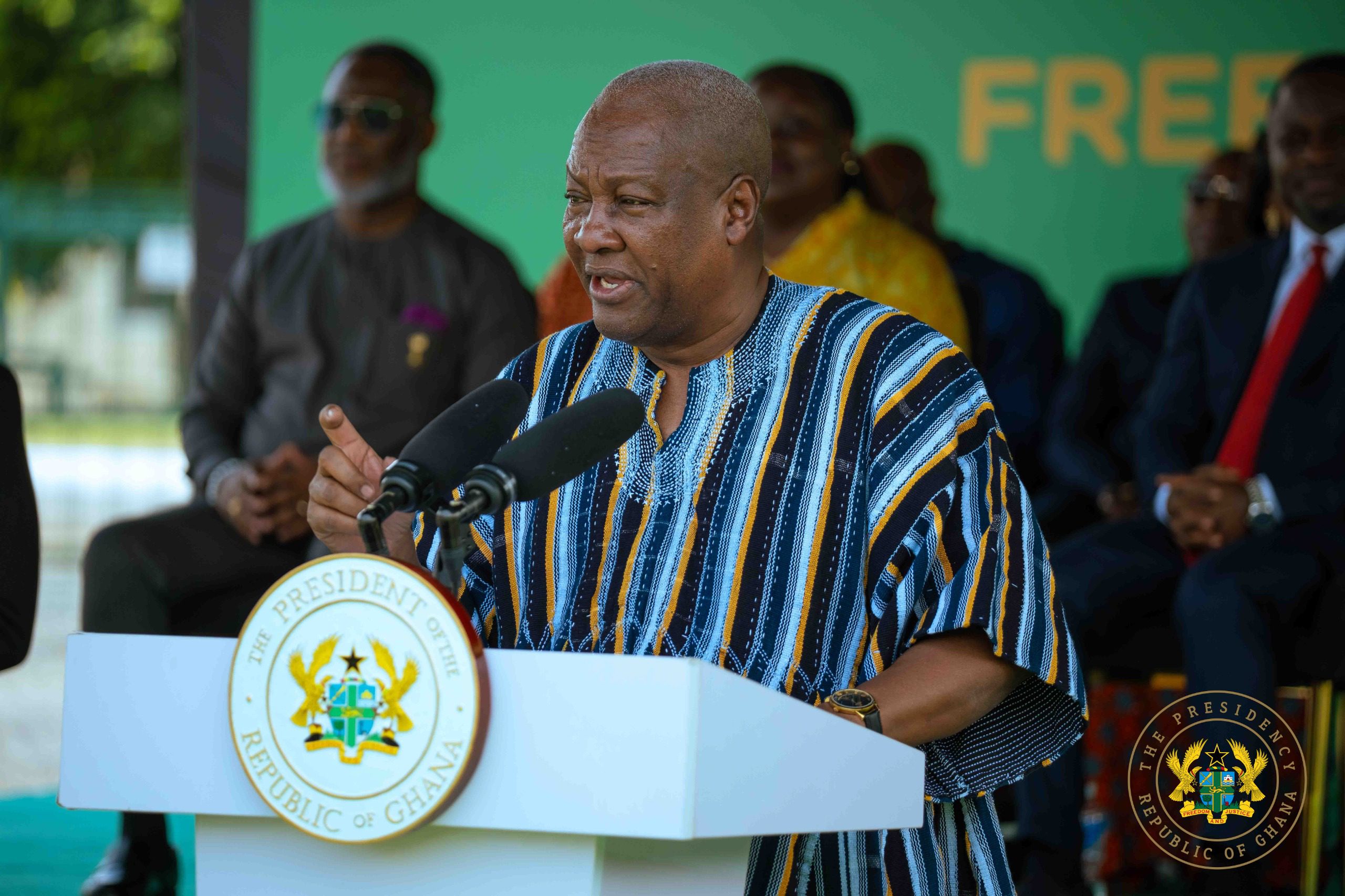
President John Dramani Mahama has officially launched Ghana’s Free Primary Health Care Policy at the Shai-Osudoku District Hospital, marking a major step toward expanding access to healthcare across the country.
Speaking at the ceremony in Dodowa, President Mahama indicated that although the Minister for Health had already delivered a comprehensive keynote address, he would highlight a few critical aspects of the policy.
“I will not read my prepared speech but emphasize a few key points,” he said.
The President expressed personal satisfaction with the choice of venue, recalling that he commissioned the hospital exactly ten years ago, on April 4, during his previous tenure.
“I am particularly happy we are launching this at the Shai-Osudoku District Hospital, which I commissioned 10 years ago,” he noted.
He praised the facility for its outstanding performance, describing it as one of the best-maintained hospitals in the country, with international recognition for achieving zero maternal and infant mortality over several consecutive years.
According to him, the hospital’s success has also led to increased pressure on its services. “Because of this reputation, the hospital has become a victim of its own success, attracting patients from beyond its catchment area, including from the Eastern Region,” he said.
President Mahama commended the Medical Director and staff for their dedication, urging them to sustain their high standards while serving as a model for other health facilities.
The newly launched Free Primary Health Care Policy, he explained, is central to Ghana’s efforts to achieve Universal Health Coverage by ensuring that every citizen has access to quality and affordable healthcare.
While acknowledging the gains made under the National Health Insurance Scheme (NHIS), he pointed out that significant gaps still exist, particularly in rural and underserved communities.
“The new policy complements NHIS. It does not replace it,” he emphasized, adding that the initiative would extend healthcare services to the grassroots level with a stronger focus on preventive care.
A major pillar of the policy is routine health screening, with the government calling on traditional and religious leaders to mobilize communities. “We want every Ghanaian to be screened at least once a year,” the President said.
He explained that screenings would cover conditions such as hypertension and high blood sugar, allowing for early detection and lifestyle adjustments, while more serious cases would be referred to higher-level facilities.
Under the policy, services at the primary level including CHPS compounds, health centres, polyclinics, and health kiosks will be provided free of charge without requiring an NHIS card.
Patients will only need a Ghana Card for identification, after which referrals to district and municipal hospitals will be handled under NHIS for further treatment and medication.
For more complex conditions such as kidney failure requiring dialysis, President Mahama revealed that patients would be supported under the Ghana Medical Trust Fund, popularly known as Mahama Cares, to access specialized treatment at no cost.
He stressed that the policy is also designed to tackle the rising burden of non-communicable diseases, including hypertension, diabetes, cancer, stroke, cardiovascular diseases, and renal failure.
“These conditions are largely driven by lifestyle changes,” he noted, highlighting the need for healthier habits.
The President outlined a strong public education component aimed at promoting better diets, increased physical activity, and improved eating patterns.
Implementation of the policy will involve trained health professionals supported by volunteers, including national service personnel and unemployed but qualified nurses and paramedics, who will be prioritized for future postings.
These teams will carry out community outreach programmes, sometimes in remote settings, using fully equipped kits to conduct screenings and basic treatments.
The initiative will also deploy health kiosks, motorcycles for outreach, and mobile clinics, effectively reviving the “On Your Doorstep” programme to bring healthcare closer to communities.
President Mahama announced that the rollout would begin in 150 underserved districts, with plans to scale up nationwide by 2028.
Story: Patrick Asford Boadu