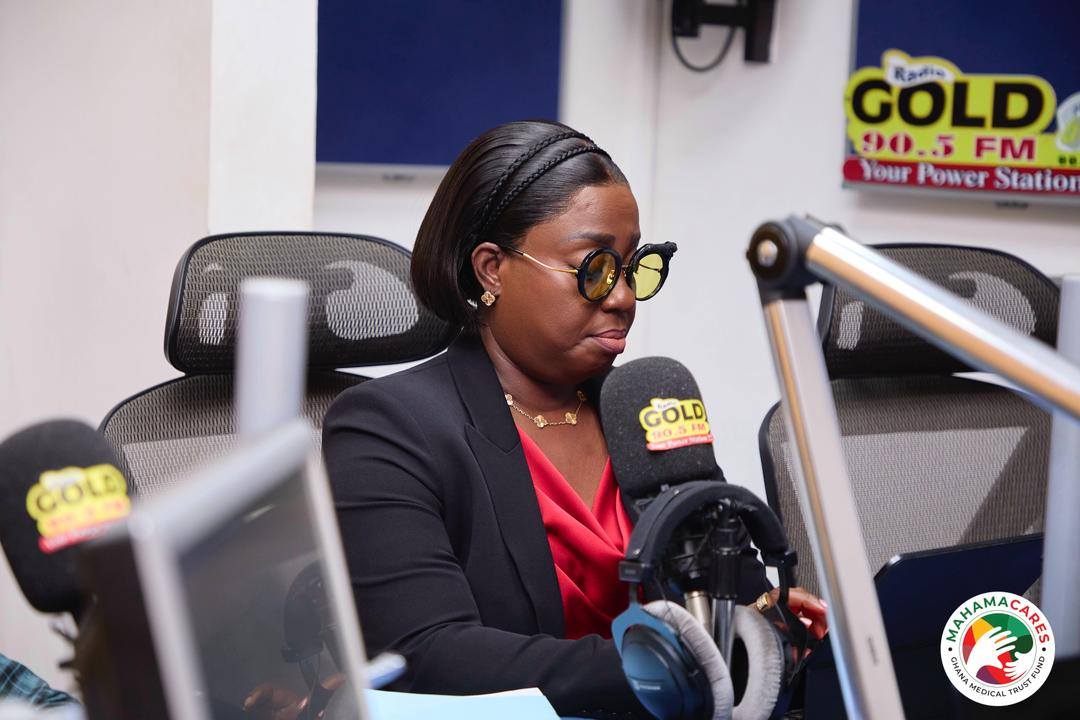
The Administrator of the Ghana Medical Trust Fund, Obuobia Darko Opoku, has pushed back strongly against misconceptions surrounding the newly established fund, describing it as a “game changer” that goes far beyond simply settling medical bills.
Speaking in an interview with Sena Numbo on the Gold Morning Conversation on Radio Gold, Obuobia addressed growing public expectations that the Fund should immediately begin paying patients’ hospital expenses following its announcement. “It doesn’t work like that,” she said.
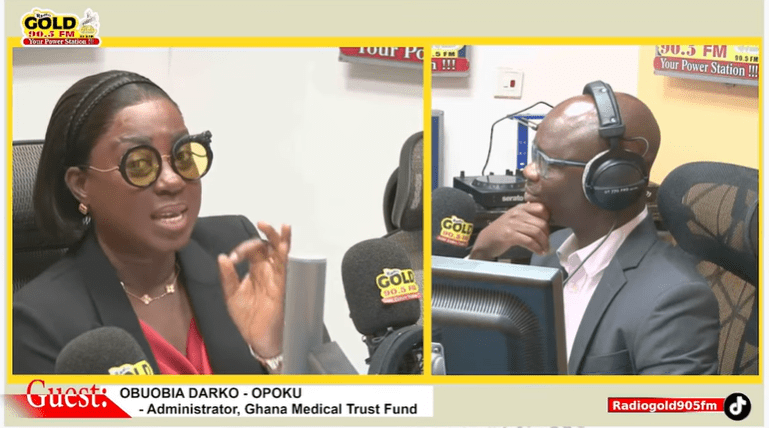
According to the Administrator, the Ghana Medical Trust Fund is not designed as a walk-in assistance office where patients submit personal requests for financial support.
Patients cannot apply directly. Instead, the process is medical-driven. “It is the doctor who is treating you that makes the intervention on your behalf,” she explained, stressing that medical directors in tertiary facilities must initiate requests once a patient qualifies under the Fund’s criteria.
To enable this system, she revealed that a coordinated digital platform must connect participating tertiary facilities. Without that integrated software system, processing interventions transparently and efficiently would be impossible.
She emphasized that paying medical bills is only one component of the Fund’s core responsibilities. “Yes, paying medical bills is central,” she noted. “But that is not all.”
The Fund is also mandated to:
Train specialist doctors, nurses, pharmacists and healthcare professionals who manage non-communicable diseases (NCDs) such as cancer, stroke and cardiovascular conditions.
Invest in research into NCDs, helping to identify patterns, causes and regional trends that can inform national health planning.
Strengthen infrastructure and provide critical medical equipment to improve diagnosis and treatment capacity across tertiary facilities.
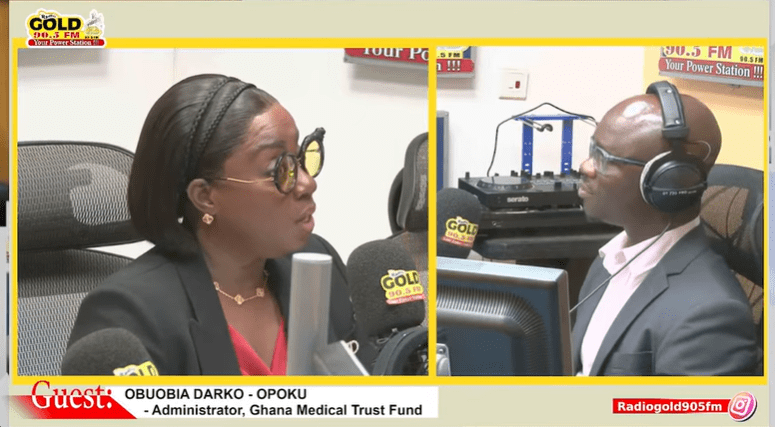
She explained that research funded by the Trust can guide prevention efforts, even if prevention itself falls under other national health programmes.
“If you wake up and there is no equipment to diagnose cancer, how are you going to get treatment?” she asked.
Obuobia argued that critics who question investments in infrastructure and equipment misunderstand a fundamental reality. Without proper diagnosis, there is nothing to pay for. “You must be sure that they are getting the diagnosis right,” she stressed.
Many tertiary hospitals lack the equipment needed to detect complex diseases early. In some facilities, even where machines exist, infrastructure to mount and operate them properly is inadequate.
Currently, she noted, the Korle Bu Teaching Hospital bears a disproportionate share of the diagnostic burden, handling close to 2,000 patients daily. By retooling other facilities such as Ridge Hospital and expanding partnerships with quasi-public and private institutions, the Trust aims to decentralize that load. “If you retool another facility, you take pressure off Korle Bu,” she said.
The Ghana Medical Trust Fund is also expanding engagement beyond the major teaching hospitals. Meetings are ongoing with quasi-public and private facilities to build a broader referral and treatment network.
There are already cases where tertiary hospitals have referred patients to other specialist facilities under coordinated arrangements.
This, Obuobia emphasized, reflects a systemic approach, not a piecemeal intervention.
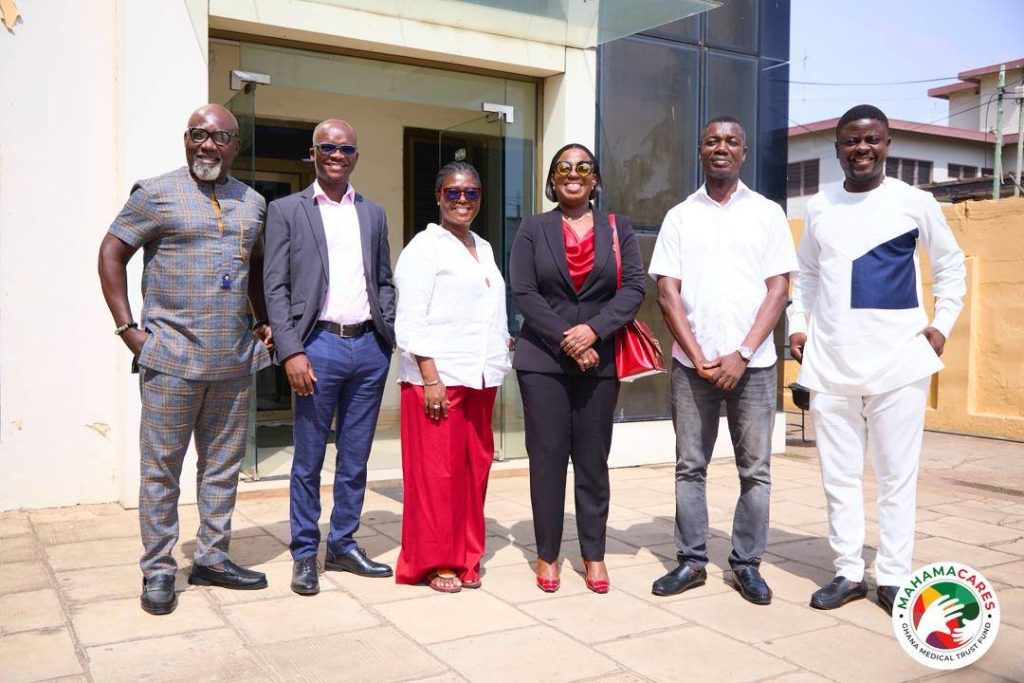
Established to address the growing burden of non-communicable diseases in Ghana, the Ghana Medical Trust Fund was approved by Parliament with funding allocations aimed at supporting treatment for life-threatening illnesses.
However, Obuobia insists that without strengthening the ecosystem, training personnel, investing in equipment, improving infrastructure and funding research, simply disbursing money for bills would be short-sighted.
“If these equipment and infrastructure do not come in, we will just keep paying medical bills and pay for what?” she asked.
For the Administrator, the Fund represents not a short-term relief scheme but a long-term structural intervention in Ghana’s healthcare system.
“The Ghana Medical Trust Fund is not about paying bills alone. It is about building capacity so that diagnosis, treatment and care can actually happen,” she emphasized