The Nungua Traditional Area has issued a clarification regarding the history of the Ga people, the origins of the Homowo festival, and the ancient timekeeping system that governs the spiritual calendar of the Ga-Dangme state.
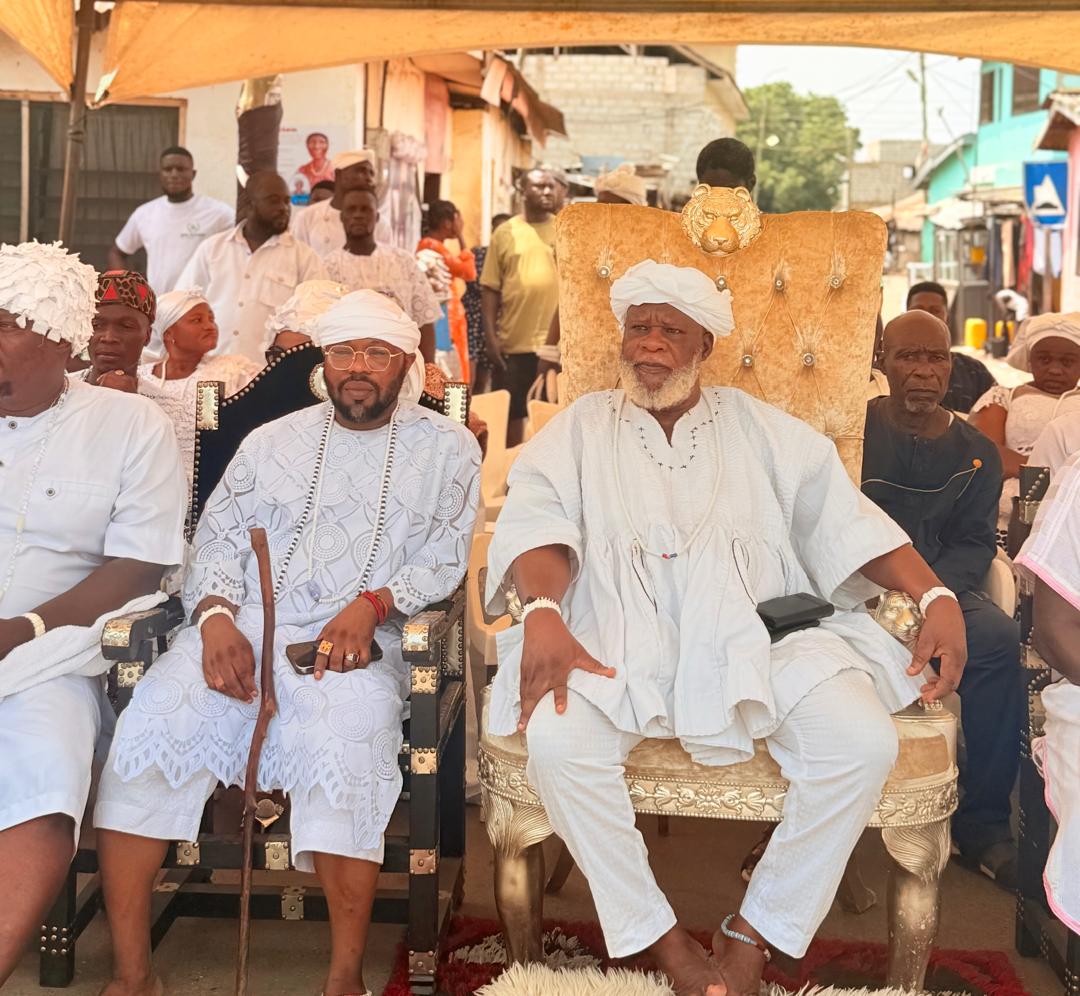
In a statement issued by the Nungua Mankralo Shuonotalo and Oyibi Gonten Mantse, Tetse Nii Bortey Kofi Frankwa II, who serves as the Chairman of the Nungua Festival Committee, the traditional authority spoke on behalf of the Gborbu Wulomo Shitse to reaffirm the sacred role of Nungua in Ga-Dangme tradition.
The statement delved into the historical migration of the Ga-Dangme people, led by the gallant Nuumo Borketey Laweh.
According to the narrative, the group sojourned through several lands, including the Benin Kingdom, before arriving in their present homeland. It was Konor Borketey Laweh, leading the last group of departures, who became the first settler to arrive at the location now known as Ghana.
During this migration, the Asere people of Ga Mashie traveled alongside the people of Nungua.
Upon settlement, some of the Asere group chose to remain with Borketey Laweh, integrating into what is now known as Odaiteitse in Nungua.
This historical integration explains the presence of communities such as Asere Kotope and Dantu within the Gborbu Koo today.
Crucially, it was Nuumo Dantu, the Wulomo from Mashie, who was permitted to meet directly with the Gborbu Wulomo Shitse, establishing a sacred bond between Ga Mashie and Nungua that has lasted over 820 years.
As the first settler, Borketey Laweh apportioned land to the other Ga towns and entrusted them with deities for their spiritual protection.
It is for this foundational reason, the statement explains, that Nungua traditionally begins the Homowo festival and all related rites for the entire Ga-Dangme State.
Central to this authority is the ancient practice of TƐ KƆMƆ (picking of stones). This system, described as the original Ga method of timekeeping, is used to determine the sacred calendar for Homowo and Kpelejoo.
Before modern calendars, days and weeks were counted using stones, guided by the movements of the moon and stars.
The statement clarifies that this sacred duty is entrusted to the Dantu Wulomo of Ga Mashie and the Gborbu Wulomo Shitse, whose divine responsibility is to keep time for all spiritual and traditional activities.
The cycle begins after Nikpamɔ (the final harvest) and runs through a thirteen-moon lunar year. Stones are accumulated to represent days and weeks until the divinely appointed period for Homowo is revealed.
To ensure absolute accuracy, an ancient convention exists between the Dantu Wulomo of Ga Mashie and the Gborbu Wulomo Shitse. Their reconciliation of the stone count confirms the dates for Homowo and Kpelejoo throughout the land.
The statement emphasizes that the final spiritual authority in this process rests solely with the Gborbu Wulomo Shitse.
“Without his performance and confirmation of TƐ KƆMƆ, no Homowo or Kpelejoo festival can traditionally begin anywhere in Ga-Dangme,” the statement read. “Once he completes the rite, all towns take their timing from it and every ritual follows in sacred sequence.”
The communication concludes by reaffirming the Gborbu Wulomo Shitse as the Overlord and final authority of Ga-Dangme tradition, the gatekeeper of sacred time, and the bridge between the cosmos and the people.
The statement serves to reassert the shared history and enduring bond between Nungua and Ga Mashie, which continues to guide the spiritual life of the Ga-Dangme people.
Story: Patrick Asford Boadu