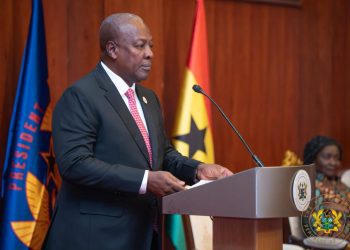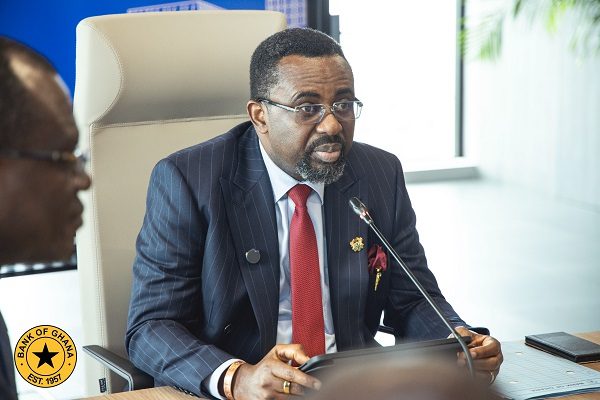
Governor of the Bank of Ghana, Dr. Johnson Pandit Asiama, has opened the 129th Monetary Policy Committee meeting with a cautiously optimistic assessment of Ghana’s economy, saying recent data point to stronger-than-expected gains but warning that rising global uncertainty could yet threaten the disinflation path.
The Bank confirmed ahead of the meeting that the 129th MPC sessions would run from March 16 to March 18, 2026, to review developments in the economy.
Addressing members at the opening session, Dr. Asiama said the committee’s cautious posture at its previous meeting in January had been justified by subsequent data. He noted that economic conditions had improved more strongly than anticipated, but insisted the meeting was not simply about endorsing positive developments.
“The improvement in the economy is in several important respects stronger than anticipated,” he said. At the same time, he cautioned that policy makers must judge the outlook under conditions that had become “more encouraging, and at the same time, more uncertain.”
The Governor said headline inflation fell to 3.3 per cent in February 2026, marking a 14th consecutive monthly decline and placing inflation below the lower end of the Bank’s medium-term target band of 8.0 ± 2 per cent. The Bank’s own public dashboard currently lists inflation at 3.3 per cent. “We are now not merely within our medium-term target band. We are below its lower bound,” Dr. Asiama said.
He also reported further strengthening in Ghana’s external buffers, with gross international reserves rising to about US$14.5 billion, equivalent to 5.8 months of import cover, up from around US$13.8 billion at the last meeting.
Fiscal outcomes, he added, had improved markedly, with a primary surplus of 2.6 per cent of GDP at end-2025, compared with a deficit of 3.9 per cent a year earlier. Real-sector momentum also appeared to be strengthening, with the Composite Index of Economic Activity growing by 8.4 per cent year-on-year at the start of 2026.
Despite the improving domestic picture, the Governor said the escalation of conflict in the Middle East had altered the external outlook since the committee’s last sitting. He warned that disruptions to major energy and shipping corridors were increasing volatility in global oil markets and introducing fresh uncertainty into the path of inflation worldwide.
For Ghana, he said, sustained increases in oil prices could raise imported inflation and tighten global financial conditions, even though higher geopolitical risk could also support gold prices and improve the country’s trade balance.
He told the committee that the central question before it was no longer whether conditions had improved, but how policy should respond now that some of the conditions supporting that success were coming under pressure. “Today, there is a live external threat to the disinflation trajectory,” he said.
The Governor’s remarks set the tone for a three-day meeting that is expected to weigh strong domestic gains against emerging external risks before announcing a fresh monetary policy decision on Wednesday.