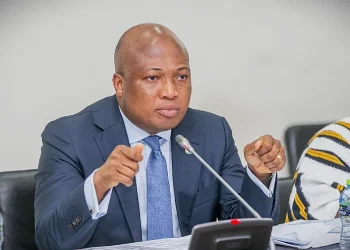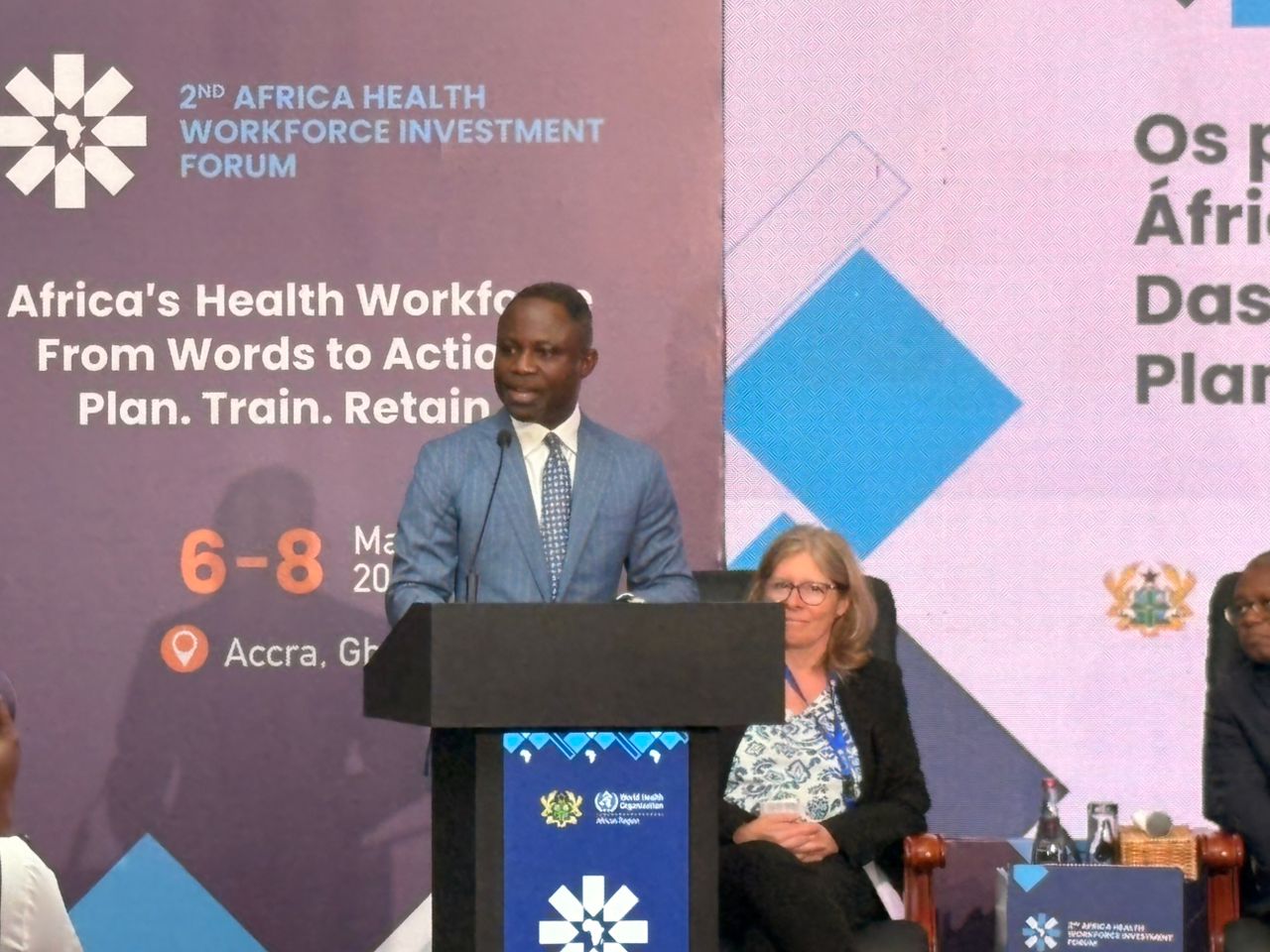
In a forceful call for continental reform, Ghana’s Minister for Health, Kwabena Mintah Akandoh, has challenged African nations to move beyond diplomatic declarations and commit to the hard financial investments required to solve the region’s health workforce crisis. Speaking at the opening of the Second African Health Workforce Investment Forum in Accra, Akandoh emphasized that the time for documenting gaps has passed, and the era of measurable implementation must begin.
Addressing a high-level audience including Regional Directors and international partners, Akandoh noted that while the inaugural forum in Namibia established the Investment Charter, the Accra gathering must be remembered as a “movement of implementation.” He argued that the stability of the continent rests upon the shoulders of its health workers, describing them as the foundation for health security, economic development, and gender equity.
”For far too long, Africa has described the health workforce crisis with clarity,” Akandoh stated. “We have documented the gaps, held the consultations, and adopted the declarations. The task now is to act with the same clarity with which we have spoken.”
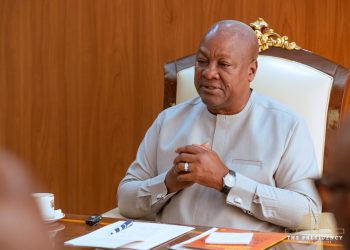
The Minister linked this continental mission to Ghana’s domestic “Accra Reset Agenda,” a vision championed by President John Dramani Mahama to rethink public institutions and strengthen domestic capacity. Akandoh introduced the concept of “Health Sovereignty” as a guiding principle for the nation, defining it not as isolationism, but as the ability for African nations to set their own priorities, use local evidence, and mobilize sustainable financing to train and retain their own professionals.
Highlighting the practical application of this workforce agenda, Akandoh pointed to the rollout of Free Primary Health Care and the “Mahama Cares” medical transplant program. He explained that these ambitious policies, which tackle everything from community disease prevention to complex NCDs and dialysis, are entirely dependent on a “capable, motivated, and well-distributed” workforce.
However, the Minister did not shy away from the challenges revealed by Ghana’s 2023 health labor market analysis. Despite significant progress in increasing the density of doctors and nurses across the WHO-Africa region, Akandoh highlighted a persistent paradox: trained professionals remain unemployed in some areas while rural communities remain desperately underserved.
To address this, Akandoh announced that the Ministry of Health is advancing a National Health Workforce Education Master Plan and strategic exchange programs. These initiatives are designed to create ethical, organized opportunities for young Ghanaian professionals to gain international experience without depleting the domestic system.
Concluding his address, Akandoh stressed that political leadership alone is insufficient to bridge the gap. He called for a multi-sectoral alliance where ministries of finance, education, and labor align to turn budget commitments into actual jobs and retention packages.
He urged the delegates to ensure the forum sends a clear message that Africa’s health agenda is no longer a mere aspiration, but a “financed, implemented, and accountable continental alliance.”
Story By: Eugenia Ewoenam Osei