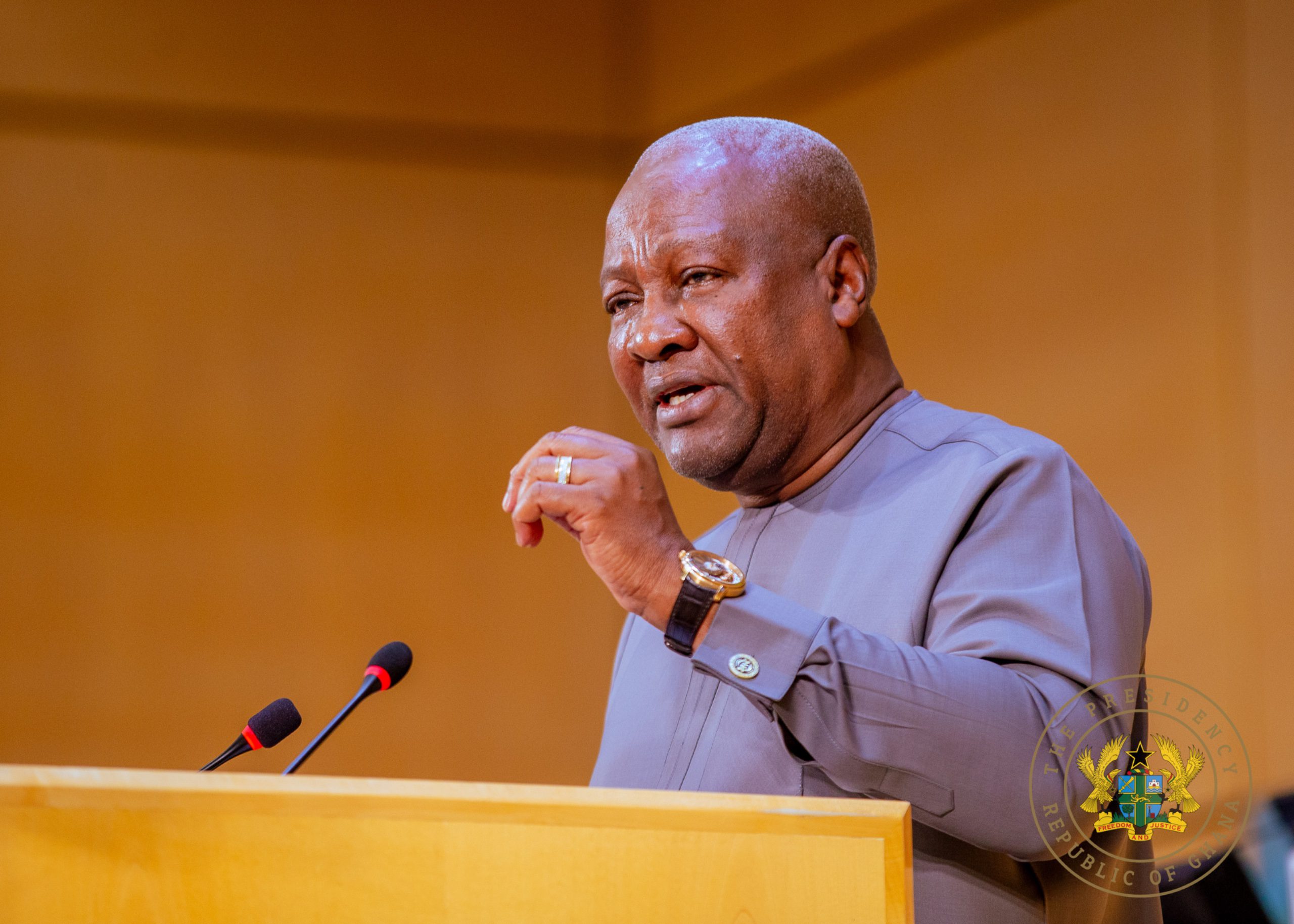
President John Dramani Mahama has called for urgent reforms to the global healthcare system and greater health sovereignty for developing countries, warning that declining international donor support could worsen poverty and lead to millions of preventable deaths across Africa and the Global South.
Speaking at the 79th World Health Assembly in Geneva organised by the World Health Organization, President John Dramani Mahama said the world was facing a critical moment in global health governance as humanitarian assistance and overseas development funding continue to decline.
“We are meeting at a time when the global health system is facing uncertainty. Humanitarian assistance is declining, overseas development support is being reduced, and major international partners are withdrawing funding from health programmes,” he stated.
The President noted that the WHO itself had not been spared from the funding crisis, citing the withdrawal of support from the United States which he said had resulted in programme cuts and staff retrenchments.
According to him, Ghana lost approximately 78 million dollars following the closure of USAID-supported programmes, affecting malaria interventions, maternal and child healthcare, nutrition programmes, HIV/AIDS treatment, testing, and antiretroviral medicine delivery.
“In Ghana, we lost about 78 million dollars following the closure of USAID programmes. This affected malaria interventions, maternal and child health, nutrition programmes, HIV/AIDS treatment, testing, and the delivery of antiretroviral medicines,” he said.
President Mahama said similar developments were unfolding across Africa, particularly in South Africa where the withdrawal of PEPFAR support disrupted HIV treatment services and affected the operations of several clinics.
“If these trends continue, millions of preventable deaths could occur, and poverty levels could worsen across many developing countries,” he warned.
The President explained that the challenges facing the continent informed the convening of the African Health Sovereignty Conference, known as the “Accra Reset,” in August 2025.
He said the initiative was designed to move African countries away from dependence on foreign donor support and towards sustainable healthcare systems driven by local ownership and financing.
“The old model of dependency is no longer sustainable. Developing countries must become active participants in shaping their own healthcare systems,” President Mahama stressed.
He added that African governments must take responsibility for financing and strengthening healthcare delivery, describing health expenditure as an investment directly linked to economic growth and national development.
Highlighting Ghana’s domestic healthcare reforms, President Mahama said the government had introduced practical policies focused on improving access and affordability.
He revealed that by the end of 2025, the National Health Insurance Scheme had achieved approximately 66 percent coverage nationwide, although about 34 percent of the population still remained outside the scheme.
To improve preventive healthcare and reduce financial barriers, especially in rural communities, he said government had introduced the Free Primary Health Care Programme.
“Because the NHIS has focused largely on curative care, we introduced the Free Primary Health Care Programme to improve preventive healthcare and remove financial barriers, particularly for people in rural communities,” he noted.
President Mahama also disclosed that government had removed the cap on the National Health Insurance Fund, making available an additional three billion Ghana cedis for healthcare investment.
He said digital systems and artificial intelligence were now being deployed to detect fraudulent claims and speed up payments to healthcare providers.
“Prompt payment to hospitals and healthcare providers is necessary if we are to maintain trust and dignity within the healthcare system,” he said.
The President further announced the establishment of the Ghana Medical Trust Fund, popularly known as MahamaCares, to support people suffering from non-communicable diseases including cancers, cardiovascular diseases, liver disease, and renal failure.
“Specialised healthcare should not become accessible only to the wealthy. Every citizen must have the opportunity to receive treatment when they need it,” he stated.
President Mahama also announced Ghana’s intention to transition away from GAVI support by 2030, with the long-term ambition of eventually becoming a donor country itself.
Touching on reforms within the international health system, the President argued that reform efforts must go beyond symbolism and address structural weaknesses within existing global institutions.
“We must be prepared to examine whether existing institutions are still serving the purpose for which they were created,” he stated.
He referenced discussions held in Accra with Tedros Adhanom Ghebreyesus and Olusegun Obasanjo on advancing the vision of health sovereignty.
According to President Mahama, health sovereignty means countries having the ability to finance their healthcare systems, regulate quality standards, produce medicines locally, and manage their own health data.
He observed that although Africa carries nearly 25 percent of the global disease burden, the continent manufactures less than one percent of the world’s vaccines.
President Mahama explained that the Accra Reset Initiative would operate through three key structures the High-Level Panel on Reform, the Reform Interlock and Observatory, and the Health Investment National Gateways Enablers (HINGE).
“These structures are intended to coordinate reforms, improve coherence in global health governance, and convert political commitments into investment opportunities,” he explained.
The President further revealed that Ghana’s 2026 budget had allocated 34 billion Ghana cedis to healthcare and expanded healthcare coverage to approximately 20 million people.
He urged world leaders to focus on practical healthcare outcomes rather than endless declarations and conferences.
“The success of global health reform should not be measured by the number of conferences we hold, but by the impact we make in the lives of our people,” he said.
Concluding his address, President Mahama called for bold action, institutional reform, and stronger investment in healthcare infrastructure and supply chains.
“The real test is whether a child in the Global South has the same reasonable chance of survival as a child in the Global North,” he concluded.
Story: Patrick Asford Boadu