President John Dramani Mahama has called for a deeper and more structured partnership between government and the private sector to accelerate Ghana’s economic transformation, stressing that economic stability must translate into jobs, production, and improved living conditions for citizens.
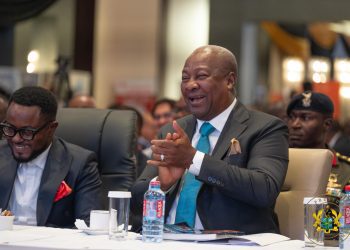
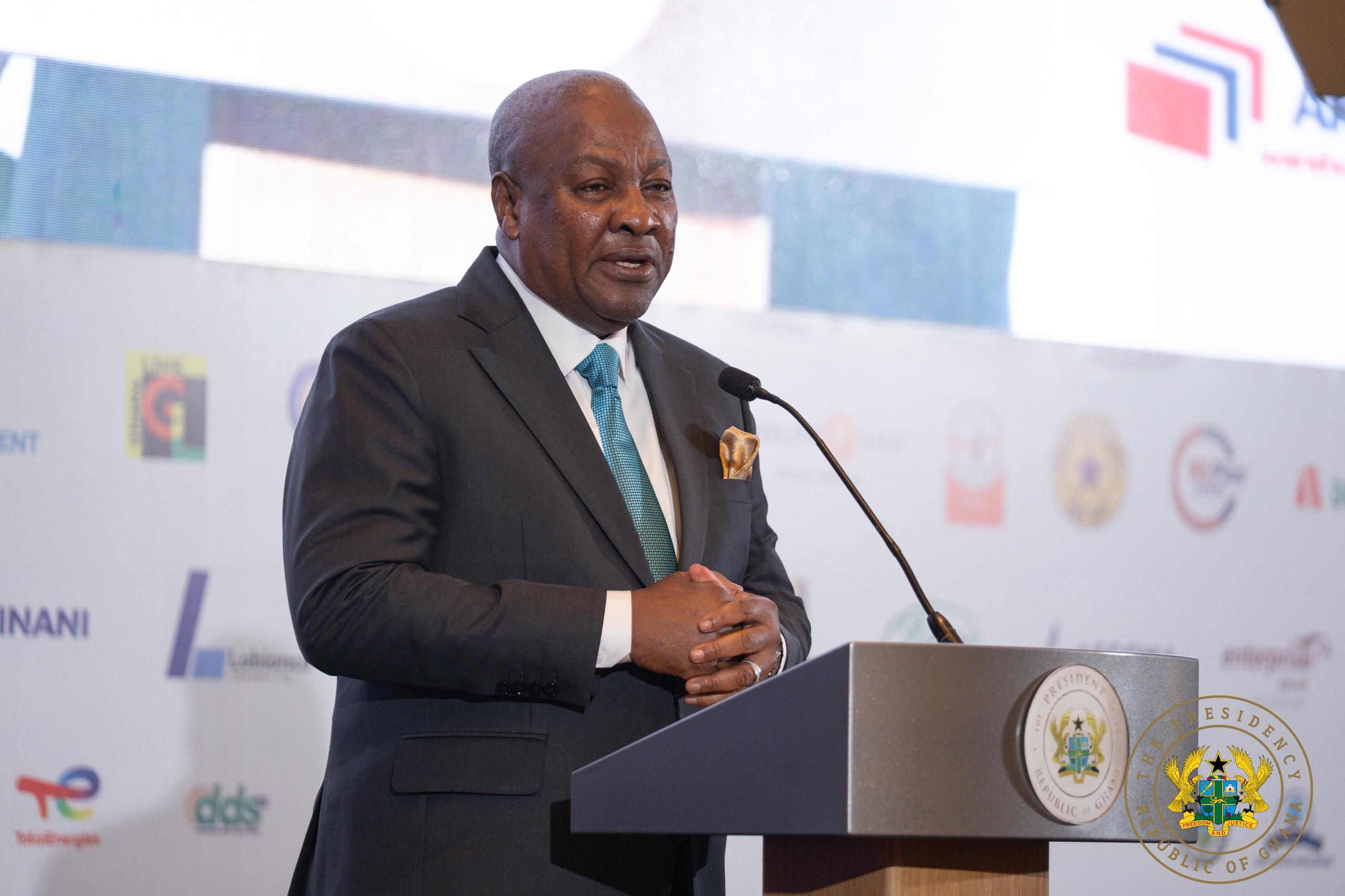
Speaking at the 10th Ghana CEO Summit, President Mahama described the platform as a critical national forum that brings together policymakers, business leaders, investors, innovators, and development partners to shape Ghana’s economic future.
“I continue to attend because Ghana’s economic transformation requires engagement between policymakers, business leaders, investors, innovators, development partners, and not government alone,” he stated.
The President commended the Chief Executives Network and its founder, Ernest De-Graft Egyir, for sustaining the initiative over the past decade.
“Ten years of convening business leaders, policymakers, investors, and development partners to address national transformation is no small achievement,” he said. “It reflects consistency, vision, resilience, and a clear understanding that progress is strongest when governments and enterprises work together.”
Addressing the summit theme, Accelerating Ghana’s Economic Transformation: Driving Bold Reforms Through Leadership, Technology, and Industrialization for Sustainable Growth, President Mahama stressed that Ghana must move beyond economic stabilization toward real production and industrial growth.
“Stability must underpin production. Production must create jobs. Jobs must raise incomes,” he noted. “Economic transformation must be defined by how it improves the daily lives of Ghanaians, not just by statistics.”
President Mahama assured the business community that Ghana’s recent economic stability would be sustained following the completion of the IMF Extended Credit Facility Programme and the country’s transition into a Policy Coordination Instrument arrangement with the Fund.
“This decision was taken in order to maintain policy credibility and fiscal discipline over the next 36 months,” he explained, adding that “captains of industry and business can therefore rest assured that the current stability we enjoy is not a fluke.”
The President also identified regulatory bottlenecks as a major obstacle to private sector growth, insisting that reforms must make it easier for businesses to operate efficiently.
“A businessperson should not waste productive time shuttling between public offices to obtain routine approvals,” he stated. “A serious investor should not receive conflicting signals from agencies of the same state.”
He emphasized that reducing the cost of doing business and creating a transparent policy environment were necessary to strengthen investor confidence and increase productivity.
On industrialization, President Mahama highlighted the importance of strengthening agribusiness value chains to better connect farmers, processors, transporters, exporters, and retailers.
“Strengthening agribusiness value chains is not just an agricultural move, but an industrial strategy,” he said.
He identified sectors such as cocoa, cashew, shea, oil palm, rice, poultry, textiles, pharmaceuticals, and light manufacturing as critical areas for job creation and export growth.
The President further explained that the government’s proposed 24-hour economy initiative is aimed at maximizing Ghana’s productive capacity through better logistics, energy supply, security, transportation systems, and extended public services.
“The concept is not simply about asking people to work at night,” he clarified. “It’s about utilizing our productive capacities more efficiently.”
President Mahama disclosed that Cabinet has been presented with a comprehensive 10-year economic transformation plan that includes cheaper electricity for industry, industrial and agro-processing parks, improved logistics systems, and investment incentives.
Touching on technology and digital trade, he said Ghana is developing a comprehensive e-commerce policy with support from UNCTAD to expand opportunities for SMEs, women-led businesses, and young entrepreneurs.
“Trade now transcends physical location,” he said. “With the right systems in place, a small enterprise anywhere in Ghana can reach a much broader market.”
On international trade competitiveness, President Mahama urged Ghanaian businesses to improve standards, packaging, logistics, and product quality under the African Continental Free Trade Area framework.
“Made in Ghana must stand for quality, consistency, and reliability,” he emphasized. “It should not merely be a patriotic slogan.”
The President also praised businesses exhibiting at the summit, describing the exhibition as evidence of the innovation and productive capacity within Ghana’s private sector.
As part of the event, President Mahama formally launched the CEO Government Compact 2026, a framework intended to deepen accountability and collaboration between government and the business community.
“The relationship between government and the private sector must not be reduced to speeches, conferences, and ceremonial engagements,” he said. “It must become a working partnership grounded in trust, policy consistency, mutual accountability, and shared national purpose.”
He concluded by urging business leaders to invest confidently in Ghana and partner government in driving industrial growth and job creation.
“Let this summit move us from dialogue to delivery, from policy to production, and from production to better lives for our people,” President Mahama declared.
Story: Patrick Asford Boadu