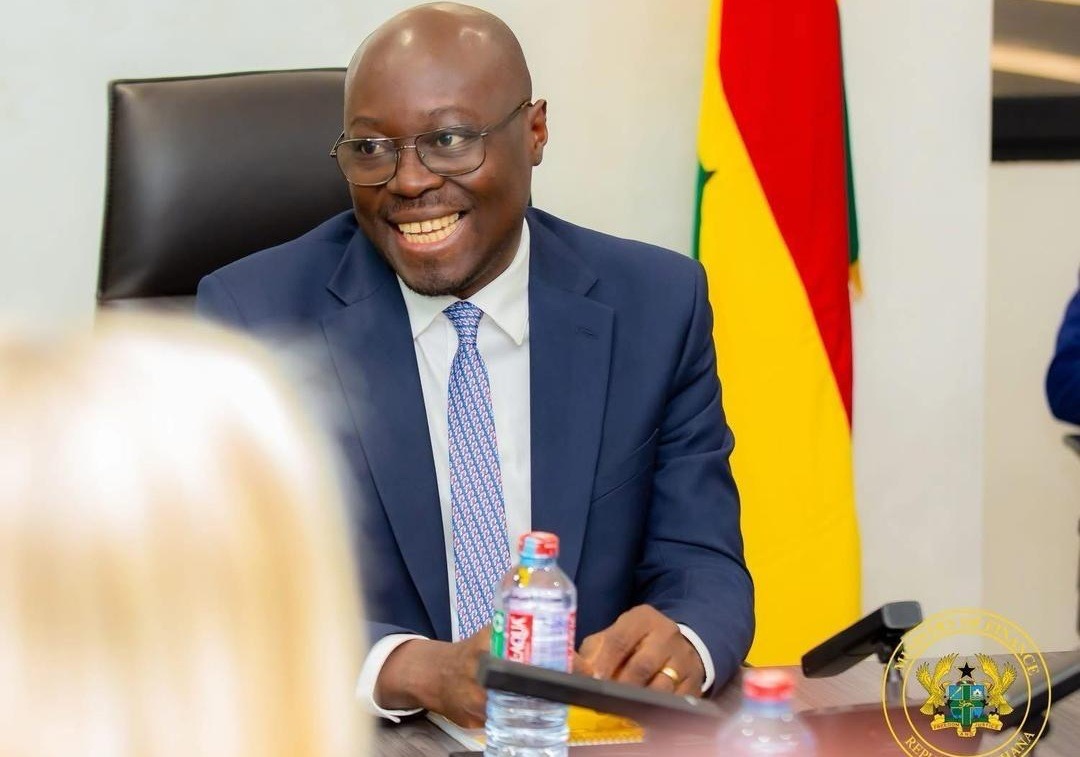
Minister for Finance Cassiel Ato Forson announced a definitive end to Ghana’s reliance on international financial bailouts, revealing that the country has successfully concluded its final review with the International Monetary Fund (IMF) Executive Board.
Presenting an official economic statement to Parliament, Ato Forson declared that the nation is transitioning from a crisis-driven financial rescue framework to a non-financing Policy Coordination Instrument (PCI).
This administrative shift signals that Ghana no longer requires direct IMF compensatory funding but will continue to utilize the fund’s structural benchmarks to anchor its domestic economic reforms and maintain investor confidence.
The Finance Minister detailed an aggressive macroeconomic recovery timeline, reporting that gross domestic product (GDP) growth surged to 6% in 2025, while nominal GDP growth reached a 14-year high of 7.6%. This expansion propelled the Ghanaian economy past the $100 billion threshold for the first time in history, formally elevating the state to a fully-fledged emerging market economy and positioning it as one of the eight largest economies on the African continent. Per capita income also experienced a historic increase, climbing to $3,385.
Reflecting on the structural vulnerabilities that precipitated the 2022 economic collapse, Forson recalled the sovereign downgrades by international credit rating agencies including Moody’s, S&P, and Fitch which effectively locked Ghana out of the international capital market.
The subsequent suspension of external credit line confirmations and the inability to secure traditional syndicated loans led to the implementation of the Domestic Debt Exchange Program (DDEP) and bilateral debt restructuring under the G20 Common Framework.
To insulate the state from future fiscal shocks, the current administration executed comprehensive structural interventions throughout 2025. These included amending the Public Financial Management (PFM) Act to statutory cap the primary surplus at 1.5% of GDP and target a net debt-to-GDP ratio of 45% by 2034.
Additional measures featured the deployment of the Gold Board, the operationalization of the Sinking Fund with local and foreign currency buffers, the establishment of the Office for Value for Money, and the verification of an Independent Fiscal Council.
Concurrently, the government achieved a major expenditure reduction by downsizing ministers of state from 123 to 16, and ministries from 30 to 23. To stimulate private sector productivity, the state eliminated several regulatory levies, including the betting tax, pollution tax, and value-added tax (VAT) on motor insurance.
These regulatory reforms yielded critical fiscal benchmarks by April 2026, with headline inflation dropping sharply to 3.4%, down from 28.4% in January 2025. The monetary policy rate was slashed by 1,200 basis points to 14%, while the national currency appreciated by 40.7% against the United States dollar over an 18-month trajectory.
Ghana’s public debt-to-GDP ratio dropped to 44.7% by the end of 2025, meeting its structural target nearly a decade ahead of the original 2034 IMF schedule and downgrading Ghana’s sovereign profile from a high risk to a moderate risk of debt distress for the first time in 12 years.
Forson emphasized that while the transition marks a profound structural milestone, the state will maintain strict regulatory prudence under the new economic transformation agenda to ensure sustainable job creation, heightened institutional productivity, and long-term economic resilience.
Eugenia Ewoenam Osei