The global pursuit of historical accountability enters a transformative new phase this week as the Republic of Ghana prepares to host the high-level Next Steps Conference on Reparatory Justice from June 17 to 19, 2026.
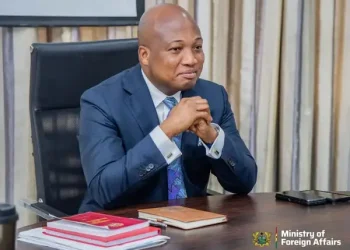
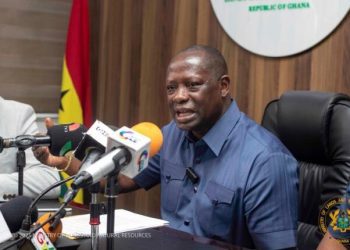
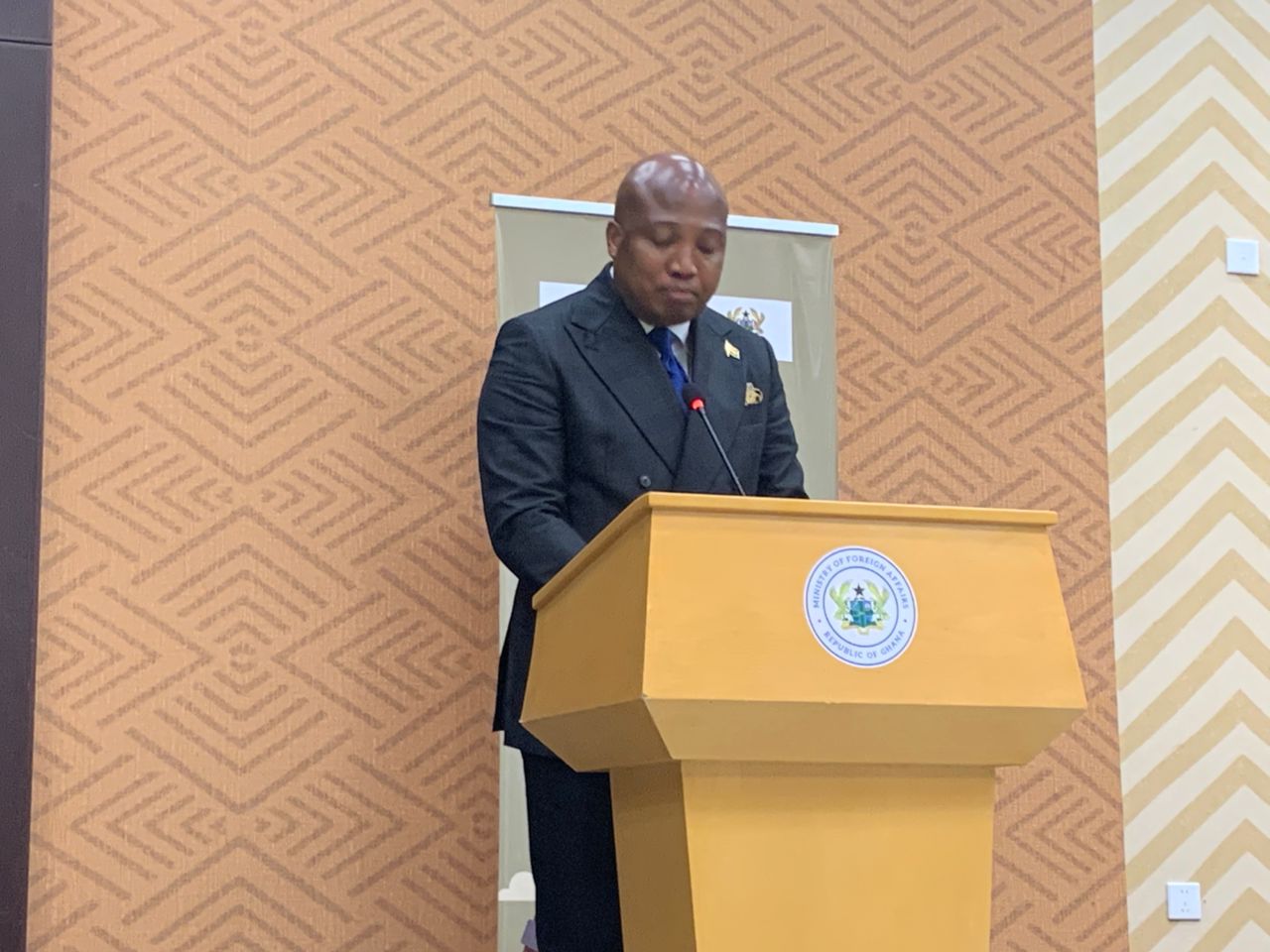
Addressing the media, the sector Minister, Samuel Okudzeto Ablakwa announced that the three-day event follows the overwhelming adoption of United Nations General Assembly Resolution A/RES/80/250 on March 25, 2026, which officially declared the trafficking of enslaved Africans and racialized chattel enslavement as the gravest crime against humanity. The resolution was championed by President John Bernard Mahama in his capacity as the African Union (AU) Champion on Reparations, alongside the 54 member states of the AU, securing 123 votes.
The upcoming conference seeks to translate that international consensus into a unified, actionable global framework. Speaking on the strategic importance of the gathering, the Minister emphasized that the UN resolution was “never intended to be the destination,” but rather the beginning of a coordinated movement dedicated to justice, restoration, and healing.
The Accra conference is designed to transition the global conversation from declaration to structural implementation. Deliberations will focus on overcoming fragmentation in advocacy and establishing sustainable mechanisms to drive the reparations movement forward.
Key institutional outcomes expected from the conference include the creation of three multi-stakeholder global bodies. These consist of a Global Advisory Panel on Reparatory Justice, an Expert Panel on the Restitution of Cultural Artifacts, and a Legal Panel for Reparatory Justice.
Additionally,Ablakwa revealed that the conference aims to institutionalize a transcontinental high-level consultative forum to ensure continuous engagement across Africa, the Caribbean, Latin America, Europe, and North America. The final outcome document will serve as a substantive contribution to the UN Secretary-General’s upcoming report on the implementation of the resolution, to be presented at the 82nd session of the General Assembly.
According to the Minister, the event will convene an unprecedented coalition of world leaders, policymakers, legal scholars, and civil rights advocates. Keynote addresses will be delivered by several heads of state, including President Bassirou Diomaye Faye of Senegal, President Joseph Nyuma Boakai of Liberia, President Dr. Netumbo Nandi-Ndaitwah of Namibia, Prime Minister Mia Amor Mottley of Barbados, President Adama Barrow of The Gambia, and President Umaro Sissoco Embaló of Guinea-Bissau.
The conference is also expected to welcome high-powered delegations from international bodies, led by AU Commission Chairperson Moussa Faki Mahamat and Caricom Reparations Commission Chair Professor Sir Hilary Beckles. Celebrated Nobel Laureate Professor Wole Soyinka is also confirmed to present a major paper during the sessions.
The conference will culminate on June 19 at the historic Osu Castle in Accra, a prominent former trading post in the transatlantic slave trade. Participants will take part in a solemn guided tour, passing through the symbolic “Door of No Return” to reflect on the human cost of enslavement and honor ancestral resilience.
Following the tour, proceedings will transition to a traditional Dwarpo assembly setting, bridging past and present through customary rites and cultural observances.
Significantly, June 19 will also mark the first time Juneteenth is officially commemorated unitedly outside the United States. A prominent delegation of African-American leaders, including members of the Congressional Black Caucus, Senator Bernie Sanders, Reverend Al Sharpton, and Dr. Julius Garvey, son of the influential Pan-Africanist Marcus Garvey will join the gathering. The inclusion of the Garvey family carries deep historical resonance for the host nation, as Marcus Garvey’s Black Star Line directly inspired Ghana’s founding father, Dr. Kwame Nkrumah, to place the Black Star in the national flag and naming of the national square.
Addressing recent public debates surrounding the participation of former colonial and slave-trading powers, the Minister clarified Ghana’s diplomatic stance, particularly regarding France. President Emmanuel Macron is scheduled to deliver a virtual address, accompanied by a high-level French delegation of at least ten senior officials.
While acknowledging that France abstained from the initial UN resolution vote, the Foreign Minister highlighted significant steps taken by Paris toward historical redress. Notably, on May 28, France officially repealed the Code Noir (Black Code) of 1685 from its statutes, a historic royal decree that had legally classified enslaved Africans as movable property and permitted physical mutilation.
Furthermore, France has expressed a willingness to partner with Ghana to establish a scientific commission on slavery, open an honest dialogue on reparatory justice, and return looted cultural artifacts. Similar commitments to restitution and return of artifact catalogues have been received from the Netherlands, Germany, and Denmark, alongside formal apologies from the Pope on behalf of the Catholic Church and the Church of Scotland.
Samuel Okudzeto Ablakwa urged the public and the wider diaspora to welcome these diplomatic overtures, emphasizing that the pursuit of reparatory justice requires open, inclusive, and good-faith engagement rather than adversarial division.
The Minister stated that former slave masters and colonial powers are not our enemies, reaffirming that Ghana remains guided by international law to foster stronger mutual relations. He added that this conference is not merely about revisiting the past, but about shaping the future and transforming recognition into action.
Story By: Eugenia Ewoenam Osei