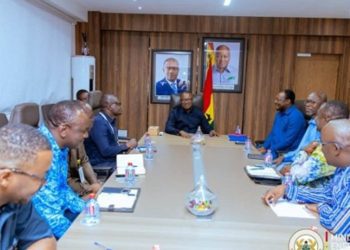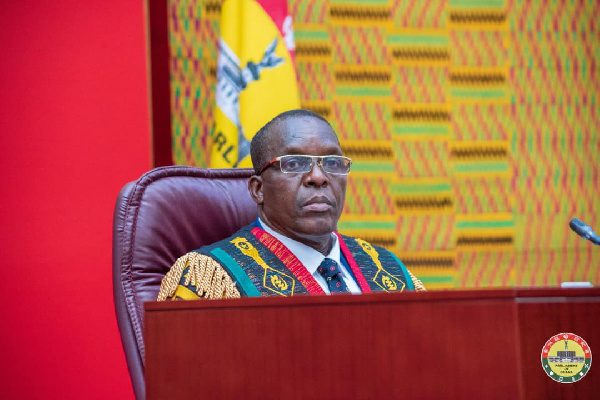
Parliament’s Committee on Economy and Development has officially commenced a comprehensive oversight review of the 2025 Annual Progress Report (APR). The report, which was prepared by the National Development Planning Commission (NDPC), was launched on July 16, 2025. This review marks a critical milestone in Parliament’s constitutional oversight mandate, aiming to hold public institutions strictly accountable for the state resources entrusted to them.
Addressing the media, the Chairman of the Committee on Economy and Development, Eric Afful, emphasized that the APR serves as one of Ghana’s primary national accountability mechanisms. The report evaluates how effectively Ministries, Departments, and Agencies (MDAs), as well as Metropolitan, Municipal, and District Assemblies (MMDAs), have implemented government policies, programs, and budgets. Afful stated that the Committee will use the report’s findings to rigorously engage all state institutions regarding their performance, budget utilization, and service delivery.
”Public institutions are custodians, not owners, of public resources,” he stated. “They have a fundamental duty to account for how these resources are utilized. The Committee’s objective is to ensure that every single cedi appropriated by Parliament delivers value for money and contributes meaningfully to improving the lives of the Ghanaian people.”
While clarifying that the exercise is designed to be constructive, promote learning, and bridge policy gaps rather than be punitive, the Chairman issued a stern warning against non-compliance. He urged all Ministers, Chief Directors, and Heads of MDAs and MMDAs to treat the Committee’s invitations with the highest priority, noting that failure to appear without justifiable cause would be viewed as a serious breach of accountability standards and the governance principles of the administration’s Reset Agenda.
Corroborating the Chairman’s remarks, the Ranking Member of the Committee, Kojo Oppong Nkrumah, provided deeper context on how Parliament enforces financial and developmental discipline. He outlined that Parliament utilizes three specific channels of accountability to oversee public funds and performance.
First, the Public Accounts Committee examines financial compliance and checks whether expenditures align with the Public Financial Management framework. Second, sector-specific committees address the technical issues and operational challenges within individual sectors.
Third, the Economy and Development Committee reviews the achievement of overarching national development targets, as evaluated and reported annually by the NDPC under its constitutional mandate under Article 87(2)(e).
Oppong Nkrumah noted that the latest APR reflects the developmental performance of the current administration. He indicated that the oversight process will not be confined to the capital, as the Committee plans to extend its work into the regions and districts to review the progress of local government assemblies.
In line with parliamentary regulations, the Ranking Member announced that the upcoming committee review sessions will be fully open to the public and the media, pursuant to standard provisions governing public hearings. He emphasized that these are public meetings to which the media is fully invited, ensuring that the people of Ghana can directly follow how public institutions have utilized resources to achieve national targets.
Oppong Nkrumah added that leadership in Parliament is fully committed to this exercise, noting that any institution failing to appear would have to explain their absence directly to the Speaker of Parliament.
The leadership of the Committee concluded by commending the NDPC for compiling the report and praised the media, civil society organizations, and development partners for their indispensable role in promoting transparency and safeguarding public trust in Ghana’s democratic institutions.
Eugenia Ewoenam Osei