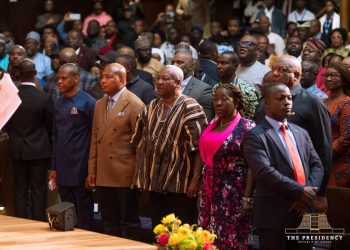
Members of Parliament are rushing to overhaul their campaign strategies following the Supreme Court’s landmark decision abolishing the delegate system for selecting parliamentary candidates—a ruling many lawmakers fear will dramatically increase the cost of contesting party primaries.
The judgment, which requires political parties to open their parliamentary primaries to all members in good standing, has sent shockwaves through Parliament, with many incumbent MPs warning that the new electoral landscape will be significantly more expensive and logistically demanding.
While advocates of political reform have hailed the ruling as a major step toward deepening internal democracy, many legislators say the practical implications could place enormous financial pressure on aspirants.
In conversations within the parliamentary precincts, several MPs expressed concern that the assumption underpinning the ruling—that expanding participation would reduce the monetization of internal elections—is misguided.
“The thinking is that opening up the process will reduce vote-buying and the influence of money in politics, but the reality may be the opposite,” one lawmaker observed. “Instead of engaging a few hundred delegates, candidates will now have to reach tens of thousands of party members across entire constituencies, requiring far greater financial and logistical resources.”
Campaign teams are already scrambling to redesign their operations, shifting from delegate-focused mobilization to constituency-wide outreach. The sudden transition has left many aspirants uncertain about how to organize and finance their campaigns ahead of upcoming internal contests.
The uncertainty has been compounded by the absence of detailed implementation guidelines from the Electoral Commission and the leadership of the major political parties, leaving candidates unsure of how the expanded primaries will be conducted.
The anxiety follows the Supreme Court’s decision declaring the long-standing delegate college system unconstitutional. The apex court ruled that restricting participation in internal party elections to a limited group of delegates undermines the constitutional principles of broad-based political participation.
The ruling now compels political parties to allow all members in good standing to vote in parliamentary primaries, a move aimed at dismantling the influence of “kingmakers” and strengthening internal democracy.
However, for many sitting MPs and aspiring candidates, the decision has ushered in a new era of campaign planning, one they believe will be far more complex, resource-intensive, and costly than the delegate system it replaces.
Story By: Eugenia Ewoenam Osei