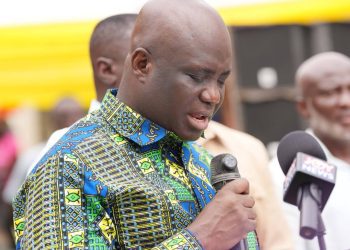
The Member of Parliament for Tolon, Habib Iddrisu, has strongly challenged Speaker of Parliament Alban Bagbin’s decision not to admit a Minority motion seeking a parliamentary investigation into recent major narcotics cases linked to Ghana, arguing that the proposed probe would not interfere with ongoing court proceedings.
Speaking in an interview with Sena Nombo on Radio Gold’s Gold Morning Conversation, Mr Iddrisu said the Minority’s proposed inquiry was intended to investigate possible failures in Ghana’s security, scanning and export-control systems rather than determine the criminal liability of suspects currently standing trial.
“I disagree entirely with the reasoning of the Speaker in not admitting the motion,” he said.
According to the Tolon MP, the fact that some suspects are before the courts does not answer the wider questions surrounding how narcotics consignments allegedly passed through Ghana’s security systems and were subsequently intercepted abroad.
Mr Iddrisu said the proposed parliamentary investigation would examine the circumstances under which the narcotics consignments departed Ghana, including the scanning and inspection processes, cargo security procedures, persons and facilitators involved, the status of investigations, international cooperation and the security of the country’s entry and exit points.
He maintained that these issues are fundamentally different from the question before the courts, which is whether the accused persons committed the offences for which they have been charged.
“What my motion seeks to do is for us to get to the core of the whole thing,” he explained, questioning whether the Narcotics Control Commission and other security agencies performed their responsibilities diligently and whether Ghana’s scanning systems were capable of detecting the narcotics later intercepted overseas.
Mr Iddrisu also questioned the decision to rely on an inter-agency arrangement involving some of the same state institutions responsible for preventing narcotics trafficking to investigate the circumstances surrounding the incidents.
He argued that agencies including the Narcotics Control Commission, National Security and the Customs Division of the Ghana Revenue Authority have responsibilities for intelligence, border security and the inspection of goods entering and leaving the country.
If narcotics managed to pass through those controls before being intercepted abroad, he said, Parliament should independently examine what went wrong.
“Why should we allow the same people to do the same investigation? What outcome will they bring?” he asked.
The MP argued that a bipartisan parliamentary investigation would provide additional independent scrutiny because Parliament consists of elected representatives from different political parties rather than officials appointed by the Executive.
He cited Article 103 of the 1992 Constitution, arguing that Parliament has constitutional oversight powers to investigate the activities of ministries, departments and agencies.
Mr Iddrisu therefore maintained that investigations ordered by President John Dramani Mahama should not prevent Parliament from exercising its separate oversight responsibility.
He further warned that the controversy surrounding the narcotics cases could damage Ghana’s international reputation and subject Ghanaian travellers to increased scrutiny abroad.
According to him, the central issue goes beyond arresting and prosecuting individuals allegedly connected to narcotics trafficking.
“Sending people to court, does it stop it?” Mr Iddrisu asked.