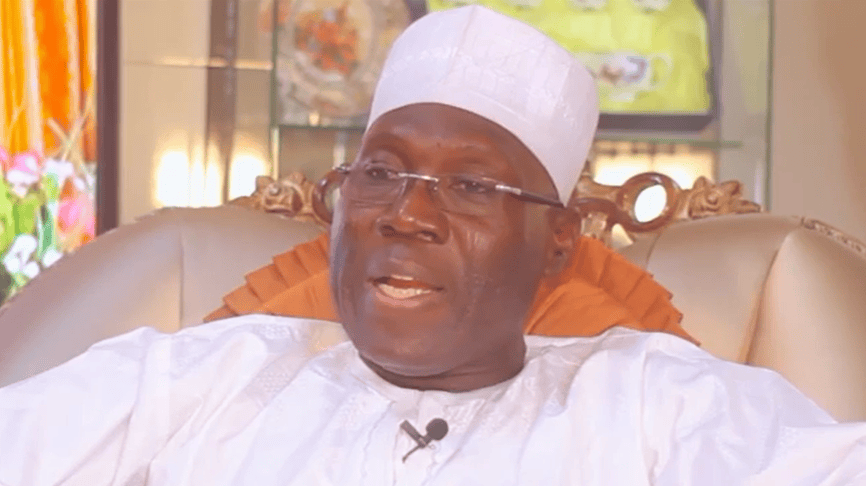
Former Tamale Central MP and former Roads and Highways Minister, Inusah Fuseini, has backed Speaker of Parliament Alban Bagbin’s handling of the Minority’s attempted parliamentary probe into recent cocaine cases, arguing that dismantling drug-trafficking networks requires covert intelligence work and prosecution rather than public parliamentary hearings.
Speaking on Radio Gold, he said the priority should be to identify the individuals and networks facilitating narcotics trafficking, close the security loopholes they exploit and remove compromised officials from positions that enable the illegal trade.
“It’s not a matter of public hearing. It’s a matter of the intelligence agencies going underground, fishing out the connections of people in this affair and bringing them forth for prosecution,” he said.
According to the former legislator, intelligence agencies should focus on uncovering the networks behind the trafficking operations, establishing possible institutional links and ensuring that individuals found to have abused positions of authority are dealt with.
He argued that a parliamentary inquiry risks becoming largely a public discussion without producing the operational results required to disrupt sophisticated narcotics networks.
“Parliament will just be speaking and speaking and speaking with no results,” Mr Fuseini said.
His position contrasts sharply with that of Tolon MP Habib Iddrisu, who has argued that a bipartisan parliamentary committee is necessary to independently examine how narcotics consignments allegedly passed through Ghana’s security and export-control systems.
Alhaji Fuseini rejected the suggestion that security institutions should be prevented from investigating possible failures within their own systems simply because some officials or processes may have failed.
He said the first response to suspected institutional wrongdoing should ordinarily be an internal investigation of the processes and personnel involved.
“If wrongdoing is perpetrated, the first course of action is for the intelligence agency to investigate,” he said.
“The first course of action is for the institution to investigate the processes, audit the processes, audit the persons, investigate the persons who have been put in charge, and come to a determination of sorts,” he added.
Alhaji Fuseini also defended the procedural basis for the Speaker’s position.
Drawing on his experience in Parliament, he explained that where Parliament is recalled for an emergency sitting, satisfying the constitutional requirement for a recall does not automatically mean that every substantive proposal contained in the petition must proceed.
According to him, Parliament must first determine whether its jurisdiction to consider the matter as an emergency has been properly invoked before proceeding to debate the substance of a proposal such as the establishment of an investigative committee.
“You first of all have to debate and conclude on the issue of whether Parliament’s jurisdiction to sit in an emergency has been properly invoked,” he explained.
If that threshold is satisfied, he said, Parliament can then consider the separate question of whether establishing the proposed committee is appropriate.
He also expressed doubts about the effectiveness of parliamentary committees where recommendations and reports do not lead to concrete action. He cited previous controversies within Parliament to support his concern that merely establishing a committee does not guarantee accountability.
For the former Tamale Central MP, the seriousness of the narcotics threat therefore demands an approach capable of producing arrests, prosecutions and institutional reforms rather than another layer of public political debate.
He maintained that the immediate task is to trace the networks behind the trafficking, identify any officials facilitating the operations, close exploited security gaps and prosecute those found culpable.
Alhaji Fuseini warned that failure to produce tangible consequences could ultimately embolden those involved in the illicit trade.