The Fair Wages and Salaries Commission (FWSC) has outlined the processes involved in negotiating public-sector salaries and allowances, explaining how different categories of benefits are treated under the country’s remuneration arrangements.
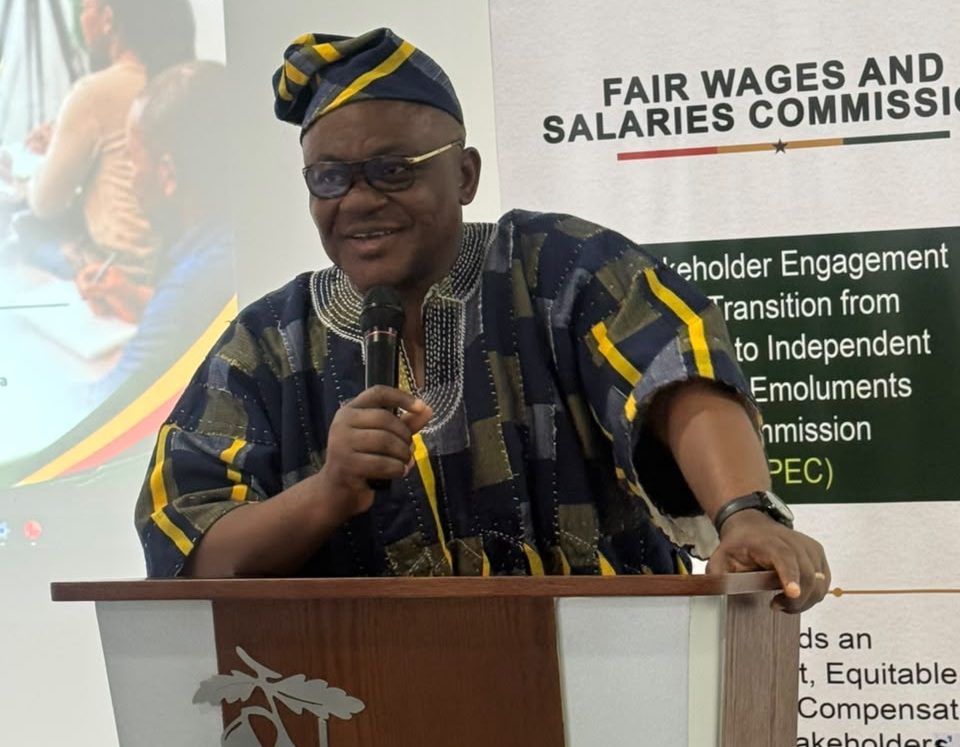
Director of Grievances and Negotiations at the Commission, Prof. Charles Adabo Oppong, gave the explanation during a two-day media training workshop organised by the FWSC at the Oak Plaza Hotel in Accra.
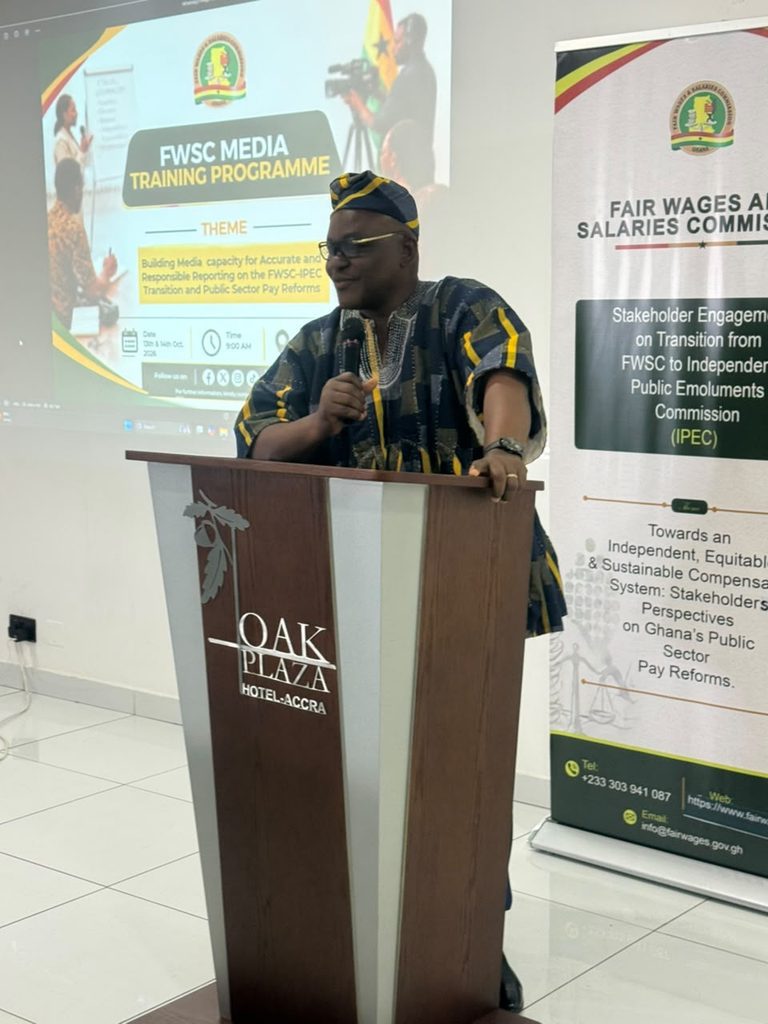
He said negotiations on base pay are conducted annually, while allowances are treated differently depending on their purpose, the applicable rules and the arrangements governing their payment.
According to Prof. Oppong, some allowances, including risk, responsibility and cash allowances, were consolidated into base pay following a job-evaluation exercise and are therefore not negotiated separately.
Other conditional allowances, such as acting, overtime and calling allowances, are negotiated through the Public Joint Standing Negotiating Committee.
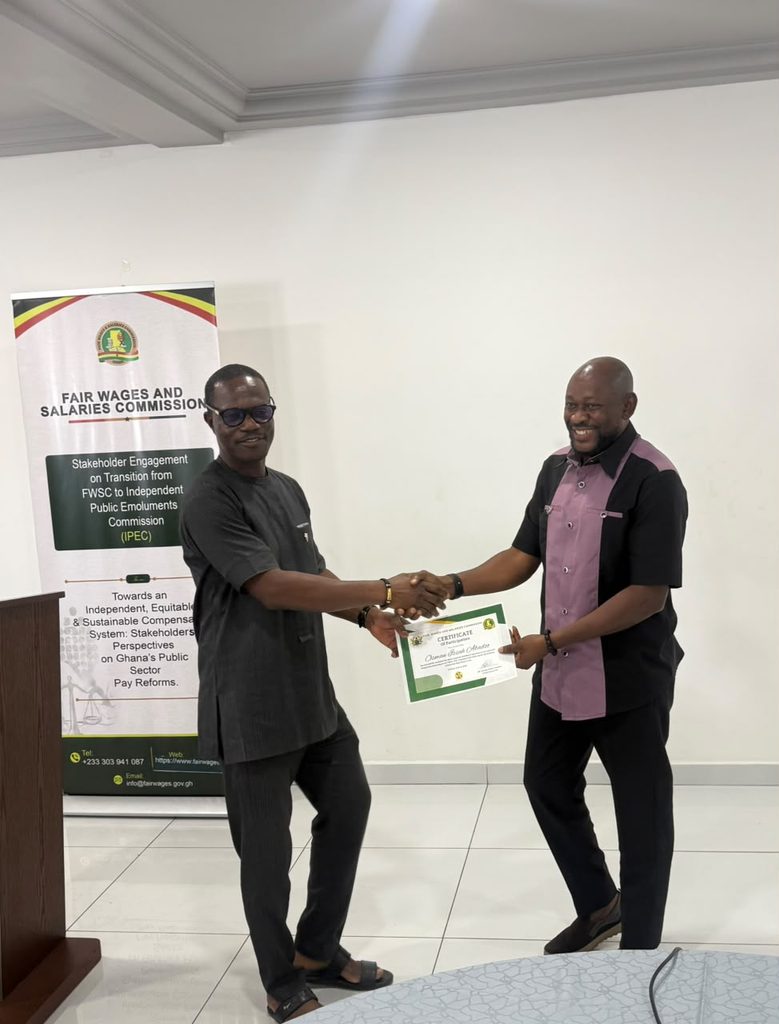
He explained that welfare-related benefits, including funeral grants and medical subsidies, are not necessarily negotiated every year but may be discussed when government and organised labour begin negotiations.
Prof. Oppong further indicated that allowances for directors and senior officials, including entertainment, accommodation, fuel and utilities, fall under the responsibility of the Ministry of Finance.
Institution-specific allowances, he added, are considered in relation to the relevant institutions and applicable collective bargaining agreements.
He said the Commission reviews proposals, develops options and consults relevant government agencies and unions before agreements are reached and implementation begins.
Respect for negotiation rules
Prof. Oppong also emphasised the importance of respecting the rules of engagement in negotiations between government and organised labour.
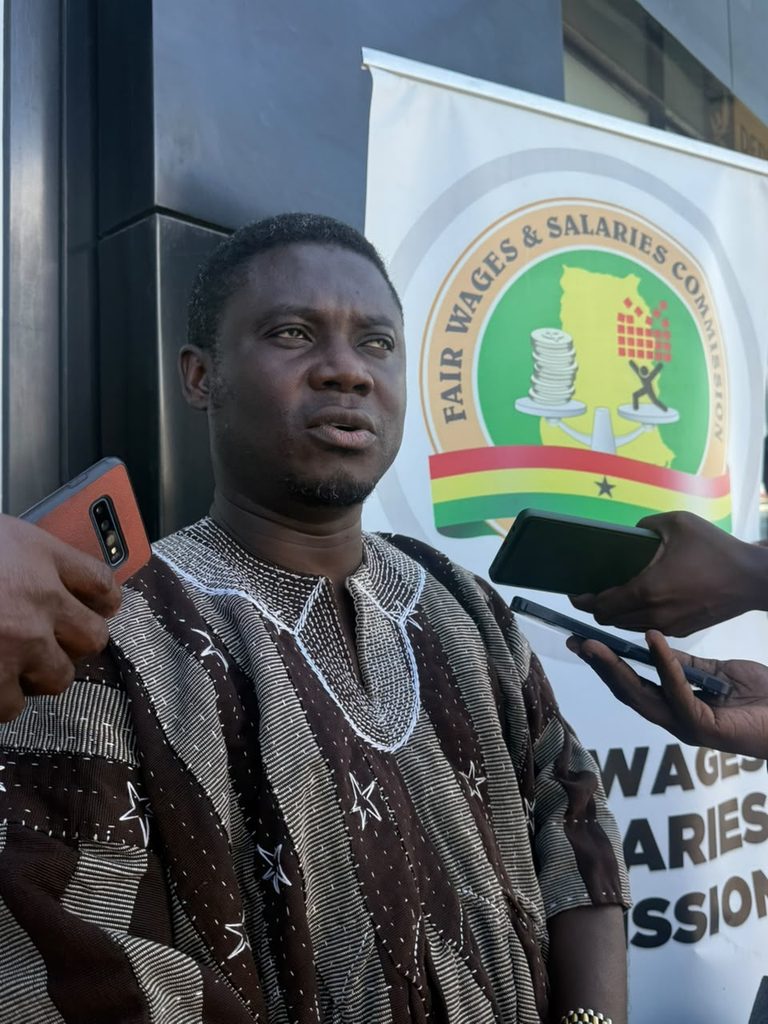
He explained that the rules provide a framework for negotiations, including the number of representatives each party may have, how confidential information should be handled and the procedures for addressing disagreements and grievances.
According to him, the rules help establish mutual understanding, demonstrate good faith and ensure that both parties operate within agreed procedures.
He urged government representatives and organised labour to honour agreements they sign, particularly provisions governing the protection of confidential information.
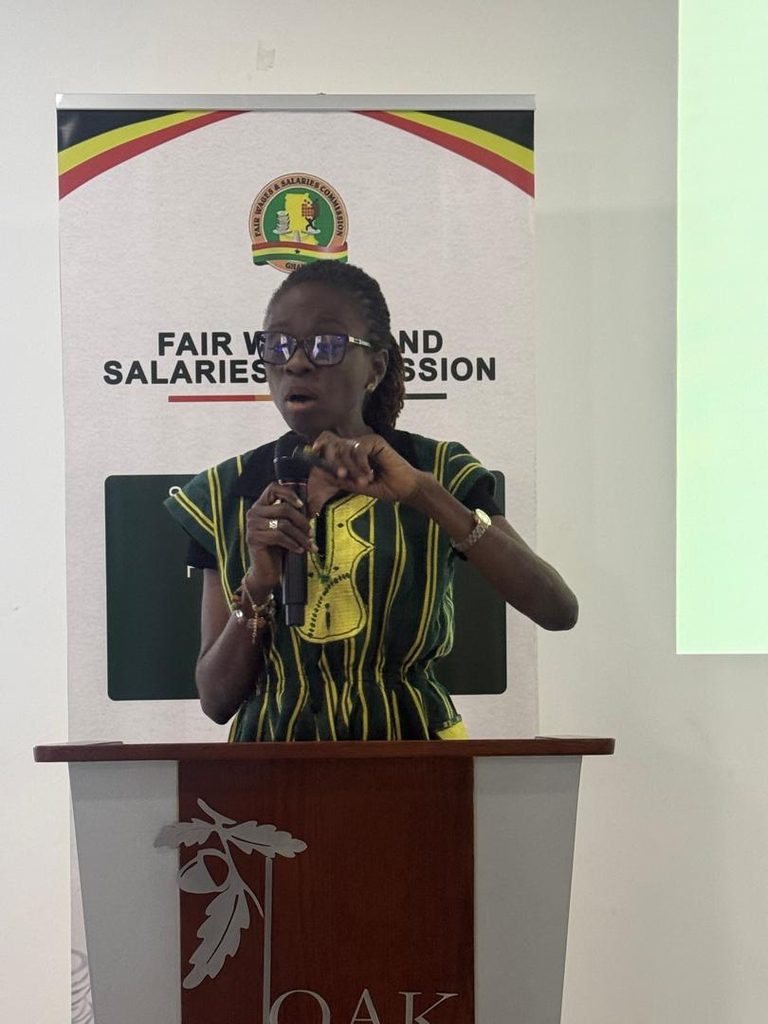
Prof. Oppong said adherence to the rules was essential to safeguarding the integrity of negotiations and promoting constructive engagement between the parties.
Engagement on university-related issues ongoing
On strike by Ghana Association of University Administrators (GAUA), Prof. Oppong said discussions were continuing and expressed hope for a positive outcome.
His presentation formed part of the FWSC’s two-day media training programme aimed at strengthening journalists’ understanding of public-sector remuneration, wage negotiations and labour relations.
The workshop also provided media practitioners with an opportunity to engage with Commission officials on the procedures governing salaries, allowances and the implementation of agreements between government and organised labour.
Story by Osman Issah Abadoo