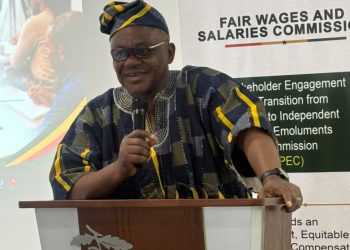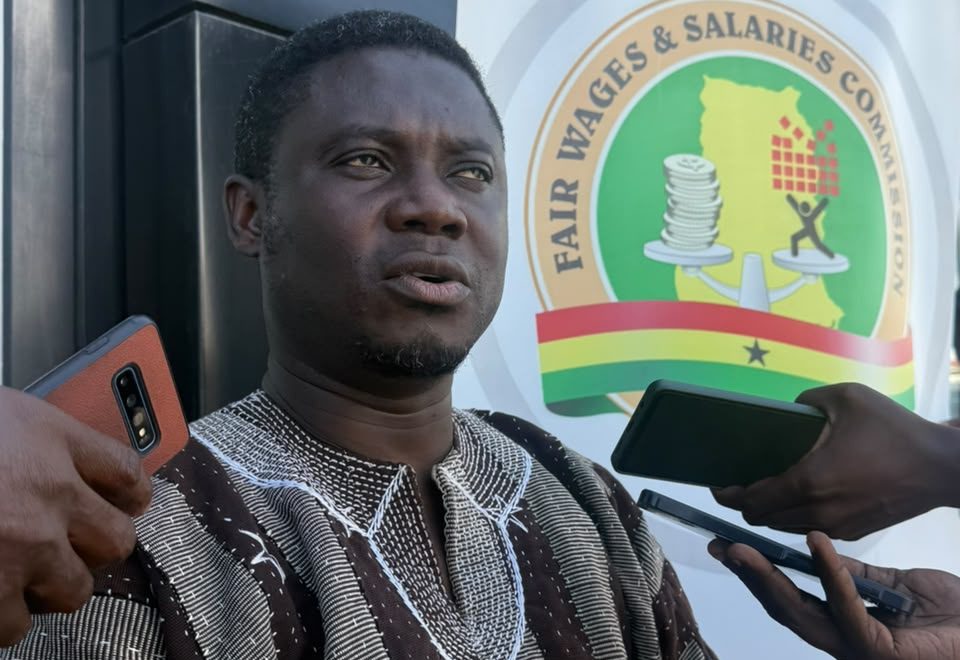
The Fair Wages and Salaries Commission (FWSC) has organised a two-day media training workshop in Accra to strengthen journalists’ understanding of public-sector remuneration, labour negotiations and conditions of service ahead of its planned transition into the Independent Emoluments Commission (IPEC).
The workshop, held at the Oak Plaza Hotel, was aimed at equipping media practitioners with the technical knowledge needed to report accurately on wage negotiations, labour disputes and agreements between government and organised labour.
Speaking at the training, Chief Executive of the FWSC, Dr. George Smith-Graham, urged journalists to verify claims about labour agreements against official documents to ensure that their reports accurately reflect what negotiating parties have agreed.
He said signed agreements and related correspondence were important sources of information that could help journalists establish the facts and correct misleading narratives surrounding labour disputes.
Dr. Smith-Graham called for non-confidential documents that are in the public interest to be made available on the Commission’s website to improve access to reliable information and promote evidence-based reporting.
He cautioned journalists against relying solely on claims from parties involved in labour disputes without examining the relevant documents and the circumstances surrounding the disagreements.
The Chief Executive also proposed quarterly engagement sessions between the Commission and the media to strengthen communication and improve journalists’ technical understanding of public-sector employment issues.
FWSC calls for proactive approach to labour disputes
Dr. Smith-Graham observed that labour disputes increasingly concern conditions of service and the implementation of existing agreements rather than basic salaries, which he said had largely been addressed.
He called for more proactive engagement between the Commission, unions and workplaces to identify challenges with implementing agreements before they escalate into industrial action.
He said the Commission needed to strengthen its approach to monitoring workplace conditions and addressing implementation problems through early engagement with the relevant parties.
Dr. Smith-Graham further encouraged journalists to investigate challenges confronting labour inspection, including whether the relevant departments have adequate resources to enforce minimum-wage protections and other employment standards.
He stressed that media coverage of labour issues should extend beyond strikes and disagreements to examine how workplace regulations are enforced and whether institutions are fulfilling their obligations to workers.
On public-sector remuneration, he emphasised the need for fair and equitable negotiations, noting that government must consider wage commitments and statutory deductions alongside the resources required for national development.
He explained that the Commission’s responsibility was not simply to pursue higher salaries but also to promote fairness in the distribution of available resources.
The two-day workshop provided journalists with an opportunity to engage with Commission officials on wage negotiations, remuneration policies and labour relations.
Certificates were presented to participants at the end of the training, which forms part of efforts to improve media understanding of public-sector pay and employment issues as the Commission prepares for its transition to IPEC.
Story by Osman Issah Abadoo