The Minister for Works and Housing, Ahmed Ibrahim, has underscored the urgent need for a bipartisan National Housing Fund and Housing Levy to tackle Ghana’s staggering 1.8 million housing deficit.
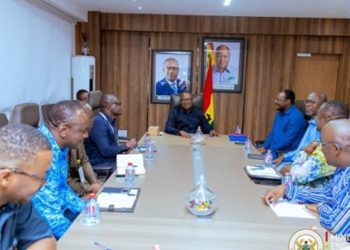
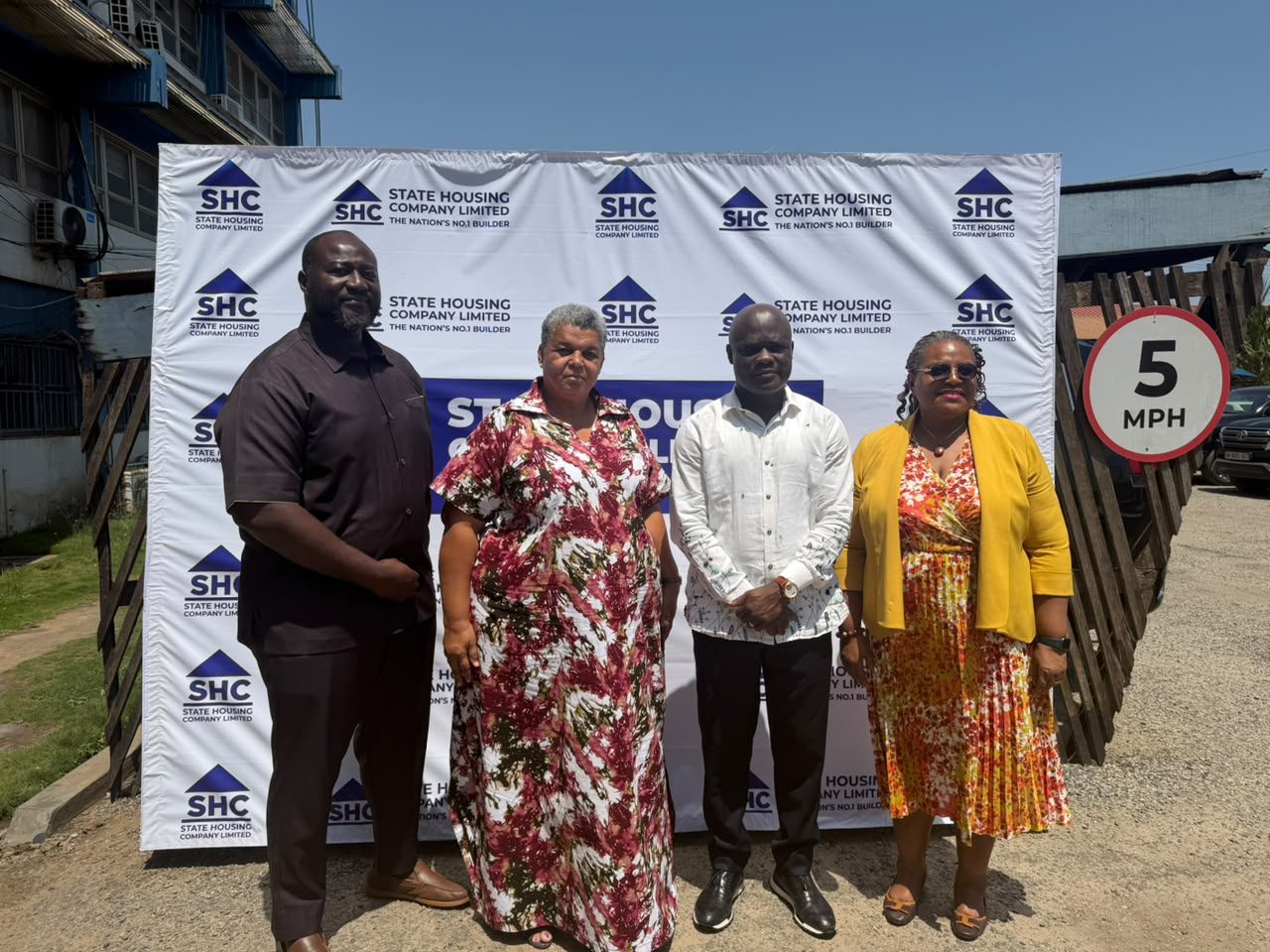
The Minister made this call during an official working visit to the State Housing Company Limited (SHC), where management briefed leadership on the company’s strategic outlook, ongoing projects, and operational milestones.
The engagement formed part of the sector ministry’s ongoing agency-by-agency tour to align institutional frameworks with national policy objectives.
Welcoming the Minister and his delegation, the Managing Director of State Housing, John S. Bawah, highlighted SHC’s rich history as a pioneer in Ghana’s real estate sector since its conversion into a commercial entity in 1995.
He noted that the company operates entirely on a full-cost recovery model without direct budgetary subventions from the central government, generating revenue through property sales, ground rents, facility management, and lease regularizations.
Bawah addressed recent public discourse surrounding housing prices and company initiatives, viewing the media debate as a healthy and necessary catalyst for solving the national housing crisis.
To improve administrative efficiency, the company has consolidated operations from semi-autonomous regional offices back to central management. SHC has also completed the digitization of over 16,000 property files in the Greater Accra Region to enhance land administration and service delivery.
On the service front, the company now operates a 24-hour premium and expert service center and maintains robust partnerships with major financial institutions, including Republic Bank, Ecobank, and ABSA, through a dedicated mortgage desk.
Additionally, the MD revealed that the management has successfully negotiated the renewal of critical expired and expiring head leases in areas such as Teshie-Nungua, Kanda, and North Labone, while partnering with legal and property recovery experts to recover outstanding ground rents.
While outlining a target to deliver 3,000 housing units by 2029 through innovative urban redevelopment pilots and improved pricing models, Bawah acknowledged the severe resource limitations facing the sector.
He also advocated for greater gender representation in future board appointments, noting the strong administrative backing provided by female leadership within the company.
In his response, Ahmed Ibrahim commended the board, management, and staff of SHC for their dedication, professional presentation, and proactive institutional reforms. However, he expressed deep concern over the massive gap between national housing delivery targets and the growing demand driven by population growth.
The Minister emphasized that relying solely on commercial real estate models would leave the majority of Ghanaians underserved. Drawing parallels to successful national financing models like the Ghana Education Trust Fund (GETFund) and international benchmarks in countries like Kenya, Hon. Ibrahim made a passionate appeal for bipartisan political will.
He stressed that to close the housing gap, Ghana requires 179,000 housing units every year, whereas current four-year agency projections stand at 3,000 units. He warned that without establishing a dedicated National Housing Fund and levy, the nation cannot meaningfully address the deficit.
The Minister urged leaders across the political divide to unite behind progressive housing policies. He further noted that scaling up construction through technical and vocational training graduates would simultaneously resolve housing shortages and youth unemployment. He reaffirmed the Ministry’s commitment to translating operational challenges on the ground into actionable policies and supporting legislation.
The engagement concluded with a renewed commitment to foster a tighter, more open working relationship between the Ministry of Works and Housing and the State Housing Company.
Both leadership teams agreed that strengthening corporate governance, leveraging land assets, and adopting modern construction technologies remain paramount to achieving sustainable, high-quality, and affordable housing for all Ghanaians.
Eugenia Ewoenam Osei