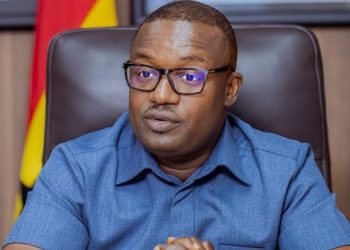
Private legal practitioner David Ametefe has welcomed Attorney-General Dr Dominic Akuritinga Ayine’s directive against unlawful arrests, detention and mistreatment of suspects, describing it as a long-overdue intervention to address serious abuses within Ghana’s criminal justice system.
Speaking to Sena Nombo on Radio Gold, Lawyer Ametefe said the directive reflected longstanding problems within law enforcement agencies, particularly the police, which he accused of routinely disregarding constitutional safeguards intended to protect suspects and accused persons.
He commended the Attorney-General for prioritising respect for the law at a time when, in his view, the government could potentially use state investigative and prosecutorial institutions against political opponents.
The Attorney-General’s directive, issued on November 2, 2026, addresses five recurring problems, including detention beyond the constitutional 48-hour limit, arrests to recover civil debts, improperly obtained statements, unlawful searches and mistreatment of suspects.
Mr Ametefe argued that the directive should not be reduced to the public debate over bail conditions, stressing that its broader significance lay in protecting individuals throughout the criminal investigation process.
Drawing on his experience as a criminal defence lawyer, he recounted representing suspects who had allegedly been unlawfully detained, tortured or subjected to fabricated allegations.
He claimed to have handled cases involving suspects who suffered machete wounds and razor blade injuries while in police custody or during arrest, some of which resulted in legal action for compensation.
The lawyer also recalled his participation in the Justice for All Programme, during which he visited prisons and assisted individuals he believed had been wrongfully detained or unnecessarily remanded.
According to him, some detainees had remained in custody without fully understanding the accusations against them.
Mr Ametefe further alleged that his efforts to challenge police misconduct had resulted in his own arrest on two occasions, including an incident in September 2011.
He said a legal action arising from that incident remained unresolved after several years, alleging that procedural developments had frustrated the determination of the case.
The private legal practitioner maintained that constitutional protections under Articles 14, 15, 17, 18 and 19, covering personal liberty, human dignity, equality, privacy and fair trial rights, must be respected by investigative agencies.
He called for comprehensive training and reorientation of police officers to ensure that the Attorney-General’s directive translates into changes in everyday law enforcement practices.
Mr Ametefe warned that issuing directives without addressing institutional attitudes and accountability would be insufficient to prevent further violations.
He urged the Attorney-General to ensure that the new instructions are effectively implemented across the country’s investigative and prosecutorial institutions.