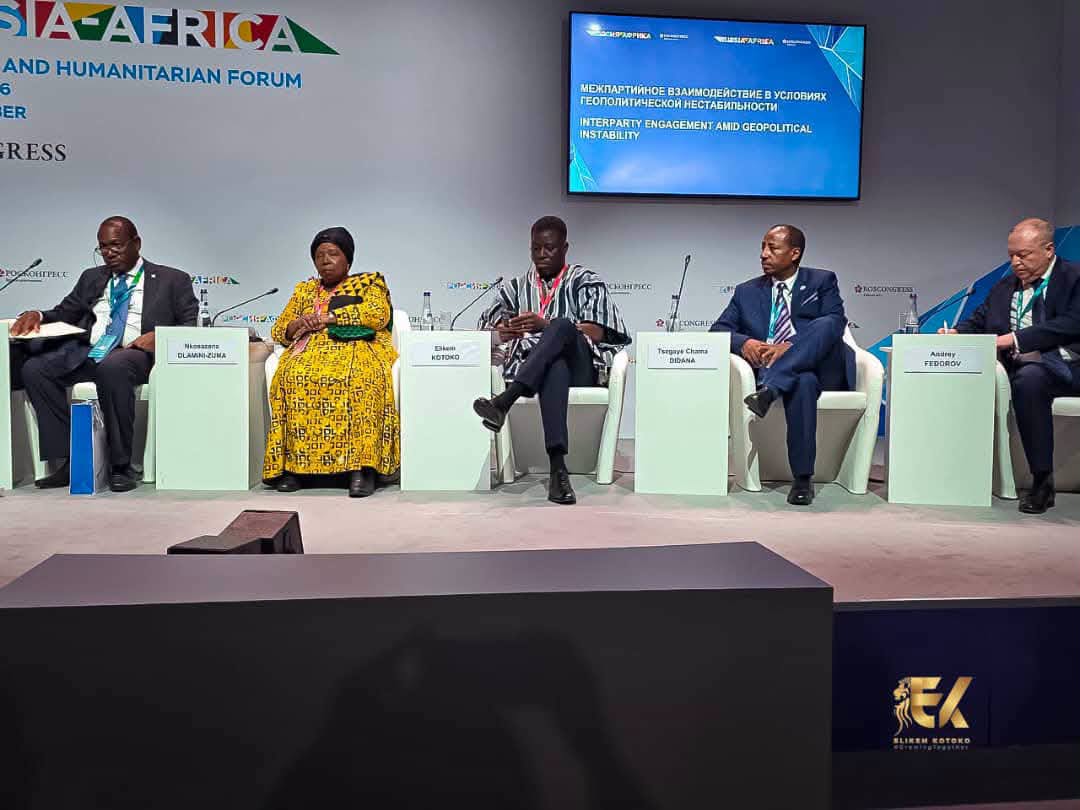
Deputy Chief Executive Officer of the Forestry Commission, Elikem Kotoko, has called on African leaders to move beyond rhetoric and confront the continent’s development challenges through genuine unity, decisive action against corruption and greater opportunities for young people to assume leadership responsibilities.
Speaking at the Russia–Africa Summit in Moscow, where he represented the National Chairman of the National Democratic Congress (NDC), Johnson Asiedu Nketiah, Mr Kotoko stressed that Africa possessed the capacity to accelerate development but needed stronger political cooperation, accountable leadership and a deliberate effort to empower its younger generation.
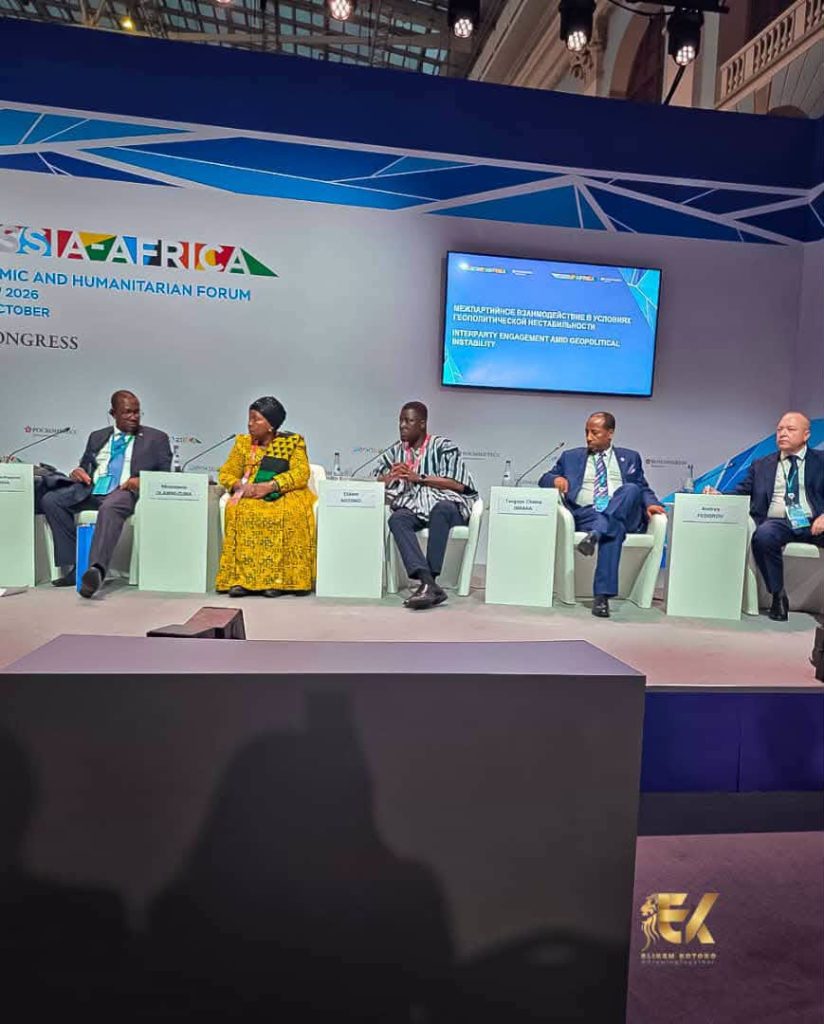
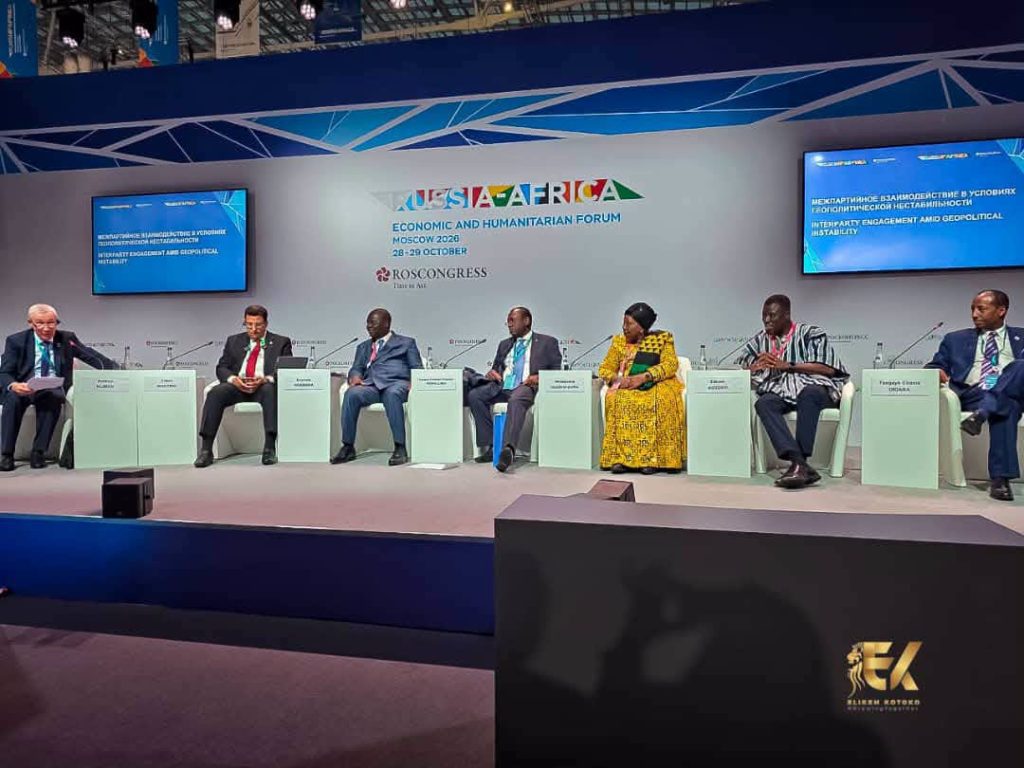
He made the remarks during a panel discussion on Inter-Party Engagement Amid Geopolitical Instability, moderated by Andrey Klimov, Deputy Chairman of Russia’s Federation Council Committee on Foreign Affairs and Chairman of the Federation Council Commission on Protecting State Sovereignty.
Mr Kotoko, who described himself as the youngest panellist, emphasised the importance of dialogue, peaceful political competition and collective economic advancement, arguing that Africa’s progress depended on the willingness of its leaders to prioritise shared interests over division.
He also advocated greater participation of women in political leadership and decision-making, urging African institutions to create meaningful opportunities for women and remove barriers to their advancement.
A central theme of his contribution was the need to redefine the role of young people in Africa’s political and economic transformation.
According to him, African youth must begin to see themselves as leaders of today rather than individuals waiting indefinitely for opportunities to lead in the future.
He cited President John Dramani Mahama’s appointments as an example of creating opportunities for younger people to contribute to national governance.
Drawing on Ghana’s political history, Mr Kotoko invoked the Pan-African vision of Ghana’s first President, Osagyefo Dr Kwame Nkrumah, who famously declared that Ghana’s independence was meaningless unless linked to the total liberation of Africa.
He argued that the principle remained relevant to contemporary Africa, particularly at a time when geopolitical tensions and competing international interests required stronger continental cooperation.
Mr Kotoko also reflected on the emergence of former President Jerry John Rawlings on Ghana’s political scene and the subsequent political trajectory of President Mahama, whose return to office he presented as an example of political resilience.
He maintained that Africa’s development aspirations would remain difficult to achieve without sincere efforts to tackle corruption, strengthen political cooperation and build confidence in the abilities of young leaders.
His message was that the continent must translate its considerable human and economic potential into practical development outcomes rather than continually dwelling on its challenges.
Mr Kotoko further stressed the importance of constructive engagement among political parties, arguing that healthy political competition should strengthen democratic institutions and contribute to economic progress instead of deepening divisions.