The Bank of Ghana has maintained its Monetary Policy Rate at 14%, opting to keep borrowing conditions unchanged as the Monetary Policy Committee weighs emerging inflationary pressures from higher crude oil prices, utility tariffs, transport costs and a strengthening US dollar.
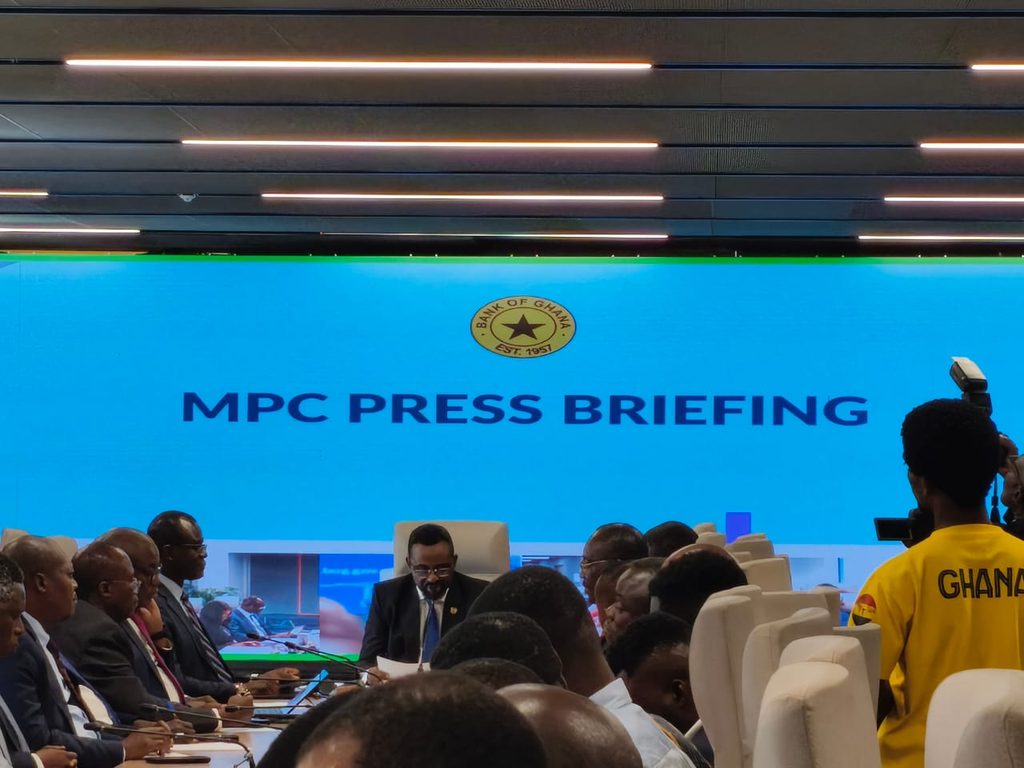
Announcing the decision at the conclusion of the 132nd Monetary Policy Committee meeting in Accra on Thursday, Governor of the Bank of Ghana, Dr Johnson Pandit Asiama, said the Committee unanimously voted to maintain the rate after assessing the balance of risks to inflation and economic growth.
The decision comes despite headline inflation remaining below the Bank’s medium-term target band of 8% plus or minus 2 percentage points.
Inflation rose to 5% in August 2026 from 4.6% in July, driven mainly by non-food inflation, which increased to 6.8% from 6.1%.
Dr Asiama attributed the increase in non-food inflation partly to the pass-through effects of upward adjustments in utility tariffs and elevated crude oil prices.
Food inflation, however, declined marginally to 3% from 3.1%, supported by improved food supply conditions.
Despite the increase in headline inflation, the Governor said underlying inflationary pressures continued to moderate.
The Bank’s core inflation measure, which excludes energy and utility prices, eased to 4.2% in August from 4.3% in July, while inflation expectations among consumers, businesses and the banking sector also declined.
The MPC expects headline inflation to rise into the Bank’s target band over the next few quarters. But Dr Asiama warned that the outlook is surrounded by risks that could push prices higher.
These include further upward revisions to utility tariffs, rising petroleum prices and their link to transport fares, a stronger US dollar following increases in US interest rates, and possible disruptions to global supply chains.
Global energy prices have become a major concern, with crude oil trading slightly above US$100 per barrel amid persistent geopolitical tensions.
The Governor also pointed to the prospect of a strong El Niño developing in the final quarter of the year, warning that adverse weather conditions, together with supply-chain constraints, could affect food prices and add to global inflationary pressures.
According to the Bank, several major central banks have responded to persistent inflation by tightening monetary policy, a development that could push global yields higher and make international financing conditions more difficult for emerging and frontier economies such as Ghana.
On the domestic front, however, the MPC identified continued fiscal consolidation, improved food supply and exchange-rate stability as factors capable of moderating price pressures.
“Based on these considerations, the Monetary Policy Committee viewed the balance of risks to inflation and growth as broadly balanced,” Dr Asiama said.
The Committee consequently voted unanimously to keep the policy rate at 14%.
The decision means the benchmark rate, which influences the direction of interest rates and credit conditions in the economy, remains unchanged as the central bank monitors whether recent price pressures become persistent.
Ghana’s economy has meanwhile maintained strong momentum, with real GDP expanding by 6% in the second quarter of 2026, although this was lower than the 6.6% recorded during the corresponding period of 2025.
The Bank said growth prospects remain broadly positive, barring significant spillovers from global supply-chain disruptions and weather-related shocks affecting agricultural inputs.
The MPC is scheduled to hold its next meeting from November 16 to 18.