President John Dramani Mahama has declared that Ghana is “open for business” and ready to forge long-term strategic partnerships with international investors as his government pursues an ambitious agenda of industrialisation, infrastructure development, digital transformation, and export-led growth.
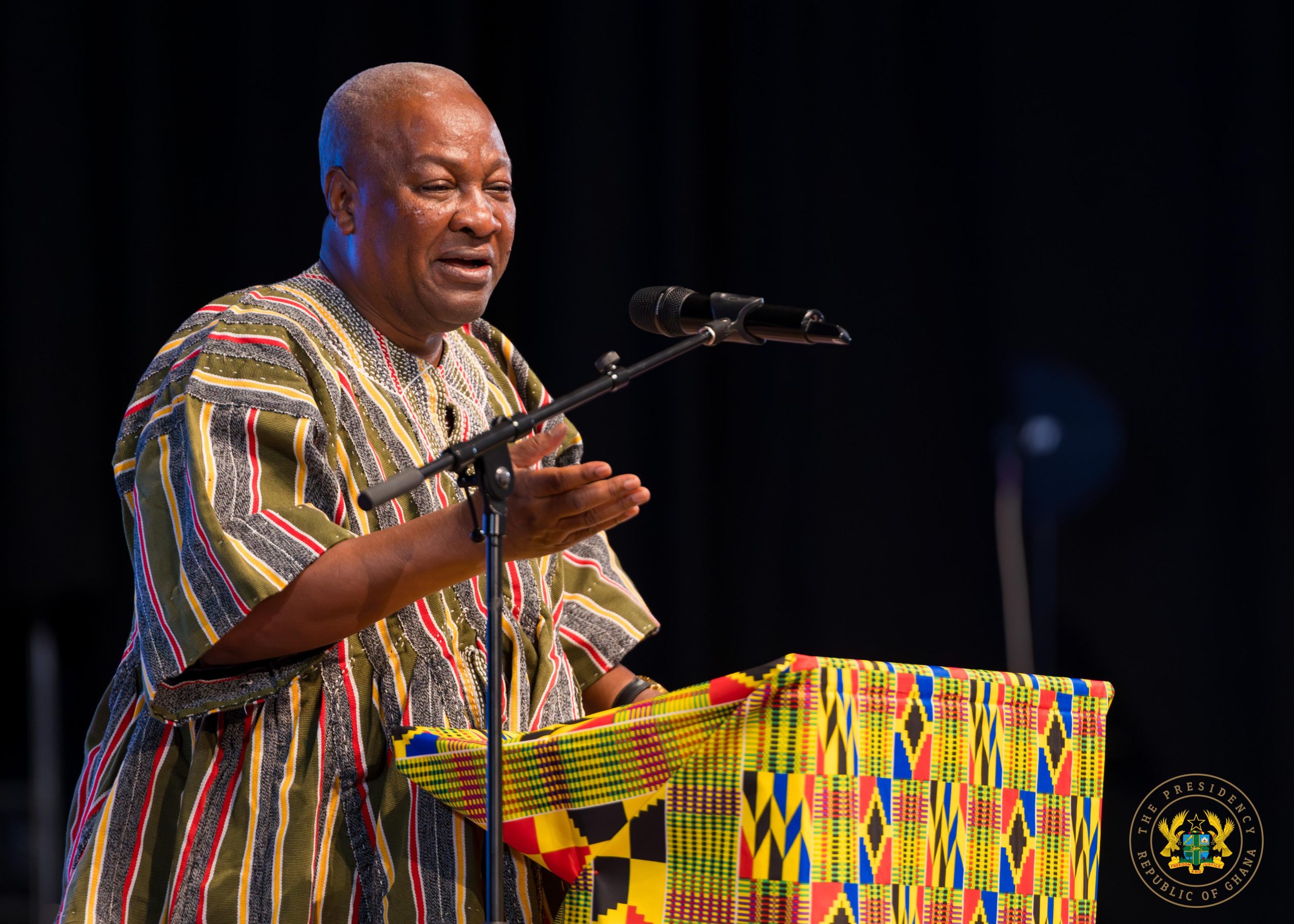
Speaking at the Ghana–UK Investment Summit 2026 in London, President Mahama said Ghana had emerged from a period of economic difficulty and was now positioned as one of Africa’s most attractive destinations for investment.
“This summit comes at a defining moment for Ghana and indeed for Africa,” the President told investors, business leaders, policymakers and development partners.
“Around the world, businesses and investors are reassessing supply chains, searching for resilient growth markets, diversifying investment destinations and positioning themselves for the next era of global economic transformation.”
Major Maritime Investment to Transform Western Ghana
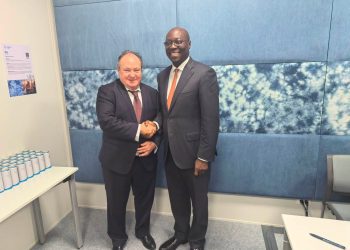
President Mahama welcomed the announcement of a £101 million ship repair and dry-docking facility at Cape Three Points Port, describing it as a transformative project for Ghana’s Western Region.
“Since our first President established the industrial city and port of Tema, much of our industrial investment has gone towards the eastern part of our country. It is time to move westwards, and a shipbuilding industry will be a jewel in the west,” he said.
The President thanked the UK High Commissioner to Ghana, Dr. Christian Rogg, for what he described as a significant investment announcement that would help reshape the economic dynamics of the region.
Ghana-UK Partnership Must Go Beyond Traditional Trade
President Mahama noted that annual bilateral trade between Ghana and the United Kingdom now exceeds £1.5 billion but argued that the relationship should evolve into deeper strategic collaboration.
“The future of the Ghana-UK partnership must move beyond traditional trade into deeper strategic collaboration in manufacturing, technology, infrastructure, agribusiness, renewable energy, financial services, pharmaceuticals, tourism, education and the digital economy,” he said.
According to him, the summit should serve as more than a networking platform. “It is a platform for building long-term partnerships capable of delivering jobs, innovation, industrial growth and shared prosperity,” he stated.
Economic Recovery Restoring Investor Confidence
The President outlined what he described as remarkable improvements in Ghana’s macroeconomic performance since his administration took office.
“When my administration assumed office, Ghana faced significant economic difficulties. Investor confidence had weakened, inflation was high, debt vulnerabilities had constrained fiscal space and businesses were struggling in an atmosphere of uncertainty,” he said.
He credited disciplined fiscal management, institutional reforms and stronger coordination between monetary and fiscal authorities for restoring stability.
According to President Mahama, inflation declined from 23.8 percent in December 2024 to 3.4 percent in April 2026, while international reserves increased from approximately $8.9 billion to nearly $13.9 billion.
“Most importantly, business confidence is returning. These improvements are not abstract macroeconomic indicators.
They translate into a more predictable investment environment, lower operating uncertainty, greater currency stability and improved planning conditions for businesses and investors,” he said.
The President added that Ghana’s economy expanded by about six percent in 2025, with national output surpassing $114 billion, making the country the eighth-largest economy in Africa.
24-Hour Economy to Drive Productivity and Investment
President Mahama described the government’s flagship 24-Hour Economy initiative as a national productivity strategy rather than a political slogan.
“The 24-Hour Economy is not merely a slogan. It is a deliberate national productivity strategy designed to maximise the utilisation of infrastructure, industry, labour, logistics, transport and energy systems around the clock,” he explained.
The initiative, he said, would create significant opportunities for investment in logistics, industrial parks, warehousing, cold-chain systems, transport, manufacturing, retail, ICT and energy.
Agriculture and Industrialisation at the Centre of Growth Strategy
The President identified agriculture as one of Ghana’s most promising investment frontiers and outlined plans under the government’s Feed Ghana Programme to modernise the sector and expand agro-industrial development.
“We are establishing agro-industrial enclaves across the country, improving irrigation systems, supporting commercial farming and expanding food processing and agricultural exports,” he said.
He highlighted opportunities in cocoa processing, oil palm, cashew, shea, poultry, rice production, fisheries and cold-chain logistics.
On industrialisation, President Mahama stressed the need for Ghana to move beyond exporting raw materials.
“Our objective is simple: Ghana must become a production hub, not merely a source of raw commodities,” he stated.
He pointed to opportunities in cocoa processing, pharmaceuticals, lithium, bauxite, manganese, automotive assembly, textiles and petrochemicals as key areas for investment.
Digital Economy and Artificial Intelligence
President Mahama also outlined his administration’s plans to position Ghana as a technology and innovation hub for Africa.
“We recently launched our National Artificial Intelligence Strategy to position our country as a leading technology and innovation hub in Africa,” he said.
The President cited the government’s Million Coders Programme, investments in digital skills development, and partnerships aimed at establishing Africa’s largest integrated AI and technology hub.
“The opportunities for venture capital, private equity, technology partnerships and innovation ecosystems are significant,” he added.
$10 Billion Infrastructure Push
A major focus of the President’s address was the government’s $10 billion, five-year Big Push Infrastructure Programme.
Through the initiative, government intends to accelerate investments in roads, railways, ports, housing, aviation and transport corridors.
“We are modernising key transport corridors, including the Eastern and Western Corridors and the now iconic Accra-Kumasi Expressway,” he said.
He also revealed plans to establish a new national airline, expand airport infrastructure and modernise Ghana’s ports and logistics systems to strengthen the country’s position as a regional trade hub.
Stability, Rule of Law and Market Access
President Mahama assured investors that Ghana remains one of Africa’s most stable democracies, with strong institutions and a predictable legal environment.
“Our legal system is predictable, based on English common law. Our judiciary is independent, power transitions are peaceful and our institutions remain strong,” he said.
He further highlighted recent reforms under the Ghana Investment Promotion Authority Act, including the removal of minimum capital requirements in several sectors, stronger investor protections and guarantees for profit repatriation.
Gateway to Africa
The President concluded by positioning Ghana as a strategic gateway to regional and continental markets.
“Ghana is not only a national market of over 34 million people. Ghana is your strategic entry point into the ECOWAS market of more than 425 million people and the African Continental Free Trade Area, which represents more than 1.4 billion consumers,” he said.
Addressing investors directly, President Mahama issued a strong invitation for deeper engagement with Ghana.
“To the international investors gathered here today, let me say this clearly: Ghana is open for business,” he declared.
“We are open to partnerships that create jobs, transfer technology, develop skills, support industrialisation, expand exports and deliver sustainable growth.
This is a time for us to move from conversations to commitments. This is a time to invest in Ghana.”
Story: Patrick Asford Boadu