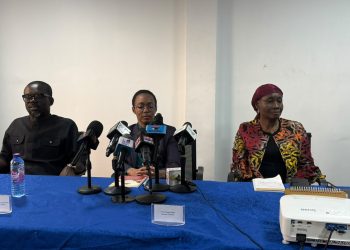
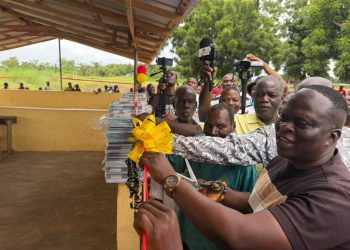
Ghana has taken a major step towards strengthening its maritime security and legal framework with the commencement of a two-day Stakeholder Sensitisation Workshop on the Maritime and Related Offences Bill, 2026, aimed at preparing key institutions for the implementation of the landmark legislation.
The workshop, held at the Accra City Hotel under the theme “Enhancing Maritime Security in Africa: Safe Seas for Africa,” is being organised by the Ghana Maritime Authority (GMA) in collaboration with the United Nations Office on Drugs and Crime (UNODC) and the European Union (EU).
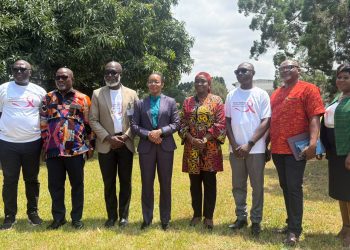
The event brought together senior officials from the Ministry of Transport, Ghana Maritime Authority, Ghana Navy, Ghana Air Force, Marine Police, the Attorney-General’s Department and other key actors within the criminal justice system to build capacity ahead of the Bill’s implementation.
Delivering the welcome address on behalf of the Minister for Transport, Chief Director of the Ministry of Transport, Mr. William Kartey, reaffirmed the government’s commitment to positioning Ghana as a leading maritime hub in West Africa.
“The Ministry is taking deliberate steps to make Ghana a maritime hub in the sub-region. To achieve this, we must ensure that our legislation aligns with international laws governing maritime activities,” Mr. Kartey said.
He commended the European Union, UNODC and the Ghana Maritime Authority for organising the sensitisation workshop, describing it as a timely initiative that will strengthen Ghana’s maritime governance.
The Deputy Director-General of the Ghana Maritime Authority, Mr. Mubarick Masawudu, described the proposed legislation as a significant milestone in Ghana’s efforts to combat emerging maritime threats.
He noted that Ghana’s maritime domain remains a vital pillar of the national economy but is increasingly threatened by piracy, armed robbery at sea, human and drug trafficking, and other forms of transnational organised crime.
“The Bill represents a significant milestone in Ghana’s efforts to strengthen its legal and institutional framework for combating maritime crime,” Mr. Masawudu stated.
He explained that the legislation would provide law enforcement agencies and prosecutors with modern legal tools and greater legal clarity to investigate and prosecute maritime offences effectively.
“A robust legal framework is essential for effective investigations, successful prosecutions and coordinated law enforcement. This Bill provides the clarity, certainty and modern legal tools needed for the suppression of maritime crime,” he added.
Although Parliament has passed the Bill and it is currently awaiting Presidential assent, Mr. Masawudu stressed that early stakeholder engagement would be critical to ensuring its effective implementation once it becomes law.
Speaking on behalf of the European Union, Mr. Jean-Pierre Bardoul, Programme Officer for the Governance Section, highlighted the EU’s continued support for maritime security through the Safe Seas for Africa Project, implemented in partnership with UNODC.
He said the project is helping to strengthen the capacity of maritime law enforcement agencies across the Gulf of Guinea to prevent, investigate and prosecute piracy and other maritime crimes, including drug trafficking.
“The Bill aligns Ghana’s legal framework with key provisions of the United Nations Convention on the Law of the Sea (UNCLOS) and provides a powerful new instrument in Ghana’s fight against maritime crime,” Mr. Bardoul said.
He added that the legislation would also give Ghanaian courts clearer jurisdiction over maritime offences, helping to address prosecutorial challenges that have previously hindered successful convictions.
Representing the United Nations Office on Drugs and Crime, Professor Martha Chantel Ribero described the workshop as another important milestone in UNODC’s partnership with Ghana to strengthen the country’s criminal justice system.
She praised Ghana’s ongoing legal reforms, describing them as commendable and essential to improving maritime security and the rule of law.
“Ghana’s legal reform efforts are commendable and represent a positive step in the right direction,” Professor Ribero noted.
She explained that the workshop seeks to deepen stakeholders’ understanding of the Bill, examine efforts to criminalise and deter maritime crime, and highlight the international and regional legal frameworks underpinning the legislation.
“On our part at the UNODC, we remain committed to supporting Ghana’s criminal justice sector through improved legislation, with the overall aim of tackling maritime crime and strengthening the rule of law,” she said.
The Maritime and Related Offences Bill, 2026, is expected to significantly strengthen Ghana’s ability to combat piracy, trafficking and other maritime crimes while aligning the country’s legal framework with international conventions and reinforcing its ambition to become a secure maritime hub in the Gulf of Guinea.
Story: Patrick Asford Boadu