The Government of Ghana, through the Ghana National Petroleum Corporation (GNPC) and its upstream subsidiary GNPC Explorco, has commenced constructive discussions with Springfield Exploration and Production Limited (SEP) on a potential state-led acquisition of SEP’s interest in the West Cape Three Points Block 2 (WCTP2).
A press release sighted by GhanaWeb Business indicates that the move forms part of government’s strategy to ensure that all decisions relating to Ghana’s upstream petroleum sector remain evidence-based, commercially prudent, and aligned with the national interest.
The intervention comes at a time when Ghana’s crude oil production has been on a declining trajectory, while global uncertainties linked to the energy transition continue to pose significant risks for resource-dependent economies.
Government argues that fast-tracking the development of the WCTP2 block is essential for sustaining national production levels and protecting the country’s long-term energy security.
“With Ghana’s national crude oil production declining over recent years, coupled with uncertainties within the global energy transition, Government considers it urgent to advance the development of the WCTP2 resource base,”
the release stated.“A timely intervention is essential to prevent further delays to field development, unlock the block’s long-term economic value, sustain upstream activity and associated national revenues, and enhance Ghana’s overall energy security.”
According to the statement, government intends to reposition the asset for accelerated development, potentially through partnerships with technically strong and experienced deepwater operators willing to work collaboratively with the State.
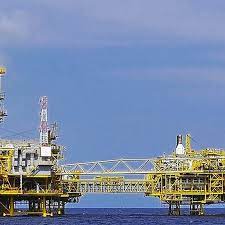
The West Cape Three Points Block 2, covering 673 square kilometres in the Tano Basin, holds historical importance as Ghana’s first wholly indigenous-operated offshore oil block.
In 2019, Springfield drilled the Afina-1X well, confirming significant discoveries—estimated at over 1.5 billion barrels of oil and 1.2 trillion cubic feet (TCF) of gas in place. Despite these promising reserves, progress toward full commercialisation has been slow due to operational and financial constraints, heightening concerns about the potential for stranded national resources.
The government’s move seeks to unlock the block’s value, protect national interests, and reinforce GNPC’s strategic role in Ghana’s upstream sector.
To ensure transparency and sound decision-making, the Petroleum Commission and GNPC have engaged independent technical consultants and transactional advisors to conduct a comprehensive technical evaluation of the block and audit past expenditures before any final decision is reached.
The outcome of these assessments will inform the next steps in what could become one of Ghana’s most significant energy interventions in recent years.