The IMANI Center for Policy & Education has engaged the Ministry of Education on Ghana’s persistent basic education challenges, with Education Minister Haruna Iddrisu calling for renewed national attention to the foundation of the country’s education system.
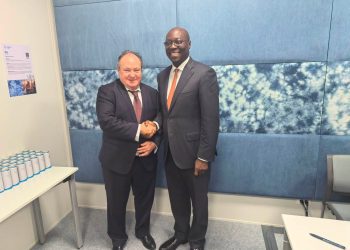
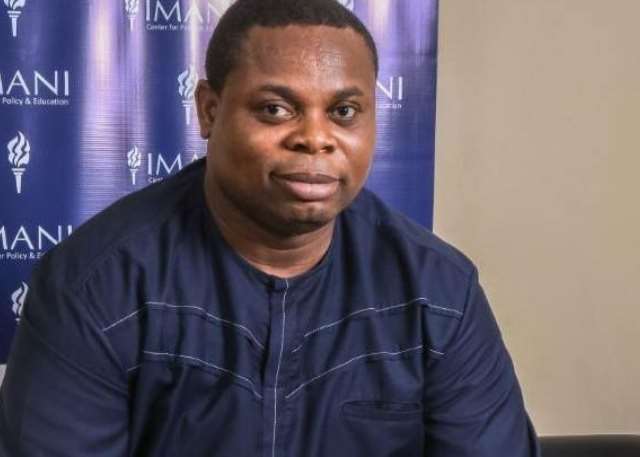
The policy engagement, held on Wednesday, August 19, 2026, brought together IMANI Founding President and Chief Executive Officer, Franklin Cudjoe, Writer and Associate Kay Codjoe, and Digital Transformation Specialist and Associate John Sitsofe Mensah.
The delegation was received by Mr Iddrisu and his Deputy, Dr Clement Abas Apaak.
At the centre of the discussion was concern over what the Minister described as an imbalance in Ghana’s education priorities, particularly the concentration of policy attention and resources on secondary education while basic education continues to face significant infrastructure and quality challenges.
According to the 2025 Auditor-General’s report, 10,730 public basic schools across 13 regions had no classroom blocks, affecting approximately 3.05 million pupils.
As a result, teaching and learning in some of the affected schools take place under trees, in sheds, churches and other temporary structures.
Mr Iddrisu argued that while programmes such as Free Senior High School and school feeding remain important, the country must give equal urgency to providing children at the basic level with proper classrooms, sanitation facilities, qualified teachers and conducive learning environments.
He questioned whether Ghana had sufficiently fulfilled its constitutional commitment to Free Compulsory Universal Basic Education before allowing the national education debate to become dominated by secondary education.
The Minister stressed that weaknesses in literacy, numeracy and learning conditions at the kindergarten, primary and junior high school levels do not disappear when pupils progress to senior high school.
Rather, he noted, such deficiencies follow learners into higher levels of education.
Teacher deployment remains a challenge
Teacher recruitment and deployment also featured prominently in the discussions.
Mr Iddrisu maintained that the challenge was not simply the number of teachers employed by the state, but whether teachers were being deployed according to the needs of individual schools and communities.
National teacher-pupil ratios, he suggested, could mask significant shortages in particular schools, districts and regions.
The meeting therefore called for greater reliance on school-level data to identify teacher shortages, determine affected subjects and develop appropriate incentives to attract and retain teachers in underserved communities.
The World Bank has reported that at least 19,987 trained teachers were recruited and deployed in 2022 and 2023, with 11,110 posted to schools under the Ghana Accountability for Learning Outcomes Project (GALOP).
However, the engagement stressed that recruitment must be matched with rational deployment to ensure that teachers reach classrooms where they are most needed.
Sanitation, discipline and inclusion
Sanitation was identified as another critical component of the basic education challenge.
The meeting highlighted the need for school infrastructure programmes to go beyond classroom blocks to include adequate water, toilets, electricity, furniture and accessibility facilities.
The participants also discussed discipline in schools, with the Minister rejecting approaches that place responsibility entirely on either students or teachers.
He argued that maintaining discipline should be treated as a shared responsibility involving students, teachers, parents, traditional authorities, religious leaders and other community stakeholders.
The discussion further highlighted the need for greater attention to special and inclusive education.
Mr Iddrisu proposed that the Ghana Education Trust Fund (GETFund) dedicate meaningful resources to special needs education and training, including specialist teachers, accessible infrastructure and assistive technologies.
Ghana’s 2026 education budget allocates GH¢52.85 million to Inclusive and Special Education.
Scholarships administration
Scholarship administration was also discussed following the replacement of the former Scholarships Secretariat with the Ghana Scholarships Authority under Act 1149.
The Minister called for greater harmonisation of publicly funded scholarship schemes to create a more coherent system for awarding, monitoring and accounting for scholarships.
The system, he said, should properly consider merit, financial need, disability, fields of study and the developmental priorities of the country.
The meeting also considered the role of domestic bursars and matrons in schools, with calls for their responsibilities, institutional support and professional standards to be reviewed.
Their duties, which include food safety, catering, sanitation, stock management and student welfare, were described as integral to the quality of the education environment.
IMANI calls for stronger foundation
The engagement ultimately underscored the need for Ghana to pursue an education strategy that strengthens basic education while preserving gains made in access to secondary education.
IMANI’s engagement with the Ministry comes at a time when concerns over infrastructure deficits, teacher distribution, sanitation, discipline, scholarships and inclusive education continue to shape discussions about the future of Ghana’s education system.
The policy direction, the meeting suggested, should be anchored in measurable infrastructure targets, transparent financing, data-driven teacher deployment, improved sanitation standards, accountable scholarship administration and sustained investment in special needs education.
The central message from the engagement was that Ghana’s education progress should not be measured only by the number of students entering senior high school or the resources committed to secondary education.
It must also be measured by the quality of the basic education system that prepares those students for the next stage.
“If the foundation remains weak, every success recorded above it will eventually inherit the weakness below,” the engagement emphasised.