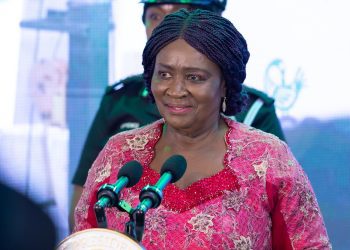
President John Dramani Mahama has called for renewed global commitment to reparatory justice, urging the international community to confront the enduring legacy of the transatlantic slave trade with honesty, dignity, and decisive action.
Speaking at a high-level reparatory justice event, the Ghanaian leader stressed that addressing historical injustice must begin with truth particularly in how history is framed and discussed.
“Truth begins with language,” President Mahama stated. “There is no such thing as a ‘slave’ by nature. These were human beings who were forcibly trafficked and enslaved, and recognizing this restores their humanity and dignity.”
He described the transatlantic slave trade as a system built on the deliberate denial of African humanity, reinforced by false racial ideologies.
“This system reduced African people to objects for exploitation, justified by a racial hierarchy that claimed Black people were inferior. That claim had no scientific or moral basis,” he said.
President Mahama emphasized that any meaningful conversation about slavery must start with reclaiming the dignity and equality of Africans and their descendants. He also reiterated the importance of formally recognizing slavery as a crime against humanity.
“Declaring slavery a crime against humanity allows the global community to acknowledge the suffering of millions and take steps toward justice and healing,” he noted.
Reflecting on the brutal realities of the slave trade, the President recounted the suffering endured during the Middle Passage, where millions of Africans faced inhumane conditions.
“Men, women, and children were subjected to horrific conditions. Many died from disease, abuse, and despair before even reaching their destination,” he said.
He further highlighted how enslaved Africans were stripped of their identities, including their names, cultures, and family ties, and were assigned imposed identities that erased their origins.
President Mahama pointed out that slavery persisted because of its economic benefits to those who practiced it.
“It thrived because it was profitable. Forced and unpaid labour generated enormous wealth, while human lives were treated as disposable,” he stated.
He also drew attention to the scale of the transatlantic slave trade, noting that millions of Africans were trafficked to regions such as Brazil, the Caribbean, and North America over several centuries.
The President rejected attempts to justify slavery within its historical context, insisting that it was morally wrong even at the time.
“There were always voices that opposed slavery. Any attempt to justify it ignores this fundamental truth,” he said.
He warned against the distortion of history through softened language.
“Describing enslaved people as ‘workers’ erases the truth and diminishes the severity of the injustice,” he added.
President Mahama also highlighted the often-overlooked contributions of Africans to global development, noting their central role in building economies and infrastructure in Europe and the Americas.
Referencing the philosophy of Bob Marley, he stressed the importance of mental liberation.
“The legacy of slavery continues through language and perception. We must free our minds from the narratives that diminish our history and identity,” he said.
He further challenged stereotypes about Africa’s past, pointing to advanced pre-colonial civilizations such as Great Zimbabwe and the Benin Kingdom as evidence of the continent’s rich heritage.
In his closing remarks, President Mahama underscored the need for collective global action.
“Reparatory justice and remembrance are essential for healing.
The international community must confront the truth and take responsibility for the lasting impacts of slavery,” he said.
He urged delegates to support ongoing efforts toward justice, calling for unity in acknowledging historical wrongs.
“We must speak truth to power and collectively recognize the full extent of the injustices committed against millions of enslaved Africans,” President Mahama concluded.
Story: Patrick Asford Boadu