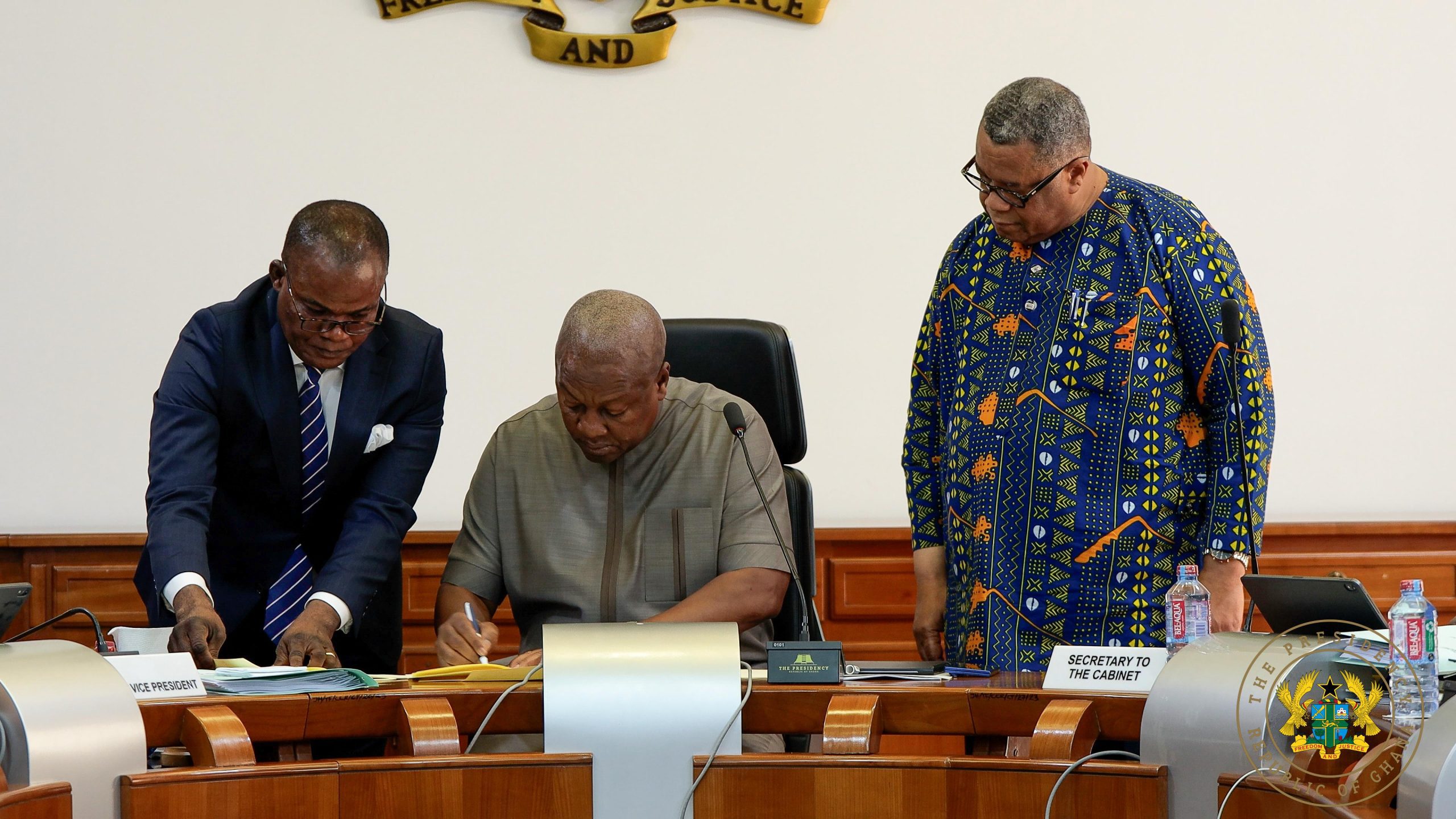
President John Dramani Mahama has given presidential assent to the 24-Hour Economy Authority Bill, marking a major milestone in the government’s flagship agenda to transform Ghana’s economy and boost job creation.
Addressing cabinet colleagues after signing the Bill into law, the President described the legislation as one Ghanaians have “been waiting for,” noting that it represents a core pillar of the administration’s economic transformation strategy.
“This Bill Ghanaians have been waiting for, it was one of our flagship strategies for economic transformation,” President Mahama said. “It’s taking a while but we needed to go patiently through the process to give legal effect to it, and so from now we must move from strategy to implementation.”
The President stressed that the passage of the law now shifts the focus squarely to execution, particularly the rollout of incentives aimed at stimulating private sector investment.
“The business sector is waiting, Ghanaian investors are waiting, foreign investors are waiting,” he noted. “They want to see the package of incentives that we can afford, so that they can invest more and expand productivity and also create more employment for our young people.”
The 24-Hour Economy Authority is expected to coordinate policies and incentives that encourage round-the-clock operations across key sectors, including manufacturing, logistics, services, and agribusiness, with the goal of increasing productivity, competitiveness, and employment.
President Mahama used the occasion to commend those who worked on the legislation, singling out senior presidential advisor Goosie Tanoh and his team for their dedication.
“It’s my pleasure to assent to this Bill today,” the President said. “Let me congratulate the team that has been working on it, our comrade Goosie Tanoh, and his team.”
With the Bill now law, government officials say attention will turn to operationalizing the Authority and unveiling the incentive framework designed to attract both local and foreign investment into Ghana’s emerging 24-hour economy.
Story: Patrick Asford Boadu