The State Housing Company Limited has declared its intention to reclaim its standing as the nation’s premier housing developer through an aggressive operational expansion and strategic financial partnerships aimed at easing home acquisition for all income classes.
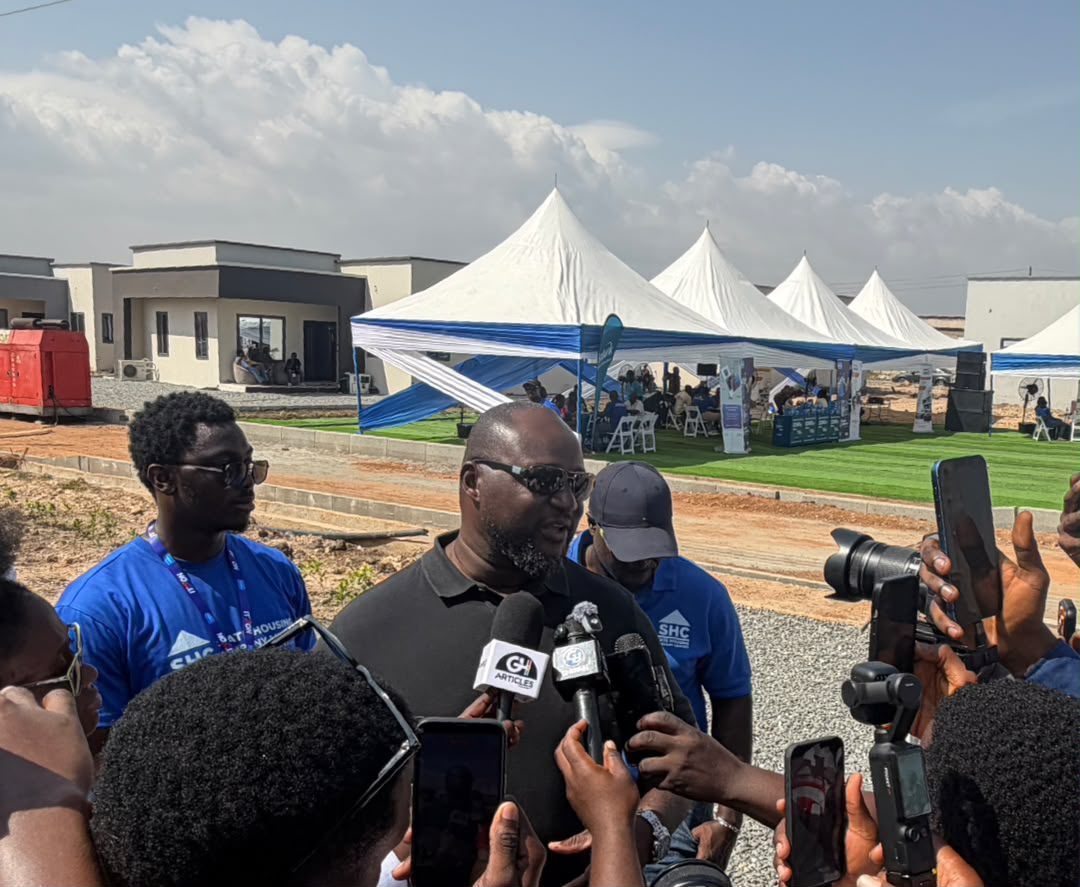
Addressing journalists during an open house event for Surge Homes, a 195-unit residential estate situated in Amrahia, Managing Director John S. Bawah emphasized that the institution is actively tackling both supply and demand bottlenecks in the sector.
“We seek to, first of all, re-establish the position of the State Housing Company Limited as the leading housing developer in Ghana,” Bawah affirmed, adding that the institution is aligning its operations with broader national institutional reforms to deliver more value for citizens everywhere.
Ghana currently faces an estimated housing deficit of 1.8 million units, compounded by rapid urbanization, with 60 percent of the national population residing in urban centers. This demographic shift has created intense competition for available residential stock.
To address the shortfall, the State Housing Company Limited is expanding its construction pipeline nationwide. The organization’s development portfolio is scaling from approximately 300 housing units this year to a target of nearly 600 units next year.
Major regional initiatives include the flagship Dedesua Housing Project in Kumasi, which is projected to deliver about 1,000 housing units, alongside ongoing projects in Tamale, Cape Coast, Takoradi, and the newly created regions.
Bawah reiterated that the company’s development portfolio remains inclusive across economic divisions. “What our role is, is to make sure that we are providing enough housing stock for every financial class. Not just the high end, but the middle class, the lower middle income, and the low income,” he noted.
Addressing the demand side of the sector, the firm has established operational linkages with major commercial lenders, including Republic Bank, Absa Bank, Ecobank and Fidelity Bank to broaden access to long-term mortgage financing.
According the the MD, stabilizing macroeconomic indicators have significantly improved borrowing conditions across the banking sector. Commercial mortgage interest rates have dropped from historic averages of 25 percent per annum down to between 12 percent and 13 percent, while repayment periods have been extended from standard 15-year tenures up to 20 years.
Furthermore, collaborative programs structured through the National Housing Fund, the Ministry of Finance, and Republic Bank now offer concessionary mortgage rates as low as 8.4 percent.
“The market is changing,” Bawah remarked. “People are going to have more access to affordable financing, which allows them to comfortably secure a home for themselves and their families.”
Responding to questions regarding transit connectivity for suburban developments such as the Amrahia project, the Managing Director pointed to ongoing state road infrastructure developments executed under government public works programs.
Major road construction projects linking Amrahia to primary commercial zones including East Legon and Central Accra are expected to streamline regional transit significantly.
“If you combine the housing delivery with the aggressive approach that His Excellency’s government is pushing to develop our road infrastructure, I believe that in the next year when the contractor is done on this road, anybody leaving from Amrahia, from Sedge Homes to work, whether it’s East Legon, whether it’s Accra Central, shouldn’t spend more than half an hour on the road,” Bawah stated.
He added that complementary traffic management strategies, such as contraflow operations introduced by the Ministry of Local Government, coupled with capital city road rehabilitation initiatives, are designed to shorten transit times and facilitate accessibility across all real estate tiers.
Eugenia Ewoenam Osei