In the bustling corridors of Accra’s premier malls, the Marina and the Accra Mall, he was a familiar, if unremarkable, sight. A Russian national, moving with the ease of a wealthy expatriate, he frequented the high-end cafes and boutiques where the city’s young and ambitious gather. To many of the women he met, he was a charming foreigner; to the state, he would soon become the face of a sophisticated international crime.
The Hidden Lens
The charm, investigators now allege, was a calculated front. Behind closed doors, the suspect is accused of orchestrating a massive “sextortion” and non-consensual filming ring. Using high-definition cameras hidden in private spaces, he reportedly recorded intimate encounters with dozens of Ghanaian women.
Crucially, these women were unaware they were being filmed. Even in instances where the encounter was consensual, the recording was not. The suspect didn’t just keep these videos; he turned them into a global commodity.
The Digital Black Market
While the victims went about their daily lives, their most private moments were being auctioned off on the dark corners of the internet. The suspect allegedly uploaded the footage to subscription-based platforms and private Telegram channels.
He didn’t deal in Cedis or Dollars. To evade the prying eyes of the Bank of Ghana and local authorities, he processed payments through cryptocurrency. By the time the Ghana Cybersecurity Authority began tracing the digital breadcrumbs, he had already built a lucrative, illegal empire funded by the exploitation of Ghanaian dignity.
A Diplomatic Standoff
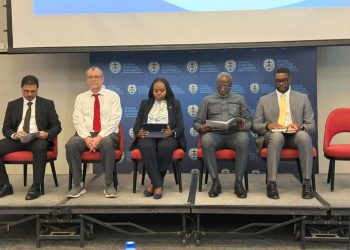
As the scale of the crime became clear, the Government of Ghana shifted into high gear. In a high-stakes briefing, the Minister for Communications, Hon. Samuel Nartey George, and the Minister for Gender, Hon. Dr. Agnes Naa Momo Lartey, stood before the press to send a message that echoed all the way to Moscow.
”This is not a moral issue; it is a criminal issue,” Minister George declared, leaning on the weight of the Cybersecurity Act, 2020.
The hunt led to a tense meeting with the Russian Ambassador, H.E. Sergei Berdnikov. Because Ghana and Russia lack a formal extradition treaty, the suspect had hoped he was untouchable. However, the Ghanaian government played a strategic card: they proved that his actions were also a crime under Russian law.
The Pursuit of Justice
The suspect has since fled the country, but the net is closing. With the help of COP Lydia Yaako and the CID, the government has activated Interpol cooperation. The goal is an international arrest warrant that makes the world too small for him to hide.
Meanwhile, back in Accra, the focus has shifted to the survivors. The Ministry of Gender has transformed its offices into a sanctuary, offering clinical psychological support to the women whose lives were upended by a click of a “record” button.
The Moral of the Modern Era
The case serves as a grim reminder of the “digitalization of crime.” The Ghanaian government remains resolute: whether the perpetrator is a local citizen or a foreign national, the law, Act 1038 covers the entire digital landscape.
The message to the public is clear: Do not share the videos. To share is to become an accomplice; to watch is to fund a crime. The state stands with the victims, waiting for the moment the “Russian Man” is finally brought to answer for his digital trail of betrayal.
Protection Under Section 67 of the cybersecurity Act
Section 67 of the Cybersecurity Act, 2020 (Act 1038) is Ghana’s primary legal weapon against “revenge porn” and digital exploitation. It was specifically designed to protect the privacy and emotional well-being of individuals in the digital age.
Breakdown of the specific protections and provisions under this section
The Core Prohibition
Section 67 makes it a criminal offense to intentionally distribute, or cause another person to distribute, an intimate image or a prohibited visual recording of another identifiable person without their consent.
Key Legal Protections
Reasonable Expectation of Privacy: The law protects images or recordings made in circumstances where the person depicted had a reasonable expectation of privacy. This applies even if the person originally consented to being recorded but did not consent to the image being shared.
Intent to Cause Distress: The prosecution must prove that the distribution was done with the intent to cause serious emotional distress to the victim.
Broad Definition of “Intimate”: Under the Act, an intimate image includes depictions where:
Genital or anal regions are bare or covered only by underwear.
Breasts (below the top of the areola) are uncovered or visible through clothing.
The person is engaged in explicit sexual activity.
Digital Alterations: The protection extends to images that have been digitally altered (like “deepfakes” or photoshopped images) to appear as though the person is engaged in sexual activity, even if the image is not real.
Penalties for Breaching Section 67
A person who contravenes this section commits an offense and is liable on summary conviction to:
A Fine: Usually ranging between 1,000 to 5,000 penalty units.
Imprisonment: A term of 1 to 3 years, or both.
Note on Extortion: If the non-consensual image is used to blackmail the victim for money or favors, the charge shifts to Sexual Extortion (Section 66), which carries a much heavier penalty of 10 to 25 years in prison.
Protection Against Redistribution
As noted in the Minister’s statement, Section 67 isn’t just for the original “uploade.” It protects victims against the “viral” nature of the internet.
Anyone who intentionally causes another person to distribute the image (re-sharing, forwarding on WhatsApp, or posting on social media) is also liable under this law.
Author: Eugenia Ewoenam Osei
The author is a student of UNIMAC-GIJ