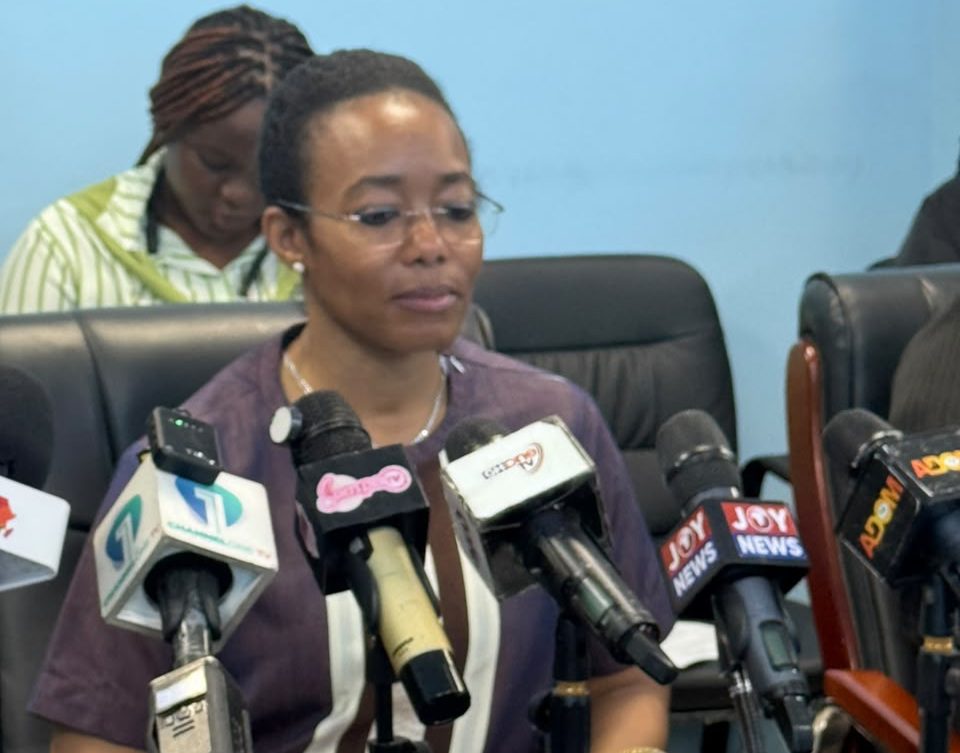
Minister for Environment, Science and Technology, Dr. Zanetor Agyeman-Rawlings, has stepped up engagement with key agencies under her Ministry, calling for stronger research, innovation, commercialisation and environmental management as Ghana seeks to use science and technology to address national development challenges.
As part of her ongoing engagement with institutions under the Ministry, Dr. Agyeman-Rawlings visited the Council for Scientific and Industrial Research (CSIR) and E-Waste Recycling Ghana, where she interacted with management and technical officials on their achievements, challenges and opportunities for collaboration.
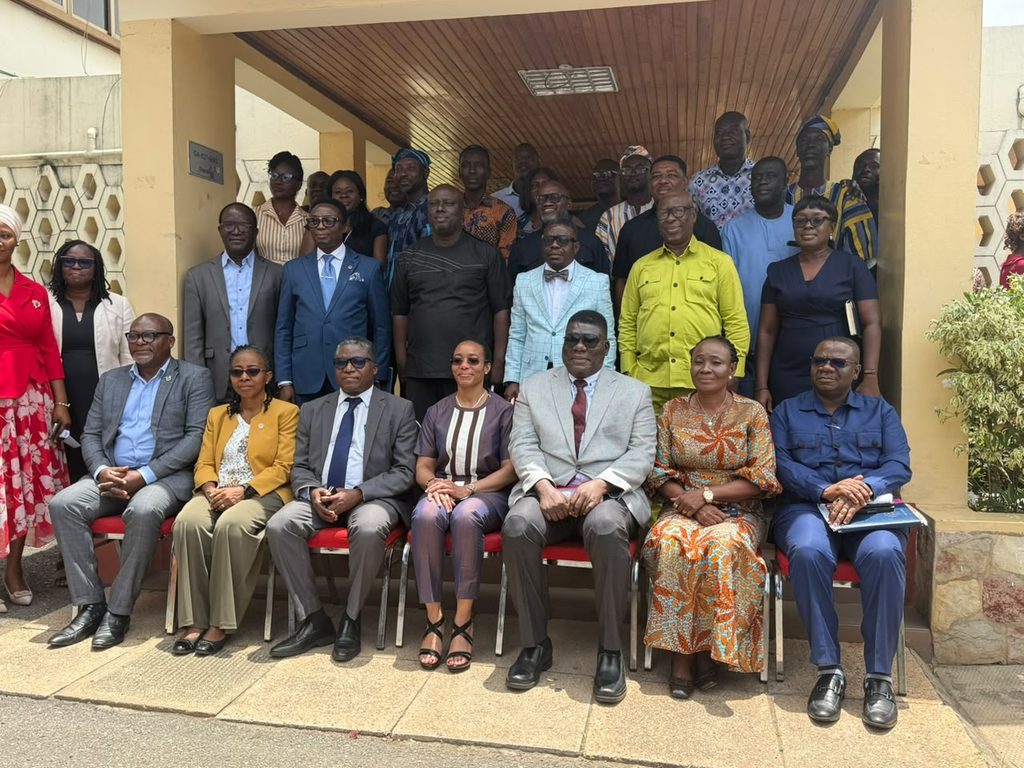
The engagements provided the Minister with an opportunity to familiarise herself with the work of the institutions and identify areas where policy support, stronger coordination and investment could help improve their contribution to national development.
Dr. Agyeman-Rawlings assumed office as Minister for Environment, Science and Technology earlier this month after Parliament approved her nomination on August 27 and President John Dramani Mahama swore her into office on August 29.
CSIR to take centre stage in research commercialisation
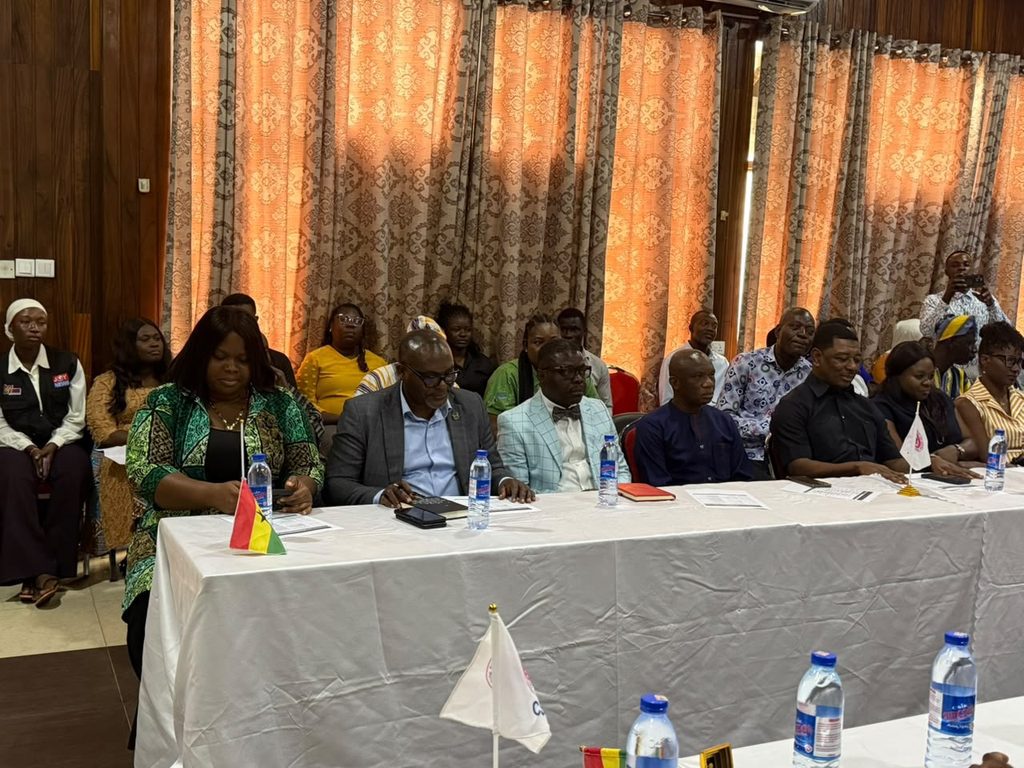
At the CSIR Head Office in Accra, the Minister met with the institution’s management, directors and heads of departments and research institutes.
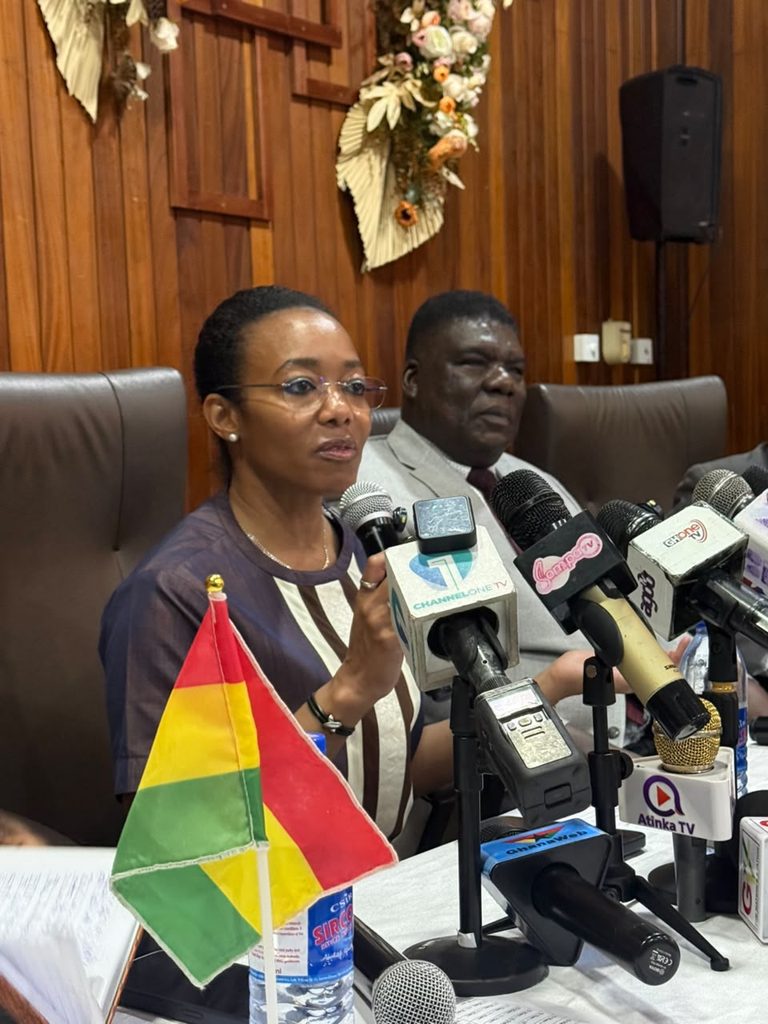
Welcoming her, CSIR Director-General, Prof. Paul Bosu, said the visit was significant at a time when Ghana was seeking to strengthen the role of science, technology and innovation in national development.
He said CSIR’s nearly seven decades of scientific expertise covered areas including agriculture, food and nutrition, natural resources, environmental management, industry, energy and biotechnology.
Prof. Bosu said emerging challenges such as climate change, artificial intelligence, biotechnology and advanced technologies required Ghana to move beyond being a consumer of technology to becoming a producer of knowledge, innovation and practical solutions.
“We aspire to a future in which science is not simply discussed but deployed, innovation is not merely celebrated but commercialized, and research is not merely published but transferred into tangible impact,” he said.
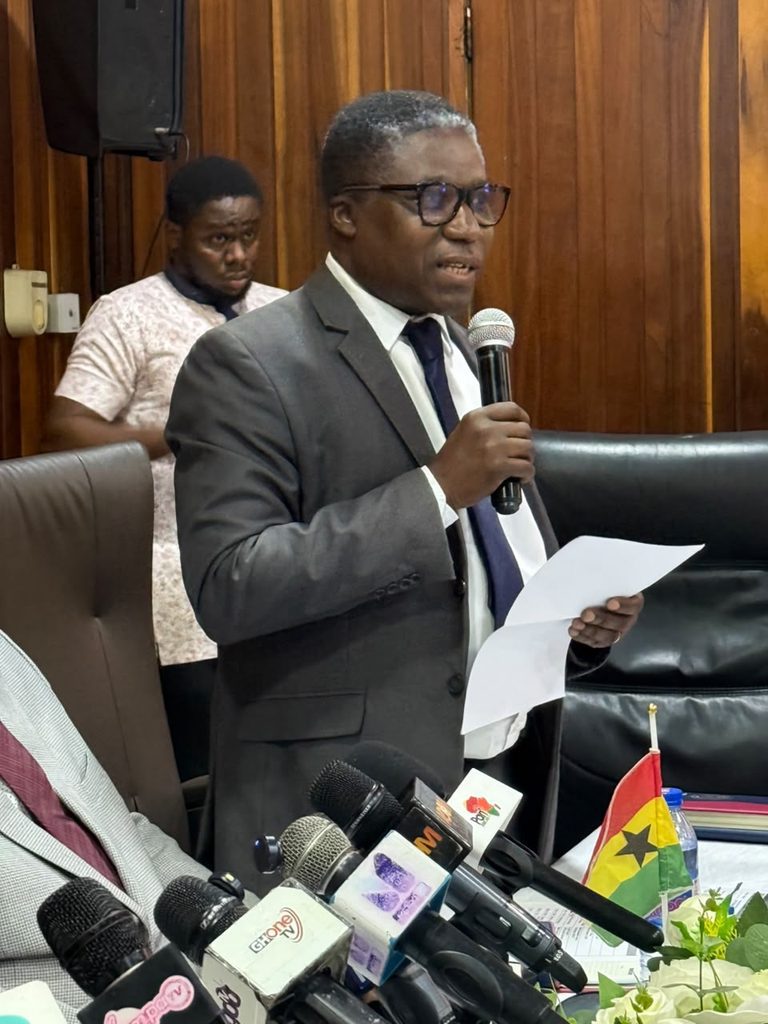
He also invited the Minister to undertake a nationwide tour of CSIR’s 13 research institutes and more than 60 field stations to gain firsthand knowledge of the institution’s work.
CSIR management used the engagement to raise concerns including the need for improved conditions of service and salary increments for scientists and researchers, recruitment to replace staff approaching retirement and the regularisation of some long-serving contract employees.
Management also raised concerns about encroachment on CSIR lands in some parts of the country and called for stronger government support to protect the institution’s research facilities and strategic properties.
The institution further highlighted its growing commercial activities, saying a number of technologies and agricultural and food products developed by CSIR were already available on the market.
Some of the products, including Melange Koose Mix, Cereal Mix and Kooko Flour, were presented to the Minister during the visit.
Management said greater public awareness and stronger support for commercialisation could help expand the market for locally developed technologies and products while contributing to food security, employment and industrial development.
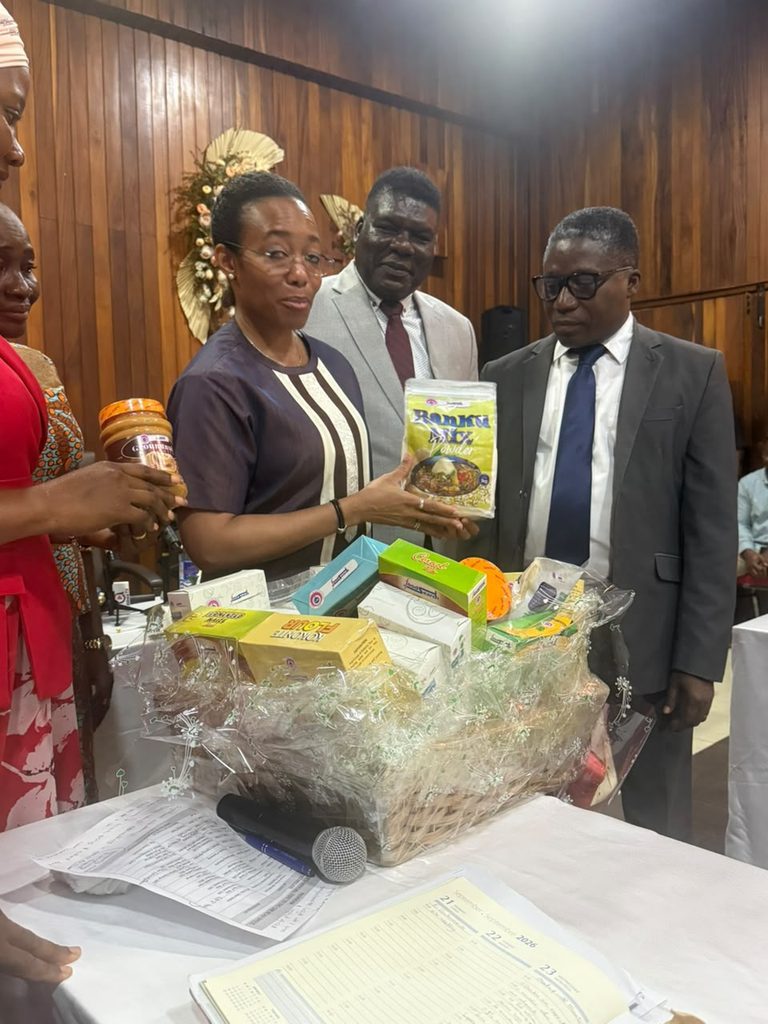
CSIR also announced plans for a CSIR Week in October to showcase its research, technologies and commercial products to policymakers, industry and the general public.
Minister seeks greater visibility for CSIR
Responding to the concerns, Dr. Agyeman-Rawlings described CSIR as an institution with significant potential and stressed the need to bridge the gap between scientific research and the Ghanaian public.
“CSIR is one of those agencies that just makes me smile because of the potential,” she said.
The Minister announced plans to work with the institution to increase the visibility of its products and research.
She said CSIR products could be displayed at the Ministry’s reception area, while videos showcasing the work of its various agencies could be featured on digital screens and social media platforms.
“We want people to know who you are. We want people to know what you do. We want us to celebrate your scientists and researchers,” she said.
Dr. Agyeman-Rawlings also expressed interest in visiting all 13 CSIR institutes to better understand their work and examine how research could contribute to addressing challenges including environmental degradation, land restoration, water pollution and food insecurity.
She called for stronger collaboration between researchers, industry and government to ensure that scientific discoveries were translated into practical solutions and economic opportunities.
The Minister also emphasised the need for scientists to communicate their work in simpler language to make research more accessible to the public and encourage more young people to pursue careers in science and technology.
E-waste becomes key part of green-transition agenda
At E-Waste Recycling Ghana, the Minister turned attention to the growing environmental implications of Ghana’s transition towards electric vehicles, solar energy and other renewable technologies.
Dr. Agyeman-Rawlings urged the organisation to develop a forward-looking strategy for dealing with waste generated by these technologies when they reach the end of their useful lives.
She said Ghana must be proactive in developing recycling and treatment capacity or establish arrangements with countries that have the necessary technology to process waste that cannot yet be handled locally.
“We don’t want to end up with a new form of waste that we cannot deal with,” she cautioned.
The Minister said the country’s green-transition agenda must be accompanied by effective waste-management systems to prevent new technologies from creating new environmental problems.
She also pointed to the pressure on existing landfill facilities, stressing that no matter how large a landfill might be, it would eventually reach its limits.
She therefore called for stronger waste segregation at household, institutional and industrial levels, particularly to prevent hazardous waste from contaminating groundwater, soil and the atmosphere.
E-Waste Recycling Ghana outlines funding and operational challenges
The Head of Fund Operations at E-Waste Recycling Ghana, Gerald Adom-Gyamfi, briefed the Minister on the organisation’s funding arrangements, progress and operational challenges.
He said the E-Waste Fund was financed through government and parliamentary allocations as well as a levy imposed on importers and producers of electrical and electronic equipment.
According to Mr. Adom-Gyamfi, the levy now covers about 365 categories of electrical and electronic products, compared with an initial list of 65 priority categories.
He said the Fund had mobilised approximately GH¢120 million since its establishment, with about GH¢70 million currently available to support collection and recycling activities.
E-Waste Recycling Ghana currently operates six collection centres and works with five recycling companies.
Mr. Adom-Gyamfi said about 1,400 tonnes of e-waste had been collected, with approximately 260 tonnes recycled under an incentive-led pilot programme.
The programme has also expanded to include items such as lamps, LEDs and LCD screens, while plans are underway to establish additional regional collection centres, introduce drop-off points at shopping malls and develop an application-enabled system for bulk collection.
However, he identified limited technical and treatment capacity, storage constraints and competition from the informal scrap market as major challenges.
He said informal operators often offered higher prices for discarded electronic equipment than the incentives available through the formal recycling system, making it difficult to attract some waste streams into regulated channels.
Mr. Adom-Gyamfi proposed measures including a review of public levy rates, additional donor financing, simplified permitting arrangements, stronger public-private partnerships and the decentralisation of treatment facilities, particularly in the northern and middle belts.
He also called for stronger public education and enforcement, including the training of district assembly environmental officers to register and regulate scrap dealers.
Linking science, technology and environmental protection
The Minister’s engagements with CSIR and E-Waste Recycling Ghana form part of a broader effort to strengthen coordination between scientific research, technological development and environmental protection.
At both institutions, Dr. Agyeman-Rawlings stressed the need for agencies to move beyond research and policy discussions towards practical solutions that can benefit citizens and contribute to economic development.
She also urged the agencies to bring forward their challenges together with practical solutions that can guide government support and policy interventions.
The engagements reflect the Ministry’s stated direction of integrating science, technology and innovation with environmental sustainability, an approach the government has identified as important to Ghana’s development agenda. President Mahama, during the Minister’s swearing-in, also charged her to strengthen scientific research, support innovation and ensure that science and technology contribute to national development while protecting Ghana’s environment.
Dr. Agyeman-Rawlings said she remained committed to working with the agencies under the Ministry to strengthen their institutional capacity, improve public visibility of their work and ensure that research and technological innovation translate into practical solutions for Ghana.
Story by Osman Issah Abadoo