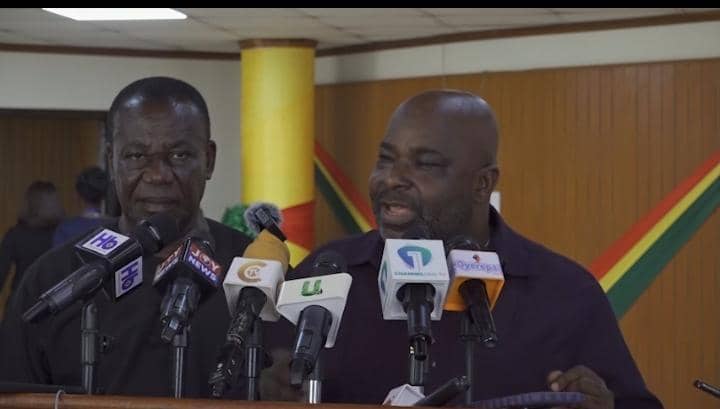
The Deputy Ranking Member on Parliament’s Trade, Industry and Tourism Committee, Michael Okyere Baafi, has vehemently criticized the current government’s decision to discontinue the One District, One Factory (1D1F) policy. He argues that the cancellation severely undermines Ghana’s industrialization agenda and economic growth, particularly given the policy’s potential to create jobs, stimulate economic activity, and improve livelihoods nationwide.
The 1D1F initiative, spearheaded by the previous administration, aimed to establish at least one factory in each district across the country to foster widespread industrialization and economic development.
Hon. Okyere Baafi voiced his strong concerns, noting the conspicuous absence of a replacement industrial policy in the March budget statement. He highlighted that while a “Feed Industry Policy ” was mentioned, the allocated funds were very insufficient, a point he previously raised in Parliament.
“What I’m addressing today,” Baafi stated, “is about the fact that we have 322 1D1F companies at various stages of implementation, with 169 already fully completed and operational.”
He expressed dismay over the lack of clarity regarding the future of these established businesses. “You just cannot stand up and say these companies also will not know their fate. That’s not too good for us as a country that the policy has been canceled,” he emphasized.
The lawmaker underscored the significant investments made by these companies, whether Greenfield (new establishments) or Brownfield (expansions of existing ones), under the 1D1F umbrella. He urged the Ministry to consider a transition period for these operational businesses, proposing that they be allowed to continue running, potentially with government incentives, until a specified future date.
“There’s the need for us to have a transition period where we can have, we can sit down and say that okay now because you’re already operationalizing this project or policy you can still run it maybe till the end of the year or till the end of next year. So after the end of next year you cannot get any incentive from government. Something like that will serve as a comfort to these companies who have invested so much money in the system,” Baafi explained.
The Ranking Member’s firm stance has ignited a broader debate about the efficacy of the 1D1F policy and the implications of its discontinuation on Ghana’s long-term economic development. According to him, stakeholders continue to weigh the potential benefits of the policy against the impact of its abrupt halt.
Story By: Eugenia Ewoenam Osei