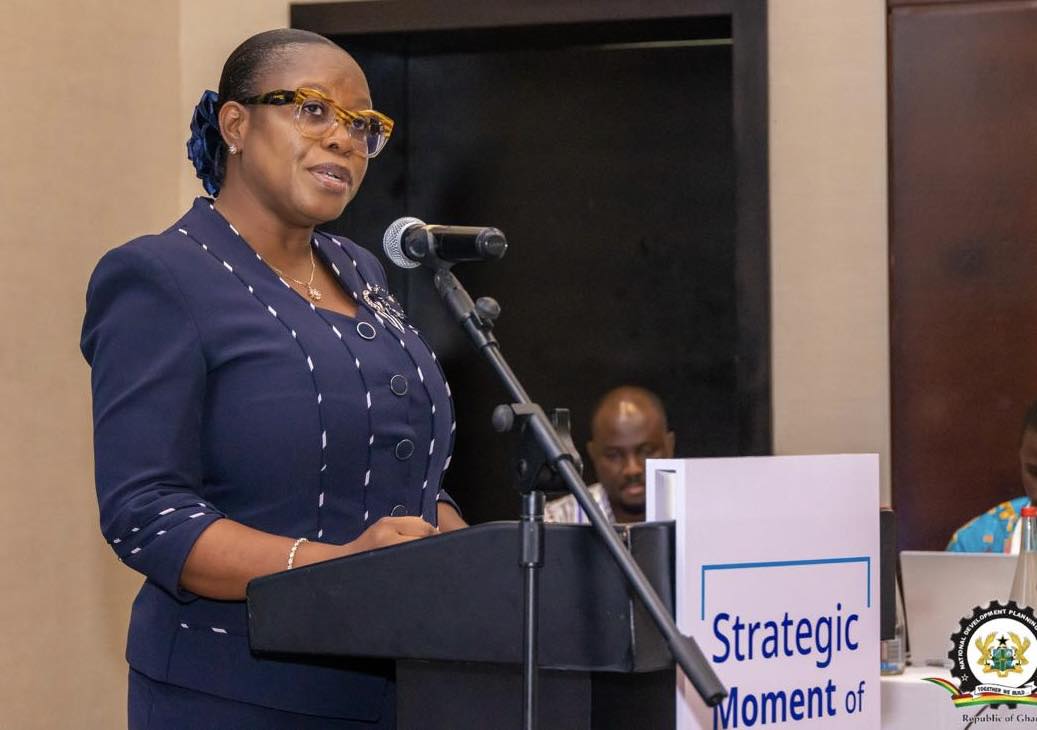
Ghana’s long-standing development challenges, ranging from weak infrastructure to poor policy implementation have come into sharp focus, as the National Development Planning Commission (NDPC) moves to consolidate the country’s fragmented plans into a single, binding national development framework.
At a media briefing in Accra, the Director-General of the NDPC, Dr Audrey Smock Amoah, revealed that consultations across all 16 regions have exposed deep-rooted structural gaps that continue to slow Ghana’s progress.
She explained that the exercise forms part of a broader national effort to develop a Consolidated National Development Plan, as directed by the President, to guide the country’s long-term growth.
“We are bringing all existing plans together into one national framework that will guide our development,” she said.
Findings from the regional engagements show that infrastructure deficits, particularly roads and transport systems remain the most pressing challenge across the country.
The consultations also highlighted high youth unemployment, weak industrialisation, and underutilised regional potential, alongside persistent gaps in access to finance for small businesses and farmers.
On the social front, issues such as poverty, inequality, weak technical skills training, and limited access to quality healthcare and sanitation services continue to affect many communities, especially in the northern parts of the country.
Environmental degradation, rapid urbanisation, and poor spatial planning were also flagged as growing concerns.
One of the most striking insights from the engagements, Dr Amoah noted, is that Ghana’s development challenges are not only about lack of resources. According to her, they are largely driven by weak governance systems, poor coordination, and ineffective implementation of plans.
“We prepare plans, but the implementation is always the challenge,” she admitted, stressing the need to close the gap between planning and execution.
The Commission’s analysis shows that in many regions, planning failures and weak coordination are just as significant as infrastructure and financial constraints.
To address this, the NDPC is pushing for a new approach, one that brings all stakeholders on board, including government agencies, the private sector, and local communities.
Dr Amoah said the Commission will expand consultations to ministries, departments, agencies, and other key groups to ensure broad participation.
“We will do it together, implement it together, and track progress together,” she stated.
She added that the goal is to create a plan that is not only inclusive but also owned by all stakeholders, making it easier to implement.
In a significant move, the NDPC is also working towards legislating the national development plan, a step that would make it binding on successive governments.
This, Dr Amoah believes, will address one of Ghana’s biggest challenges; policy discontinuity.
“We are hopeful that this time, the plan will be legislated so it binds whoever is in authority,” she said.
She disclosed that initial engagements with Parliament have already begun, with the aim of strengthening the legal backing for the plan.
The Commission is targeting September 2026 for the official launch of the consolidated plan, which will align with global frameworks such as the Sustainable Development Goals and the African Union’s Agenda 2063.