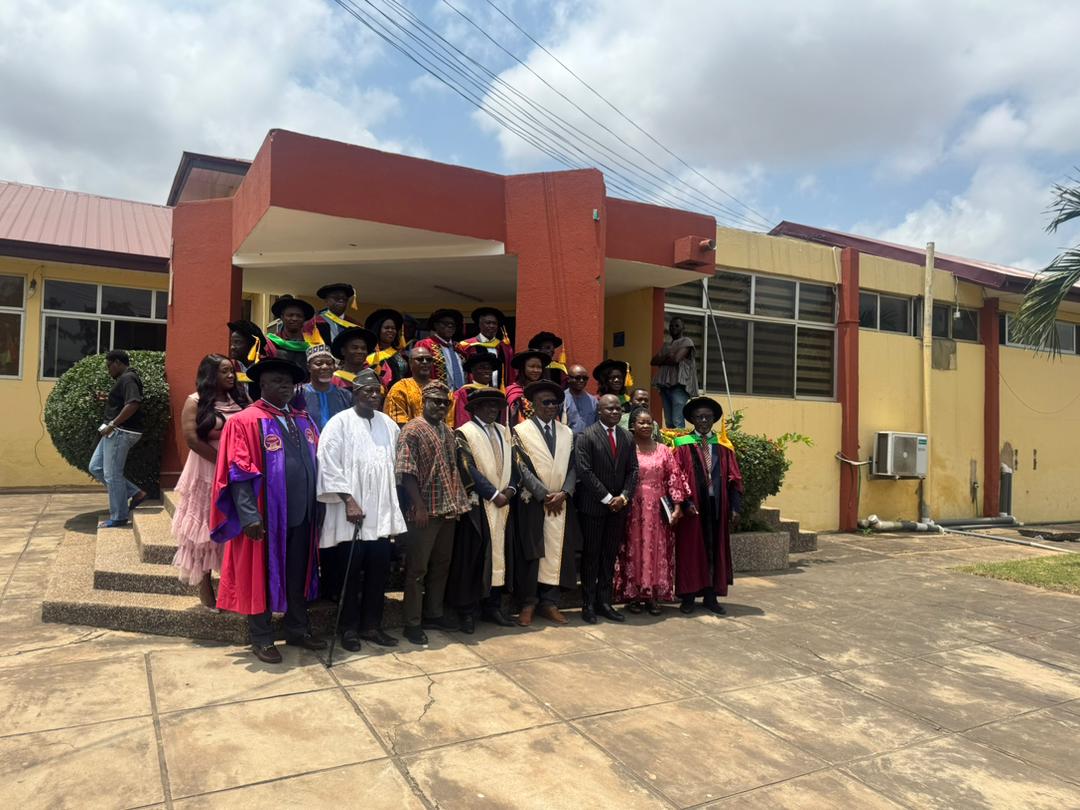
Accra – In a major policy address at the 7th Congregation of the Institute of Local Government Studies (ILGS) on Saturday, August 30, 2025, Ghana’s Minister for Local Government, Chieftaincy, and Religious Affairs, Ahmed Ibrahim, unveiled a comprehensive plan to strengthen and empower the country’s decentralized governance system.
Speaking at the ILGS campus in Ogbojo, Accra, the minister reaffirmed government’s commitment to deepening accountability and local-level development in line with President John Dramani Mahama’s Resetting Ghana Agenda.
“The success of Ghana’s decentralization program hinges on the capacity levels of local government functionaries and staff,” Mr. Ibrahim stressed, underscoring ILGS’s central role in training the next generation of governance professionals.
ILGS to Become a Degree-Awarding Institution
A key highlight of the minister’s address was the announcement that ILGS would soon be elevated into a specialized public university.
The University of Local Governance and Development Bill, 2025, he disclosed, would be presented to Parliament after Cabinet approval.
“This move is of strategic national importance,” the minister said, adding that it would enhance ILGS’s ability to provide cutting-edge research, training, and academic programs tailored for local governance and development.
Unifying Local Governance and Traditional Leadership
Mr. Ibrahim also revealed that the ministry had been strategically realigned to bring Local Governance, Chieftaincy, and Religious Affairs under one umbrella, describing it as a “tripod approach” to strengthen synergies across these institutions.
“As part of this initiative, the ministry will prioritize building the capacity of chiefs, queen mothers, and traditional authorities through the new Royal Academy for Chiefs and Traditional Authorities (RACTA) at the ILGS,” he announced.
The academy will focus on studying chieftaincy and integrating indigenous governance approaches into Ghana’s broader local government framework.
Strengthening Financial Accountability
Touching on the congregation’s theme, “Beyond the funds transfer: Exploring the prerequisites for improved financial accountability and local development in Ghana,” the minister pledged stronger oversight of local government finances.
He revealed that President Mahama had directed the direct transfer of at least 80% of the District Assemblies Common Fund (DACF) to Metropolitan, Municipal, and District Assemblies (MMDAs).
“To ensure effective utilization of these funds, the ministry will enforce strict compliance with Cabinet-approved guidelines and prevent misappropriation,” Mr. Ibrahim said. He further emphasized plans to promote greater public participation in budget tracking and accountability mechanisms.
A Call to Service
The minister concluded his address by congratulating the graduating class, urging them to carry the values of ILGS into their professional careers.
“The world today is knowledge-based, and there are various opportunities out there,” he said.
“I encourage you to serve as ambassadors of the institute, upholding integrity, leadership, and service excellence in all that you do.”
By Eugenia Ewoenam Osei