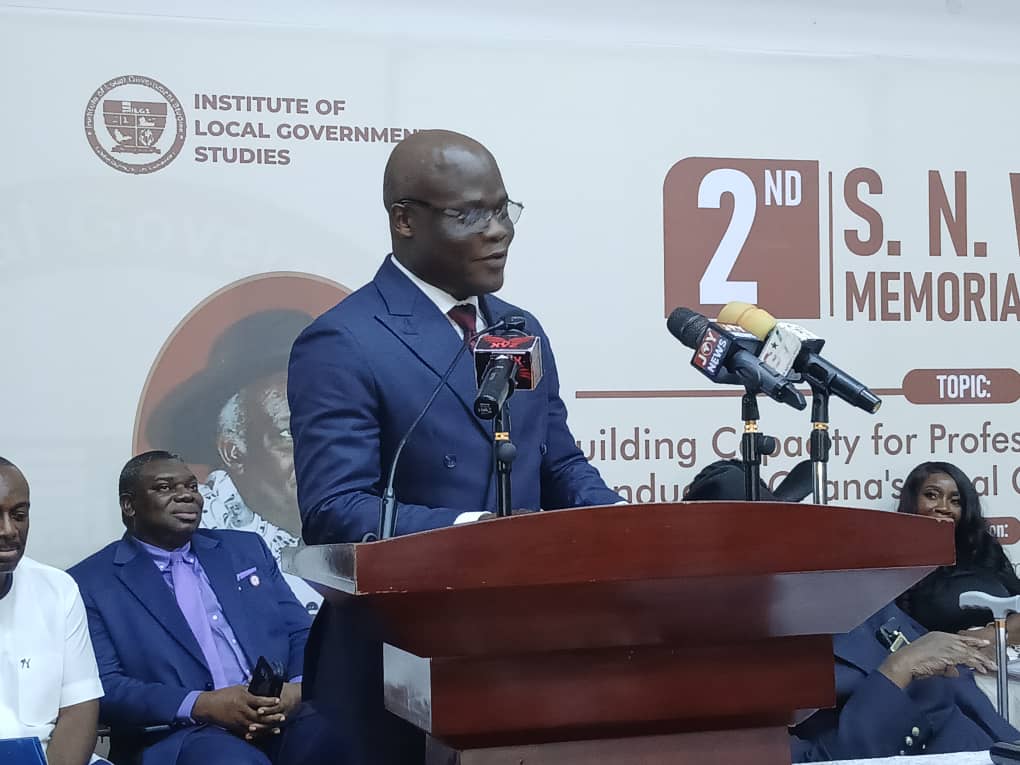
Former Minister for Local Government, Professor Kwamena Ahwoi, has called for stronger professionalism, ethical conduct, and structured career development within Ghana’s local government service to boost efficiency, accountability, and service delivery.
Delivering the Professor Samuel Nunoo Woode Memorial Lecture at the Institute of Local Government Studies (ILGS) in Accra, Prof. Kwamena Ahwoi reflected on his tenure as Ghana’s longest-serving Local Government Minister and highlighted reforms he championed to strengthen the service.
He explained that career progression within local government had historically lacked structure, prompting the creation of the position of District Coordinating Director to give staff a clearer pathway for advancement.
He added that regional and national-level appointments should be based on open, competitive processes rather than automatic promotions.
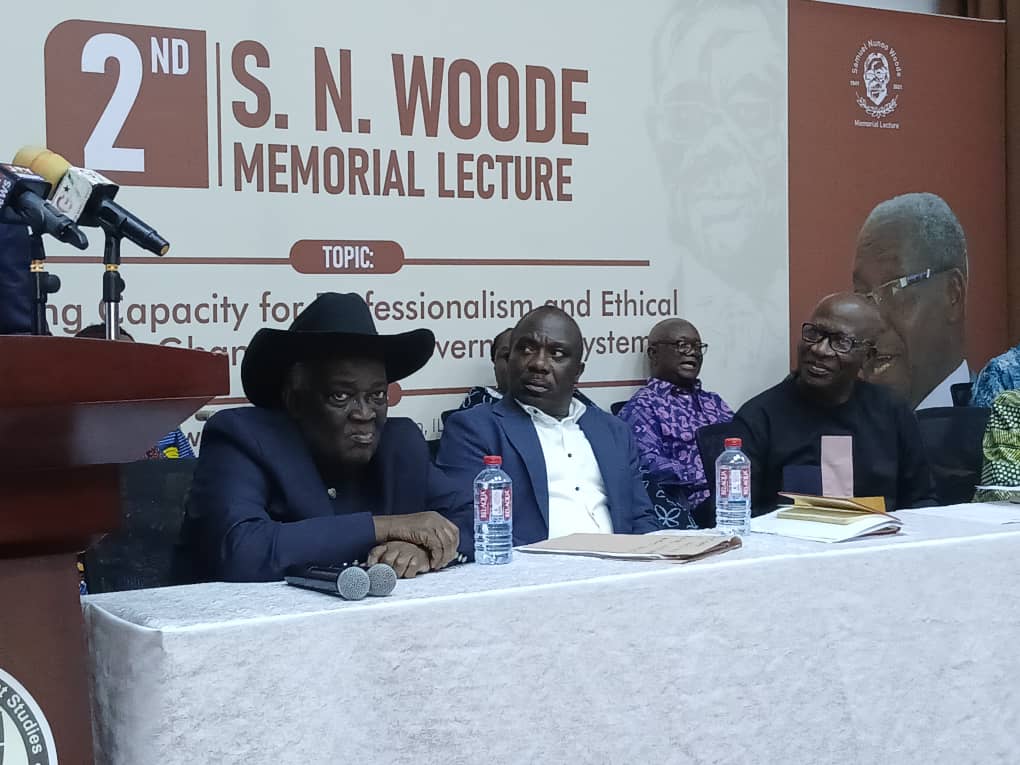
“Professionalism must go hand-in-hand with performance management and ethical responsibility,” he stated, adding that “ethicality in governance is not only about laws but about values. We must place the interests of the people above personal gain and ensure that integrity and professionalism guide every action of local government officials.”
Prof. Ahwoi also called for decentralizing training and capacity-building programs, urging the strengthening of human resource departments in each district assembly to identify specific staff needs.
He recommended closer collaboration between assemblies and ILGS to design tailored training initiatives.
He further proposed the adoption of a local government-specific code of conduct to ensure accountability across the service.
The lecture paid tribute to Professor S.N. Woode, who was instrumental in Ghana’s 1988 decentralization reforms that made district assemblies the cornerstone of local development.
Speaking at the event, the Minister of Local Government, Decentralization, and Rural Development, Hon. Armed Ibrahim, echoed Prof. Ahwoi’s call, urging stakeholders—including assembly members, technocrats, traditional leaders, and civil society—to support reforms that embed professionalism and ethics in local governance.
“With a call to action to honour Professor S.N. Woode’s legacy not just in words but in deeds, his vision must continue to guide reforms that promote ethical standards, fight corruption, and rebuild public trust in institutions,” the minister said.
The lecture also underscored the critical role of ILGS in shaping future leaders for Ghana’s decentralized governance system.
With more than 35,000 professional staff, 10,000 political functionaries, and 30,000 unit committee members operating at the subnational level, participants agreed that structured training in ethics and process management is vital for strengthening integrity in public service.
Story by Osman Issah Abadoo