In a detailed account of government’s intensified efforts to clamp down on illegal mining, Presidential Spokesperson and MP for Abura Asebu Kwamankese, Felix Kwakye Ofosu, has outlined a robust and far-reaching response aimed at dismantling galamsey networks, reclaiming polluted water bodies, and restoring national forest reserves.
According to Mr Kwakye Ofosu, a significant element of the illegal mining operations involves the use of heavy machinery, especially excavator, which were never intended for such destructive activity.
“Excavators are actually construction equipment, earth-moving tools,” he explained, adding that “they are not designed to be used illegally. But some of those involved in galamsey have found ways to use them. So, it was important to ensure that this equipment is taken away from those misusing it.”
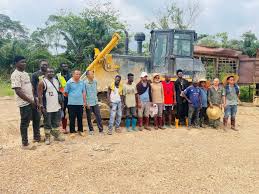
Mr Kwakye Ofosu painted a stark picture of the government’s resolve, pointing to a sharp escalation in enforcement activities.
“In the last seven to eight months, 440 excavators have been seized, and some have been destroyed. In the same period, 1,400 arrests have been made. To put that into perspective, in the last two years of the Akufo-Addo administration, only 800 people were arrested. In just eight months, we’ve nearly doubled that,” he revealed.
To strengthen accountability and speed up justice delivery, Mr Kwakye Ofosu noted that the Attorney-General is establishing special courts to swiftly prosecute offenders.
“I engaged the Attorney General and he says that special courts are going to be set up to hasten the trial of these people so that it serves as a deterrent,” he said.
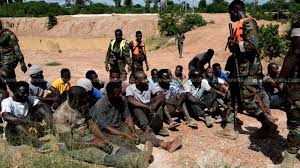
Beyond arrests, the government is also tackling the environmental fallout from illegal mining. Mr Kwakye Ofosu, who has a background in chemistry, lamented the alarming level of water pollution in the country’s river systems.
“As a chemist by training, I can tell you the water quality is way, way beyond acceptable thresholds. Turbidity levels are not acceptable at all,” he said.
He attributed this largely to the use of changfangs, makeshift contraptions designed to stir riverbeds and extract gold particles.
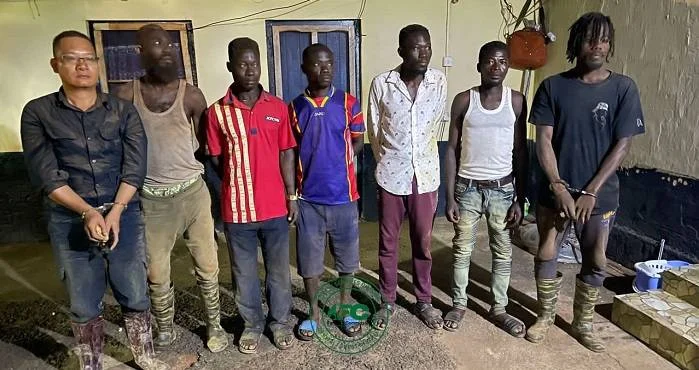
“The equipment they use to stir the riverbed and push gold up, the changfangs have been a major cause of the turbidity. 300 of those have been seized and destroyed. You won’t find them anywhere. They’ve been completely destroyed.”
Mr Kwakye Ofosu also revealed that over 900 water pumps used in galamsey operations had been seized and repurposed.
“In fact, was it on Thursday or Friday, the agriculture minister handed some over to farmers to use for watering their farms. Some have questioned the morality of that, but it shows that we are dispossessing illegal miners of their equipment and putting it to productive use,” he said.
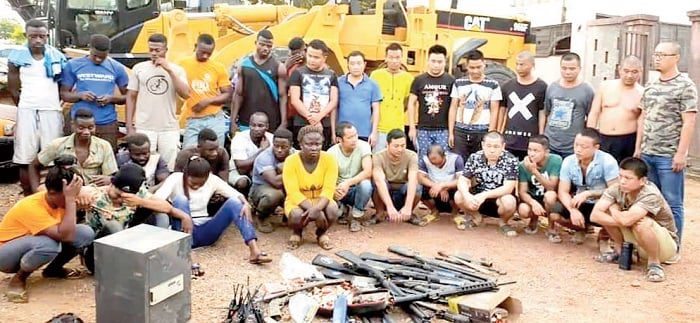
A major innovation in the government’s strategy is the deployment of what he described as “Blue Water Guards,” community-based volunteers trained to monitor and report illegal activity in riverine areas.
“Of course, they are not armed. They’re not going to shoot their way into galamsey areas. But they serve as the eyes and ears of government,” he clarified, adding that “they are tasked with policing the rivers and reporting back.”
So far, 980 Blue Water Guards have been trained, with an additional 1,020 expected to be deployed by the end of the year, bringing the total to 2,000.
“These are people located in areas where there are rivers. They know the terrain, and they can help us stay ahead of illegal operators,” he added.
Mr Kwakye Ofosu’s remarks offer a comprehensive snapshot of the Mahama administration’s multipronged approach to ending galamsey, from arrests and equipment seizure to environmental protection and citizen involvement, while reiterating that government’s resolve is backed by clear and measurable actions.