African Heads of State and Government meeting under the auspices of the Africa Centres for Disease Control and Prevention (Africa CDC) on the sidelines of the 80th UN General Assembly have adopted a resolution to accelerate the continent’s health sovereignty agenda.
The leaders acknowledged the threats and opportunities arising from recent cuts in global health financing, including an $8 billion reduction by the United States and similar actions by European partners.
They underscored the urgent need for African nations to prioritize investment in health, strengthen transparency, and break the cycle of dependency on external aid.
A key outcome of the meeting was the adoption of a policy framework to harmonize regulatory standards across Africa and pool resources for the establishment of drug manufacturing hubs.
The goal is to meet at least 60 percent of Africa’s pharmaceutical demand by 2040, reducing costs, creating jobs, and strengthening resilience.
Leaders pointed to India’s thriving pharmaceutical industry with over 10,000 manufacturing giants as a model Africa could match by acting collectively.
The Africa CDC also announced plans to expand its operational capacity through advanced training, the creation of surveillance systems for early disease detection, and the deployment of digital tools in rural areas to enable real-time responses to communicable diseases such as Mpox, Dengue Fever, Ebola, and Cholera.
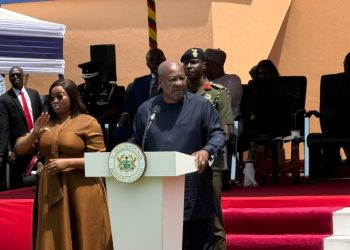
President John Dramani Mahama, who chaired the meeting, was commended for convening the Accra Health Summit, which reinvigorated the continental conversation following the Abidjan Declaration and Lusaka Agreement. He highlighted Ghana’s own interventions, including the uncapping of the National Health Insurance Fund, expanded access under new health projects, and upcoming investments in the health sector under the Big Push Initiative.
In his remarks, President Mahama called for greater commitment from member states and stronger direct engagement with investors and donors. “As the world steps back, Africa must step forward,” he said, urging leaders to champion advocacy and mobilization for resources.
The session also witnessed the signing of several Memoranda of Understanding (MoUs) aimed at enabling each African country to manufacture health products for domestic and continental use.
The resolution was backed by partners including GAVI, represented by Sania, and the World Health Organization (WHO), whose Director-General pledged to revisit the issue during another planned meeting on the sidelines of UNGA 80.
Story: Patrick Asford Boadu