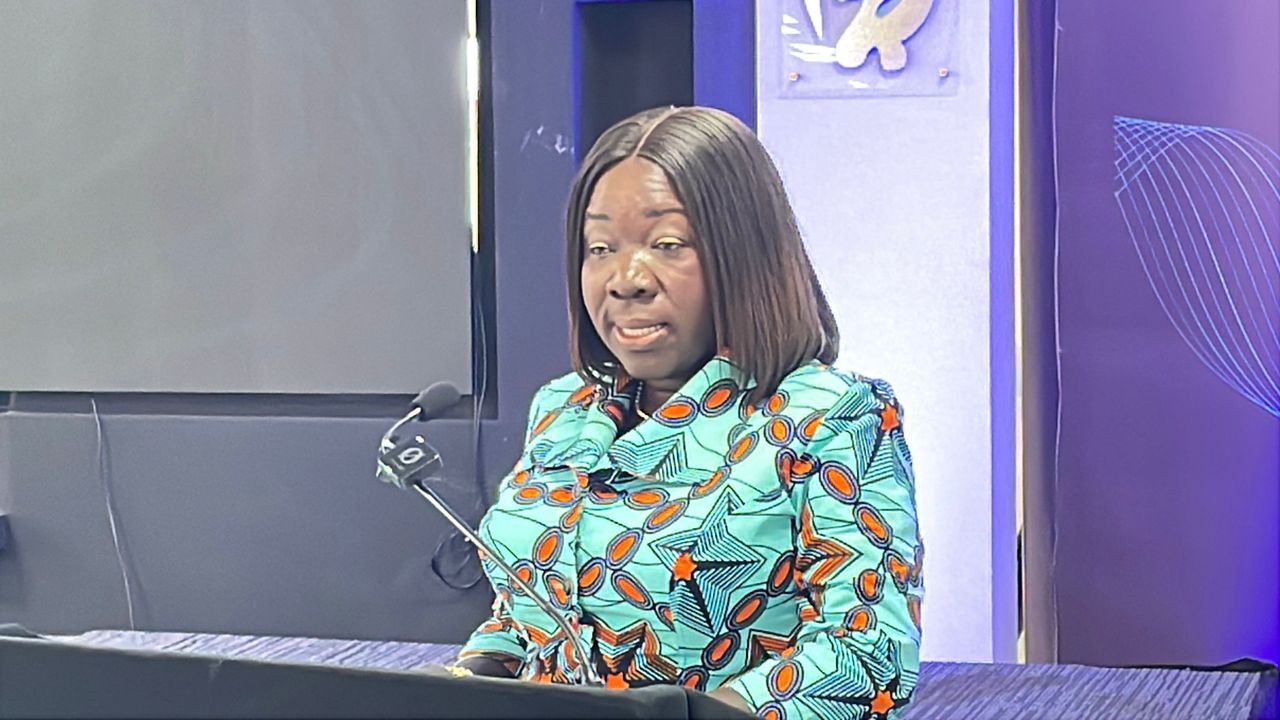
Minister of Trade and Agribusiness , Elizabeth Ofosu Agyare, today addressed the Africa Trade Summit in Accra, announcing a major policy initiative to implement 24/7 productivity across strategic economic sectors and calling on international partners to align financing with Africa’s long-term industrial ambitions.
Hon. Ofosu Agyare revealed that key sectors of the Ghanaian economy will transition to operating in three continuous shifts, ensuring round-the-clock productivity. This structural shift targets manufacturing, agro-processing, logistics, health, and digital services, among other strategic areas.
”The purpose is straightforward, to increase national output, expand job opportunities for our young population, improve turnaround times in essential services, and position Ghana as a continuous production hub that can meet demands in both regional and global markets,” the Minister stated. She described the initiative as a “practical restructuring of how our economy functions” and a direct invitation to the private sector to scale operations and increase investment.
The Minister emphasized that industrial transformation hinges on value addition and value extension. She strongly criticized the long-standing practice where African economies export raw commodities only to import finished products at significantly higher costs.
She added that the country is actively working to reverse this dynamic, particularly in the cocoa sector, a national pillar. The government is steadily increasing local processing capacity to transform a greater share of cocoa into intermediate and finished products. This commitment supports domestic grinders, chocolate manufacturers, and cocoa-based SMEs.
Similar efforts, according to her are underway across the cashew, shea, palm oil, coconut, and cassava value chains. These initiatives involve establishing new processing facilities, improving marketing linkages, and strengthening quality standards, enabling farmers and agribusinesses to move up the value ladder.
This focus on industrialisation was clearly articulated in the 2026 National Budget, where the Ministry is leading private-sector establishment of factories for processing commodities like cashew and garments.
Acknowledging that industrialisation requires an efficient trade and logistics system, the Minister highlighted Ghana’s recent strides in infrastructure development.
She noted the recent commissioning of Phase One and Two of the Tema Port expansion project by His Excellency, John Dramani Mahama, calling it a significant milestone. Tema now stands as one of Africa’s most modern and efficient container ports, supporting higher cargo volumes and improved turnaround times. Additionally, Takoradi Port continues its modernization to enhance its role in bulk and energy-related trade.
”As host of the African Continental Free Trade Area (AfCFTA) Secretariat, Ghana views the agreement as the backbone of Africa’s industrial future.” Elizabeth Ofosu Agyare stated.
Ghana was one of the first countries to operationalise Guided Trade under the AfCFTA, enabling Ghanaian companies to export processed goods to other African markets using preferential tariffs. The Minister stressed that for investors and businesses, producing in Ghana grants access not only to the domestic market but also to the continental market of 1.3 billion people. This strategic advantage will be strengthened through continuous policy reforms, trade facilitation measures, and close collaboration with the AfCFTA Secretariat.
The Minister concluded with a strong appeal for stronger international partnerships, reaffirming that while the private sector is the “engine of industrialisation,” policymakers must create the necessary enabling environment.
She called on development partners and financial institutions to align their support with Africa’s long-term priorities, specifically urging them to fund sustainable manufacturing, resilient supply chains, and cross-border infrastructure. She rejected “short-term project cycles detached from national strategies” in favour of financing models that genuinely complement Africa’s industrial ambitions.
”As His Excellency, the President of the Republic of Ghana reiterated at the United Nations General Assembly this year, the future is Africa,” she concluded, assuring the summit that Ghana possesses the firm political will and solid policies to ensure that value addition and industrialisation are achieved rapidly.
Story By: Eugenia Ewoenam Osei